Switching from lead-acid to lithium forklift batteries requires a higher initial investment in many applications. However, the battery purchase price alone does not determine whether the conversion produces a positive return.
A complete ROI analysis should examine how the change affects battery quantity, charging infrastructure, maintenance labor, battery-changing time, forklift downtime, electricity consumption, floor-space use, replacement frequency and operating productivity.
Lithium conversion is therefore more likely to produce a measurable return in operations with high forklift utilization, multiple shifts and frequent battery changes. Toyota notes that the return can vary substantially between operations and uses daily equivalent battery usage as one way to identify fleets that should investigate lithium conversion more closely.
What Does ROI Mean in a Forklift Battery Project?
Return on investment measures the financial result produced by the additional capital spent on the lithium battery system.
The basic formula is:
ROI = (Total financial benefit − Additional investment) ÷ Additional investment × 100%
The payback period measures how long it takes for annual savings to recover the additional investment:
Payback period = Additional investment ÷ Annual savings
For a lithium conversion, the additional investment can include:
Lithium forklift batteries
Lithium-compatible chargers
Electrical infrastructure
Battery enclosure or ballast customization
CAN communication commissioning
Charger installation
Operator and technician training
Remote monitoring or software costs
Annual financial benefits can include:
Reduced battery-maintenance labor
Reduced battery-changing labor
Fewer battery replacements
Reduced forklift downtime
Lower charging-energy cost
Reduced battery-room requirements
Reduced battery-handling equipment
More productive operating hours
Avoided purchase of spare batteries or forklifts
The calculation should cover the same number of forklifts, operating hours and years for both battery systems.
Lead-Acid and Lithium Cost Structure
| Cost Item | Lead-Acid Battery System | Lithium Battery System |
|---|
| Initial battery cost | Generally lower per battery | Generally higher per battery |
| Batteries per forklift | One battery in light-duty use; additional batteries can be required in multi-shift operations | One battery can support multiple shifts when the capacity and charging schedule are sufficient |
| Charger | Lead-acid charging equipment | Lithium-compatible charger with the correct voltage, profile and communication |
| Routine watering | Required for flooded batteries | Not required |
| Equalization | Periodically required for many flooded batteries | Not normally required |
| Battery changes | Common in battery-rotation operations | Can be avoided through in-truck opportunity charging |
| Charging time | Conventional charging commonly requires a longer charge-and-cool cycle | Often charged in shorter sessions with no separate lead-acid cooling period |
| Battery room | Can include charging, cooling, maintenance and spare-battery storage | Charging points can be distributed near operating areas |
| Battery monitoring | Often based on charger records and manual inspections | BMS can record state of charge, temperature, current and faults |
| Replacement planning | Depends heavily on maintenance and charging discipline | Depends on cycles, energy throughput, temperature and BMS-controlled operating conditions |
Step 1: Calculate the Initial Lithium Investment
Begin with all costs required to place the lithium system into operation.
Lithium Battery Cost
Include the number of lithium batteries required for the fleet.
Do not automatically assume one battery per forklift. Confirm that the proposed battery capacity and charging plan can support the complete daily workload.
Charger Cost
Lithium batteries require chargers configured for the battery chemistry, voltage, maximum charging current, connector and BMS communication. Toyota states that lithium forklift batteries require charging equipment rated for their chemistry and voltage.
The charger budget can include:
Electrical Infrastructure
Fast and opportunity charging can require:
New electrical circuits
Three-phase power
Larger breakers
Distribution-panel upgrades
Transformer-capacity review
Cable routing
Additional charging points
A battery capable of accepting high current will not charge quickly if the site supply or charger is undersized.
Battery Adaptation
A lithium replacement can require:
Customized enclosure dimensions
Integrated counterweight
Adjustable spacers
Charge and discharge connector adaptation
Cable-position changes
Forklift CAN integration
Display integration
Heating for low-temperature applications
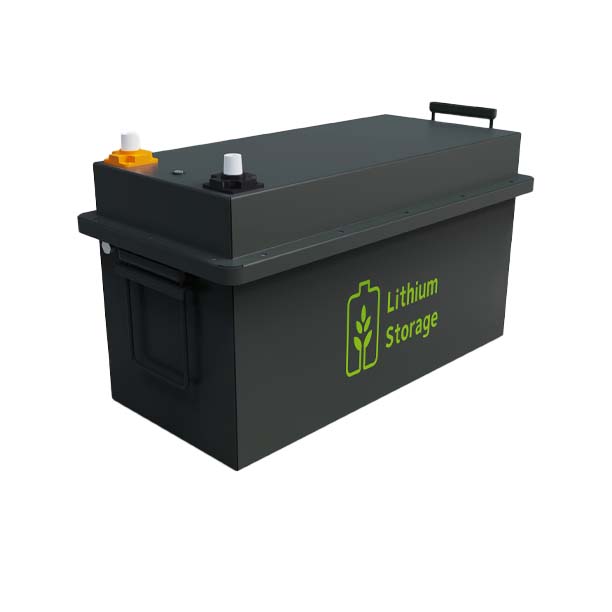
LITHIUM STORAGE offers 24V, 36V, 48V and 80V forklift battery configurations, together with enclosure, additional-weight, connector and communication adaptations for different truck models.
Step 2: Establish the Lead-Acid Baseline
The lithium project should be compared with the lead-acid costs the operation would otherwise incur.
Record:
Number of lead-acid batteries currently assigned to each truck
Remaining service life of the existing batteries
Replacement battery price
Existing charger condition
Number of battery changes per day
Battery-room operating costs
Maintenance labor
Electricity consumption
Downtime associated with charging and battery changes
Do not compare a new lithium system against lead-acid equipment that has already been fully paid for without accounting for its remaining life. The timing of the conversion affects the ROI.
For example, replacing relatively new lead-acid batteries can produce a longer payback period than converting when the existing batteries and chargers are already due for replacement.
Step 3: Determine Whether the Fleet Has Sufficient Utilization
Fleet utilization has a major effect on lithium ROI.
Toyota uses Equivalent Battery Usage, or EBU, to estimate how many lead-acid battery cycles an operation uses each day. It identifies approximately 1.6 daily equivalent usages as a screening threshold: operations above this level are generally more likely to justify further lithium analysis, while lower-use operations can produce a less compelling financial case.
Fleets That Often Require Detailed Lithium ROI Analysis
These include operations with:
Two or three shifts
Frequent battery exchanges
High annual operating hours
Short breaks available for charging
High maintenance-labor costs
Limited battery-room space
High downtime costs
Multiple lead-acid batteries per truck
Forklifts expected to remain in service for several years
Fleets That Can Have a Longer Payback Period
These include operations where:
Forklifts operate only a few hours per day
One lead-acid battery already covers the complete shift
Long overnight charging windows are available
Battery maintenance is limited
Existing batteries and chargers have substantial remaining life
The site requires major electrical upgrades
The forklifts are approaching replacement
A Forklift Battery Manufacturer should therefore request operating data before presenting a payback estimate.
Step 4: Calculate Battery-Maintenance Savings
Flooded lead-acid battery maintenance can include:
Checking water levels
Adding approved water
Equalization charging
Cleaning battery surfaces
Removing corrosion
Inspecting terminals and vent caps
Maintaining watering systems
Recording maintenance activity
Maintenance-Savings Formula
Annual maintenance savings = Lead-acid maintenance hours per year × Fully burdened labor rate − Lithium inspection and service cost
Example
Assume a fleet has:
Annual lead-acid maintenance labor:
15 × 20 ÷ 60 × 52 = 260 hours
Annual cost:
260 × $35 = $9,100
If annual lithium inspection and monitoring cost is estimated at $1,500:
Annual maintenance saving = $9,100 − $1,500 = $7,600
These figures are illustrative. Use measured maintenance records from the actual fleet.
Step 5: Calculate Battery-Change Labor
Battery replacement during a shift can consume operator and equipment time.
The process can include:
Driving to the battery room
Waiting for an available changing station
Disconnecting the battery
Using extraction or lifting equipment
Installing a charged battery
Reconnecting and securing it
Returning to the work area
Hyster gives an example in which changing a lead-acid battery takes approximately 20 minutes, followed by a much longer charging and cooling process before that battery returns to service.
Battery-Change Labor Formula
Annual battery-change labor cost = Changes per day × Time per change ÷ 60 × Operating days × Labor cost per hour
Example
Assume:
Annual labor hours:
12 × 15 ÷ 60 × 300 = 900 hours
Annual battery-change labor cost:
900 × $32 = $28,800
This calculation does not include forklift travel, waiting time or battery-changing equipment costs.
Step 6: Calculate the Value of Reduced Downtime
Battery-changing labor and forklift downtime should be calculated separately when the equipment itself has a measurable hourly value.
Downtime can include:
Travel to the battery room
Waiting for a replacement battery
Battery extraction and installation
Charging delays
Cooling time
Maintenance
Charger faults
Low-battery interruptions
Downtime-Savings Formula
Annual downtime saving = Avoided downtime hours × Cost of idle forklift and interrupted operation per hour
Example
Assume the conversion avoids:
Annual downtime value:
500 × $45 = $22,500
Avoid counting the same operator time in both the battery-change labor and downtime categories unless the costing method clearly separates labor from lost production.
Step 7: Estimate the Reduction in Battery Quantity
A multi-shift lead-acid fleet can require spare batteries because one battery is operating while another is charging or cooling.
Lithium opportunity charging can allow the battery to remain installed through multiple shifts when charging breaks restore sufficient energy. Toyota explains that this approach uses lunch periods, operator breaks and shift changes to charge the battery while it remains in the truck.
The potential saving includes:
However, one lithium battery does not automatically replace two or three lead-acid batteries. The supplier must verify:
Starting usable battery energy + energy added during the day ≥ daily energy consumption + required reserve
Battery-Quantity Saving
Assume a fleet of 10 forklifts currently uses:
20 lead-acid batteries
10 batteries installed
10 batteries in rotation
A lithium conversion validated at one battery per truck would require 10 lithium batteries.
The investment comparison should therefore be:
10 lithium batteries vs 20 lead-acid batteries
—not 10 lithium batteries vs 10 lead-acid batteries.
Step 8: Calculate Replacement-Frequency Savings
Battery replacement frequency should be based on the proposed battery model, test conditions and actual annual use.
LITHIUM STORAGE states that its LiFePO4 forklift batteries can provide three to four times the cycle life of conventional lead-acid batteries and reach up to 80% charge within one hour under the stated configuration. These are supplier-published figures and should be verified for the exact battery model, depth of discharge, charging rate and warranty conditions.
For a realistic replacement model, request:
Cycle life at a defined depth of discharge
Expected calendar life
Warranted operating hours
Warranted energy throughput
End-of-life capacity
Maximum charging rate
Test temperature
Warranty exclusions
Annualized Replacement Cost
The annualized cost can be estimated as:
Battery purchase cost ÷ Expected service years
For example:
| Battery System | Purchase Cost | Expected Service Period | Annualized Cost |
| Lead-acid batteries | $60,000 | 4 years | $15,000 per year |
| Lithium batteries | $100,000 | 8 years | $12,500 per year |
Annualized replacement saving:
$15,000 − $12,500 = $2,500 per year
This method simplifies the comparison. A more detailed model should include discount rates, replacement timing and residual value.
Step 9: Measure Charging-Energy Costs
Charging-energy cost depends on:
Energy-Savings Formula
Annual energy saving = Lead-acid charger input kWh − Lithium charger input kWh
Annual financial saving = Annual energy saving × Electricity price
Example
Assume:
Lead-acid charging consumes 120,000kWh per year
Projected lithium charging consumes 105,000kWh
Electricity costs $0.14 per kWh
Annual energy reduction:
120,000 − 105,000 = 15,000kWh
Annual saving:
15,000 × $0.14 = $2,100
Also check whether simultaneous fast charging creates additional utility demand charges.
Step 10: Assign a Value to Recovered Floor Space
A centralized lead-acid battery room can include:
Floor-Space Formula
Annual floor-space value = Recovered area × Annual facility cost per unit of area
For example:
Annual value:
600 × $15 = $9,000
Include this category only when the recovered space can actually be reassigned, avoided in a new facility or given a measurable internal value.
Step 11: Include Battery-Handling Equipment
Lead-acid battery rotation can require:
Battery extractors
Transfer carts
Roller beds
Overhead lifting systems
Battery stands
Watering systems
Cleaning equipment
Include:
Purchase cost
Depreciation
Maintenance
Inspection
Repairs
Floor space
Replacement parts
When the lithium system eliminates routine battery exchanges, some of this equipment can be removed from future capital plans.
Do not count the full original purchase price as an immediate lithium saving when the equipment has already been purchased. Use its remaining depreciation, maintenance cost or avoided replacement cost.
Step 12: Account for Lithium-Specific Costs
A credible ROI analysis must include continuing costs associated with the lithium system.
These can include:
Charger maintenance
Remote-monitoring subscriptions
BMS diagnostics
Specialist technician training
Replacement connectors and cables
Software commissioning
Module repairs
Communication support
Heating-system energy in cold storage
End-of-life transportation and recycling
Worked ROI Example: Multi-Shift Fleet
The following example is hypothetical and is intended to demonstrate the calculation method.
Fleet Profile
10 electric forklifts
Two shifts per day
300 operating days per year
Frequent lead-acid battery changes
Existing batteries and chargers due for replacement
Opportunity-charging breaks available
Initial Investment
| Investment Item | Lithium System | Lead-Acid Replacement Baseline |
| Batteries | $140,000 | $90,000 |
| Chargers | $40,000 | $25,000 |
| Electrical installation | $15,000 | $5,000 |
| Battery-handling equipment | $0 | $10,000 |
| Commissioning and training | $5,000 | $2,000 |
| Total | $200,000 | $132,000 |
Additional lithium investment:
$200,000 − $132,000 = $68,000
Estimated Annual Savings
| Savings Category | Annual Saving |
| Battery-maintenance labor | $8,000 |
| Battery-change labor | $18,000 |
| Reduced forklift downtime | $15,000 |
| Charging-energy reduction | $3,000 |
| Avoided handling-equipment maintenance | $2,000 |
| Floor-space value | $5,000 |
| Annualized battery-replacement difference | $4,000 |
| Less lithium service and monitoring cost | −$2,000 |
| Total annual saving | $53,000 |
Payback Period
$68,000 ÷ $53,000 = 1.28 years
Five-Year ROI
Five-year savings:
$53,000 × 5 = $265,000
Net financial benefit:
$265,000 − $68,000 = $197,000
Five-year ROI:
$197,000 ÷ $68,000 × 100% = approximately 290%
This result applies only to the assumptions in the example. Actual quotations, labor costs and operating data can produce a substantially different result.
Worked ROI Example: Low-Utilization Fleet
Consider a second hypothetical operation:
Three forklifts
One shift per day
Four operating hours per truck
Long overnight charging window
No routine battery changes
Existing lead-acid chargers remain serviceable
Assume:
Additional lithium investment: $30,000
Annual maintenance saving: $2,000
Annual energy saving: $500
Annual replacement saving: $1,500
Annual lithium service cost: $500
Net annual saving:
$2,000 + $500 + $1,500 − $500 = $3,500
Payback period:
$30,000 ÷ $3,500 = approximately 8.6 years
When the equipment is expected to be replaced in five years, the conversion would not recover its additional investment within the planned ownership period under these assumptions.
This illustrates why lithium ROI should not be presented as universal.
ROI Metrics Buyers Should Use
Payback Period
Shows how quickly the additional investment is recovered.
Five- or Ten-Year ROI
Shows the cumulative benefit over the evaluation period.
Net Present Value
Discounts future savings to reflect the time value of money.
NPV = Present value of future savings − Initial investment
Internal Rate of Return
Shows the discount rate at which the project’s NPV equals zero.
Cost per Operating Hour
Battery system lifetime cost ÷ Total productive forklift hours
Cost per Pallet Movement
Battery system lifetime cost ÷ Total pallets moved
Cost per Lifetime kWh Delivered
Total battery system cost ÷ Lifetime usable energy throughput
Cost per operating hour and cost per pallet movement are often easier for warehouse managers to connect to the operation than battery cost alone.
Final ROI Assessment
Switching from lead-acid to lithium forklift batteries can produce financial returns through:
Reduced maintenance labor
Fewer battery changes
Lower forklift downtime
Fewer batteries per truck
Longer replacement intervals
Reduced battery-room requirements
More flexible charging
Improved fleet-data visibility
These savings must be compared with the higher battery cost, lithium chargers, electrical upgrades, commissioning and ongoing technical-support expenses.
LITHIUM STORAGE supplies LiFePO4 forklift battery systems across 24V, 36V, 48V and 80V classes. Its product range includes customized enclosures, integrated additional weight, connector adaptation, charger communication and remote battery monitoring for selected Smart FLT configurations.
Before approving the conversion, request a fleet-specific analysis from the Forklift Battery Manufacturer and calculate:
Incremental investment + annual savings + payback period + five-year ROI + cost per operating hour
The result should be based on measured fleet data rather than a general assumption that one battery chemistry always produces a lower cost.
 EN
EN
 fr
fr  de
de  it
it  ru
ru  es
es  pt
pt  tr
tr  jp
jp  ar
ar  th
th 

 No.9 East Mozhou Road, Jiangning District, 211111, Nanjing City, China