Cycle life is one of the most frequently compared specifications when selecting a forklift battery. However, a published number such as 1,500, 3,000, or 5,000 cycles does not provide a complete basis for purchasing decisions unless the test conditions are also stated.
Depth of discharge, charging rate, operating temperature, maintenance, battery chemistry, and the manufacturer’s end-of-life definition can all change the reported cycle life. A lead-acid battery tested at 60% depth of discharge cannot be compared directly with a lithium battery tested at 80% depth of discharge.
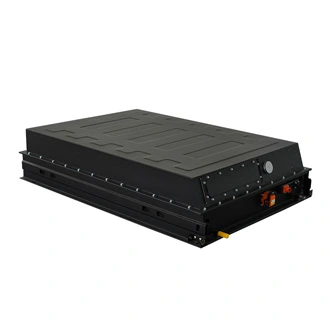
When evaluating a Lithium Ion Forklift Battery against a lead-acid battery, buyers should compare usable energy throughput, expected operating hours, calendar life, warranty conditions, and replacement frequency—not the headline cycle number alone.
Lead-Acid vs Lithium Battery Cycle Life at a Glance
| Comparison Item | Lead-Acid Forklift Battery | Lithium-Ion Forklift Battery |
|---|
| Common published cycle-life range | Approximately 1,000–1,500 cycles for many properly maintained traction batteries | Commonly around 2,000–3,500 cycles for many industrial lithium systems; some products publish higher figures |
| Typical test depth of discharge | Often stated at 60% or 80% DOD | Commonly stated at 80% DOD or another manufacturer-defined condition |
| Effect of partial charging | Depends on lead-acid technology and charging strategy | Frequently designed for partial and opportunity charging |
| Routine maintenance effect | Watering, equalization, cleaning, and charging discipline can affect service life | BMS control, temperature, charging rate, and operating limits affect service life |
| Temperature sensitivity | High temperatures can accelerate plate corrosion and water loss | High temperatures can accelerate cell degradation and trigger BMS current limits |
| End-of-life definition | Often based on remaining capacity and inability to complete the required shift | Commonly based on a specified percentage of original capacity |
| Cycle tracking | Often estimated from charging records and fleet use | Can be recorded by the BMS, although counting methods vary |
| Calendar aging | Relevant even when the battery is lightly cycled | Relevant even when the battery is lightly cycled |
| Replacement planning | Depends heavily on maintenance and depth of discharge | Depends heavily on energy throughput, temperature, charging behavior, and BMS settings |
Hyster publishes a general comparison of approximately 1,000–1,500 charges for lead-acid batteries and 2,000–3,000 charges for lithium-ion batteries. Crown similarly lists 1,000–1,500 cycles as a typical properly maintained lead-acid range, while its lithium product information includes model-specific figures extending substantially higher. These figures illustrate general product ranges, not a universal result for every battery.
What Does One Battery Cycle Mean?
A battery cycle represents the use and subsequent restoration of stored energy. However, manufacturers do not always count cycles in exactly the same way.
For a traditional lead-acid traction battery, one operating discharge followed by a recharge is commonly treated as one cycle. An EnerSys traction-battery manual, for example, describes one discharge in use as one cycle and identifies 1,200–1,500 cycles at 80% discharge as a design range for the covered battery type.
Lithium batteries are frequently charged in partial sessions. A forklift could consume 30% of its capacity, recharge during lunch, consume another 40%, and recharge again at the end of the shift.
For comparison purposes, buyers can calculate equivalent full cycles by adding the total discharged energy:
Two 50% discharges equal approximately one equivalent full cycle.
Four 25% discharges equal approximately one equivalent full cycle.
Ten 10% discharges equal approximately one equivalent full cycle.
The BMS can count physical charge events, cumulative energy throughput, or equivalent full cycles. Buyers should ask the battery supplier which method is used because “3,000 cycles” can mean different things under different counting systems.
Published Cycle Numbers Are Not Universal Specifications
Official industrial battery manufacturers publish different cycle-life figures because their products use different chemistries, cell designs, charging systems, and test conditions.
Examples include:
Hyster states that one lithium forklift battery system has an expected life of 3,000 charge-and-discharge cycles when its internal battery temperature remains at or below 35°C.
Toyota lists a warranty cycle life of up to 3,500 cycles for a specific lithium-ion battery platform.
Crown states that selected lithium-ion systems can reach up to 3,600 cycles in cold-storage applications, while another Crown comparison lists up to 9,000 cycles for a different lithium technology and operating definition.
EnerSys lists up to 1,500 cycles for selected TPPL lead-acid products, including a defined 60% depth of discharge for some configurations.
These values should not be placed in a simple ranking. A 9,000-cycle claim under one test method cannot be compared directly with a 3,000-cycle claim based on a different chemistry, depth of discharge, temperature, or end-of-life threshold.
1. Depth of Discharge Has a Major Effect on Cycle Life
Depth of discharge, or DOD, describes how much of the battery’s available capacity is used before charging.
For example:
Discharging from 100% to 80% state of charge represents approximately 20% DOD.
Discharging from 100% to 50% represents approximately 50% DOD.
Discharging from 100% to 20% represents approximately 80% DOD.
A battery that undergoes shallow discharges generally completes more cycles than one repeatedly discharged deeply. However, more shallow cycles do not automatically mean that the battery delivers more total energy during its life.
Consider two hypothetical batteries:
| Battery | Published Cycle Life | DOD per Cycle | Calculated Lifetime Throughput |
| Battery A | 1,500 cycles | 80% | 1,200 full-capacity equivalents |
| Battery B | 2,500 cycles | 50% | 1,250 full-capacity equivalents |
Battery B has a much higher cycle count, but the calculated lifetime energy throughput is only slightly higher.
This is why buyers should request both:
EnerSys, for example, publishes different cycle-life figures for lead-acid products according to whether they are tested at 60% or 80% DOD.
2. Lead-Acid Cycle Life Depends on Maintenance
Flooded lead-acid batteries require regular maintenance to reach their intended operating life.
The maintenance program can include:
Checking electrolyte levels
Adding approved water
Equalization charging
Cleaning the battery surface
Removing corrosion
Inspecting cables and connectors
Monitoring battery temperature
Avoiding incomplete charging
Recording discharge and charging activity
Improper water levels can reduce lead-acid battery life and shorten the operating period between charges. Regular maintenance can help preserve battery capacity and runtime, while poor charging or watering practices can cause earlier replacement.
A lead-acid battery rated for 1,500 cycles will not necessarily complete 1,500 cycles when it is repeatedly undercharged, over-discharged, overheated, or operated with low electrolyte levels.
When reviewing a lead-acid fleet, buyers should distinguish between:
The manufacturer’s design cycle life
The fleet’s actual historical battery life
The number of cycles lost through maintenance variation
The cost of maintaining the battery to achieve the expected cycle range
3. Lithium Cycle Life Depends on BMS Control
An industrial lithium battery normally uses a battery management system to monitor and control:
The BMS can limit or interrupt operation when the battery approaches programmed voltage, temperature, or current thresholds.
This reduces the dependence on manual watering and equalization, but it does not make lithium battery life independent of operating conditions. A battery that repeatedly reaches high-temperature or overcurrent limits can age more quickly even when the BMS prevents an immediate failure.
The target product range includes LiFePO4 battery systems with BMS control, vehicle and charger communication, and remote-monitoring functions across 24V, 36V, 48V, and 80V forklift platforms.
Buyers should ask whether the BMS records:
These records provide a more useful view of battery condition than the cycle counter alone.
4. Temperature Affects Both Battery Types
Battery cycle life is strongly influenced by temperature.
For lead-acid batteries, elevated temperature can accelerate plate corrosion, increase water consumption, and shorten service life. Low temperatures can reduce available capacity and increase charging requirements.
For lithium-ion batteries, prolonged high temperature can accelerate chemical degradation. Low-temperature charging can require current reduction, battery heating, or temporary charging prevention.
Hyster’s published 3,000-cycle lithium figure is conditional on maintaining an internal battery temperature of 35°C or less. This temperature condition is important because it shows that the cycle number does not apply independently of the operating environment.
When comparing cycle life, buyers should provide:
Average operating temperature
Maximum operating temperature
Minimum operating temperature
Battery temperature when charging begins
Time spent in cold storage
Time spent outdoors
Charger-room temperature
Whether the battery includes heating or cooling controls
A warehouse operating at moderate indoor temperatures can obtain a different battery life from a cold store, foundry, outdoor yard, or non-air-conditioned production facility.
5. Charging Rate Influences Battery Aging
Charging rate is often expressed as a C-rate.
For example:
A 500Ah battery charged at 100A is charging at 0.2C.
A 500Ah battery charged at 250A is charging at 0.5C.
A 500Ah battery charged at 500A is charging at 1C.
Higher charging current reduces the time required to restore energy, but it can also create more heat and place greater demand on the cells, cables, connectors, and charger.
Lithium batteries are commonly used with fast or opportunity charging, but the charging current must remain within the manufacturer’s approved range. The BMS can reduce charging current when cell voltage or temperature approaches a limit.
Lead-acid charging also requires an approved charger profile. Repeated incomplete charging, uncontrolled opportunity charging, or insufficient equalization can affect battery capacity and operating life.
Buyers should request:
Standard charging current
Maximum charging current
Recommended charging rate for expected cycle life
Cycle-life data at the proposed charging rate
Temperature-related current reduction
Expected charging time
Charger efficiency
Opportunity-charging limits
A cycle-life result measured at a moderate charging rate should not be assumed to apply unchanged to continuous high-rate charging.
6. High Discharge Current Can Reduce Usable Life
Material-handling batteries do not operate at one constant current.
Peak demand can occur during:
Acceleration
Direction changes
Heavy lifting
Ramp climbing
Simultaneous travel and hydraulic operation
Use of clamps, rotators, or other attachments
A battery selected only by voltage and Ah can be undersized for the truck’s current demand.
Repeated high-current operation can increase internal temperature and voltage variation between cells. In a lithium battery, this can trigger BMS power reduction. In a lead-acid battery, high current can increase voltage drop and reduce usable capacity during the shift.
The quotation should therefore state:
Continuous discharge current
Peak discharge current
Maximum peak duration
Current limits at low state of charge
Current limits at high or low temperature
Cycle-life test discharge rate
A battery with sufficient energy but insufficient current capability can experience a different service life from the cycle-life figure shown in the general data sheet.
7. Partial Charging Changes the Way Cycles Are Counted
Lithium forklift batteries are frequently charged during breaks and shift changes. One operating day can therefore contain several partial charging events.
For example, a forklift could follow this schedule:
| Operating Period | Energy Discharged |
| Start of shift to morning break | 15% |
| Morning break to lunch | 25% |
| Lunch to afternoon break | 20% |
| Afternoon break to shift end | 20% |
| Total daily discharge | 80% |
The battery may have received three or four physical charging connections, but its total daily use is approximately 0.8 equivalent full cycles.
When comparing a lithium battery with a lead-acid battery, buyers should avoid counting every plug-in event as a complete cycle unless that is the manufacturer’s official warranty method.
Ask the supplier:
Is one partial charge recorded as one cycle?
Are cycles calculated from cumulative Ah?
Are cycles calculated from cumulative kWh?
What DOD is assumed in the cycle-life claim?
How does the warranty count opportunity charging?
Is there a maximum number of daily charge events?
This clarification is especially important for multi-shift fleets using frequent opportunity charging.
8. Calendar Life Can Become the Limiting Factor
Cycle life describes usage-related aging, while calendar life describes aging that occurs over time whether the battery is heavily used or not.
A battery can reach end of life because it has:
Completed its designed energy throughput
Reached its cycle limit
Aged for many calendar years
Spent excessive time at high temperature
Remained stored at an unsuitable state of charge
Experienced repeated maintenance or charging problems
A lightly used forklift might complete relatively few cycles each year. In that application, the battery’s calendar age or the remaining life of the forklift can become more relevant than the maximum advertised cycle count.
For example:
| Operation | Cycles per Year | Cycles in Five Years |
| Occasional use | 100 | 500 |
| One cycle per workday | 250 | 1,250 |
| 1.5 equivalent cycles per day | 375 | 1,875 |
| Two equivalent cycles per day | 500 | 2,500 |
A battery rated for 3,000 cycles would require 12 years to complete those cycles at 250 cycles per year. Its calendar aging, warranty period, and the forklift’s remaining service life would therefore need to be considered.
9. End-of-Life Capacity Must Be Defined
A battery does not normally stop operating immediately after completing its published cycle count. Cycle life is usually based on reaching a defined remaining capacity.
For example, a manufacturer can define end of life when the battery retains:
80% of its original capacity
70% of its original capacity
Another model-specific threshold
A battery at 80% remaining capacity can still power a forklift, but it can no longer provide the same runtime as when it was new.
Assume a battery originally provides 25kWh of usable energy:
| Remaining Capacity | Approximate Available Energy |
| 100% | 25kWh |
| 90% | 22.5kWh |
| 80% | 20kWh |
| 70% | 17.5kWh |
Whether the battery remains usable depends on the forklift’s daily energy requirement.
A battery reaching 80% capacity can continue operating in a light-duty truck while no longer completing the shift in a high-utilization application. Operational end of life can therefore occur before or after the laboratory cycle-life threshold.
10. Compare Lifetime Energy Throughput
Lifetime energy throughput provides a more consistent comparison than cycle count alone.
A simplified calculation is:
Lifetime energy throughput = Nominal energy × usable DOD × cycle life
Consider the following illustrative example:
Lead-Acid Battery
Nominal energy: 30kWh
DOD per cycle: 80%
Cycle life: 1,500
30 × 0.80 × 1,500 = 36,000kWh lifetime throughput
Lithium Battery
Nominal energy: 25kWh
DOD per cycle: 80%
Cycle life: 3,000
25 × 0.80 × 3,000 = 60,000kWh lifetime throughput
The lithium battery has a smaller nominal capacity in this example but delivers more calculated lifetime energy because it completes more cycles.
This is only an initial calculation. A complete comparison should also account for:
11. Convert Cycle Life into Expected Years
Cycle life can be converted into an approximate service period:
Expected years = Published cycle life ÷ Equivalent full cycles per year
Example Using a 1,500-Cycle Lead-Acid Battery
| Fleet Use | Equivalent Cycles per Year | Calculated Time to 1,500 Cycles |
| 250 | 250 | 6 years |
| 375 | 375 | 4 years |
| 500 | 500 | 3 years |
Example Using a 3,000-Cycle Lithium Battery
| Fleet Use | Equivalent Cycles per Year | Calculated Time to 3,000 Cycles |
| 250 | 250 | 12 years |
| 375 | 375 | 8 years |
| 500 | 500 | 6 years |
These are mathematical estimates, not guaranteed service lives. Calendar aging, temperature, charging rate, cell quality, maintenance, and warranty terms can shorten or limit the actual operating period.
EnerSys states that a lead-acid traction battery designed for 1,200–1,500 cycles at 80% discharge can last approximately five or six years in a one-shift-per-day operation when recommended maintenance and charging procedures are followed.
12. Cycle Life Affects Replacement Planning
The practical value of cycle life is its effect on how frequently batteries must be replaced during the forklift’s service period.
Consider a fleet planning to operate its forklifts for eight years.
Scenario A: Light Single-Shift Operation
200 equivalent cycles per year
Eight-year total: 1,600 cycles
Long overnight charging window
No routine battery changing
In this case, a properly maintained lead-acid battery could approach the required cycle total, while a high-cycle lithium battery might have significant unused cycle capacity when the truck is replaced.
Scenario B: Regular Single-Shift Operation
300 equivalent cycles per year
Eight-year total: 2,400 cycles
Frequent daily use
Limited maintenance labor
The fleet should compare whether one battery can cover the complete ownership period or whether a replacement is expected.
Scenario C: Multi-Shift Operation
500 equivalent cycles per year
Eight-year total: 4,000 cycles
Opportunity charging
High annual energy throughput
The fleet can require several lead-acid replacements or battery rotations during the evaluation period. A lithium system can also require replacement depending on its cycle rating, operating temperature, warranty, and remaining capacity.
These examples show why battery selection should be linked to planned forklift use rather than a general statement that one chemistry lasts longer.
13. Different Lead-Acid Technologies Have Different Cycle Profiles
“Lead-acid battery” is a broad category.
Material-handling systems can include:
Flooded flat-plate lead-acid
Flooded tubular lead-acid
Valve-regulated lead-acid
Gel batteries
Thin plate pure lead batteries
Fast-charge or opportunity-charge lead-acid systems
Crown states that its lead-acid range includes flat-plate and tubular products for different duty cycles, while EnerSys lists selected TPPL products with up to 1,500 cycles and opportunity-charging capability.
A lithium-versus-lead-acid comparison should therefore name the exact lead-acid technology. Comparing LiFePO4 with conventional flooded lead-acid can produce a different result from comparing LiFePO4 with an advanced TPPL system.
14. Different Lithium Chemistries Also Have Different Cycle Profiles
“Lithium-ion” is also a broad category.
Industrial batteries can use chemistries such as:
Lithium iron phosphate, or LiFePO4/LFP
Nickel manganese cobalt, or NMC
Other manufacturer-specific lithium formulations
These chemistries differ in nominal cell voltage, energy density, thermal behavior, charging characteristics, and cycle-life profile.
Hyster’s current integrated forklift battery systems use LFP chemistry and describe it as suited to fast charging, temperature tolerance, and multi-shift operation. Toyota has also published cycle figures for model-specific lithium systems using different cell formulations.
Buyers should request:
A quotation that states only “lithium-ion battery” does not contain enough information for a cycle-life comparison.
15. Warranty Life and Technical Life Are Different
A battery can have a technical design life that is longer than its warranty period.
Warranty coverage can be limited by:
For example, a battery described as capable of 3,000 cycles can have a warranty that ends after five years, 10,000 operating hours, or a defined energy-throughput limit.
 EN
EN
 fr
fr  de
de  it
it  ru
ru  es
es  pt
pt  tr
tr  jp
jp  ar
ar  th
th 


 No.9 East Mozhou Road, Jiangning District, 211111, Nanjing City, China