Lithium forklift batteries generally store more usable energy for a given battery mass than conventional lead-acid batteries. In pallet trucks, stackers, tow tractors and purpose-built lithium forklifts, this can reduce total vehicle weight or create more space for energy storage and equipment components.
For counterbalance forklifts, however, a lighter battery is not automatically installed at its minimum possible weight. The traction battery often forms part of the truck’s counterweight, so a lithium replacement can require a steel enclosure or additional ballast to meet the forklift manufacturer’s specified battery-weight range.
The practical weight difference therefore depends on the equipment design:
A purpose-built lithium forklift can use the lower battery mass to reduce total truck weight.
A lead-acid forklift converted to lithium can use additional ballast to maintain stability.
A pallet truck can use a compact lithium pack without requiring the same counterweight as a larger counterbalance forklift.
A customized Electric Forklift Battery can separate the energy-storage module from the outer box and added weight.
Understanding this distinction prevents buyers from assuming that every lithium conversion will make the complete forklift lighter.
The Lighter Battery Paradox
In most battery-powered equipment, reducing battery weight is treated as a straightforward engineering objective. A lighter battery can reduce vehicle mass, rolling resistance and the energy required for acceleration.
Forklifts are different because the battery can perform two functions:
Supply electrical energy.
Contribute to vehicle stability and counterbalance.
Toyota explains that the battery in an electric counterbalance forklift acts as both the power source and part of the counterweight that stabilizes the truck.
As a result, the lower natural weight of a lithium battery does not always become a lower installed battery weight. When a truck was originally designed around a heavy lead-acid battery, the lithium replacement must normally comply with the truck’s minimum battery-weight requirement.
A lithium pack that is electrically compatible but too light can affect:
The relevant specification is therefore not “How light is the lithium battery?” but “What finished battery weight does this forklift require?”
Why Lithium Batteries Can Be Lighter
Lead-acid batteries store energy through lead plates and sulfuric-acid electrolyte. Both the lead content and the robust traction-battery casing contribute substantial mass.
A lithium battery stores the same operating energy using a different cell chemistry and pack architecture. Lithium Storage identifies higher energy density as a defining characteristic of its industrial lithium battery systems.
The weight difference can be used in several ways:
Reduce the mass of the battery system.
Increase capacity within a fixed weight limit.
Reduce battery volume while retaining the required energy.
Create space for the BMS, heating components or communication hardware.
Add controlled ballast in the location required by the forklift design.
The final choice depends on whether the equipment is designed specifically for lithium or is being converted from lead acid.
Purpose-Built Lithium Forklifts Can Use the Weight Reduction Directly
A forklift designed around an integrated lithium battery does not necessarily need to reproduce the size and mass of a traditional lead-acid pack.
The manufacturer can redesign the truck structure around the lithium system, adjusting:
Counterweight location
Chassis geometry
Operator compartment
Axle loading
Battery position
Cable routing
Charging access
Hyster’s J40XNTL is an example of this approach. The truck was engineered around an integrated lithium-ion battery rather than designed to accept a conventional removable lead-acid battery. Hyster states that the resulting lower truck weight supports acceleration and reduces energy consumption during long travel cycles. The compact battery layout also creates more room in the operator compartment.
In this type of vehicle, the lithium battery’s lower mass is reflected in the complete truck design. The manufacturer has already recalculated stability, counterweight distribution and rated capacity.
This is different from placing a lightweight lithium pack into an existing lead-acid forklift.
Lead-Acid Replacements Often Need Ballast
Many warehouses are not purchasing an entirely new lithium forklift. They are replacing an existing lead-acid battery while retaining the truck.
In this situation, the lithium battery must match the original equipment requirements for:
Toyota’s lithium battery products include built-in counterweight specifically to meet minimum and maximum truck-weight requirements. Adjustable spacer tabs are also used to fit the lithium system correctly inside existing battery compartments.
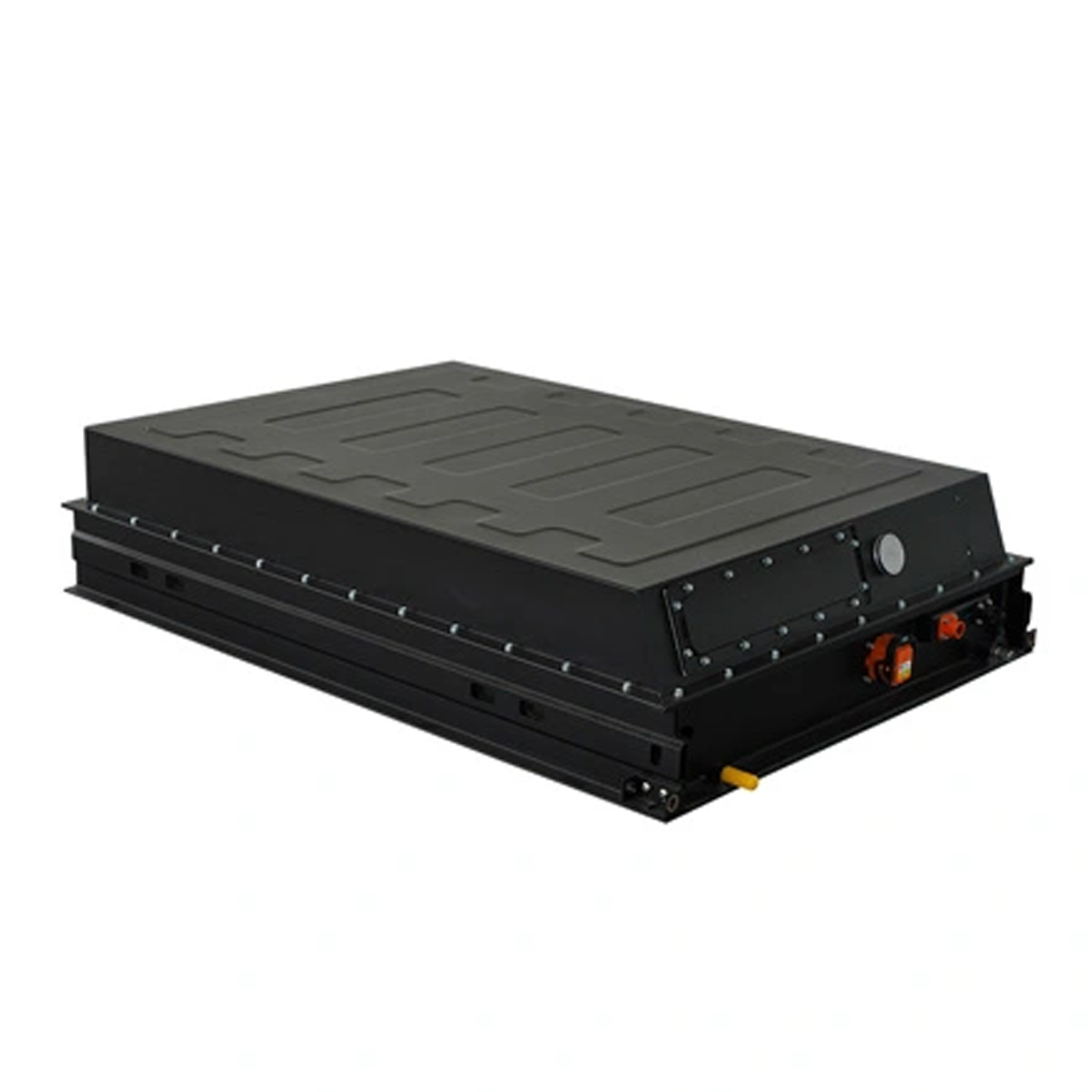
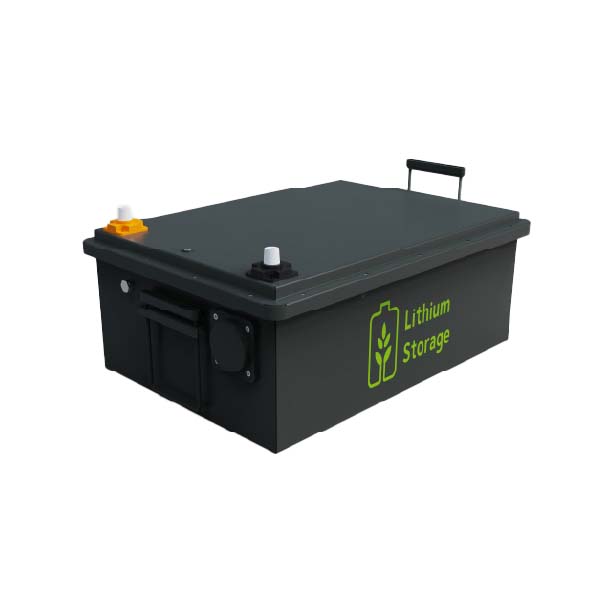
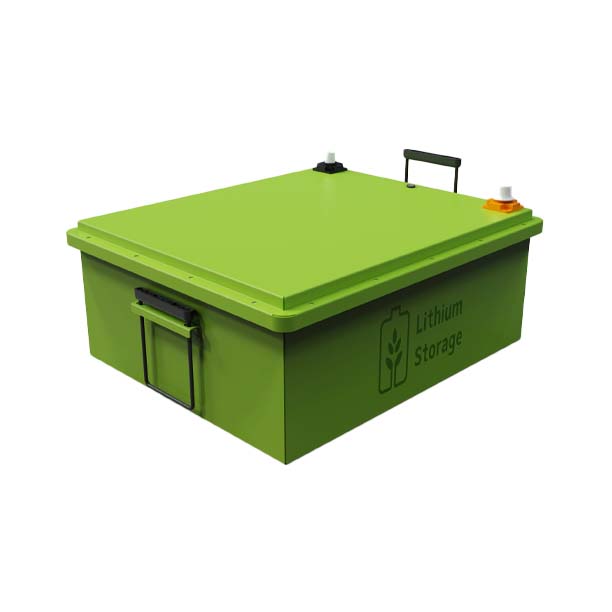
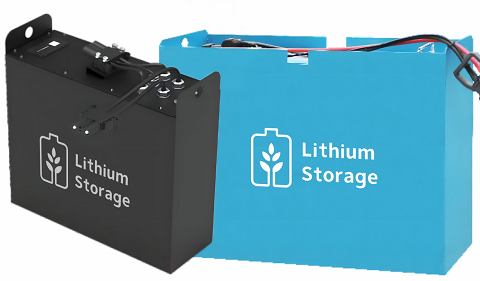
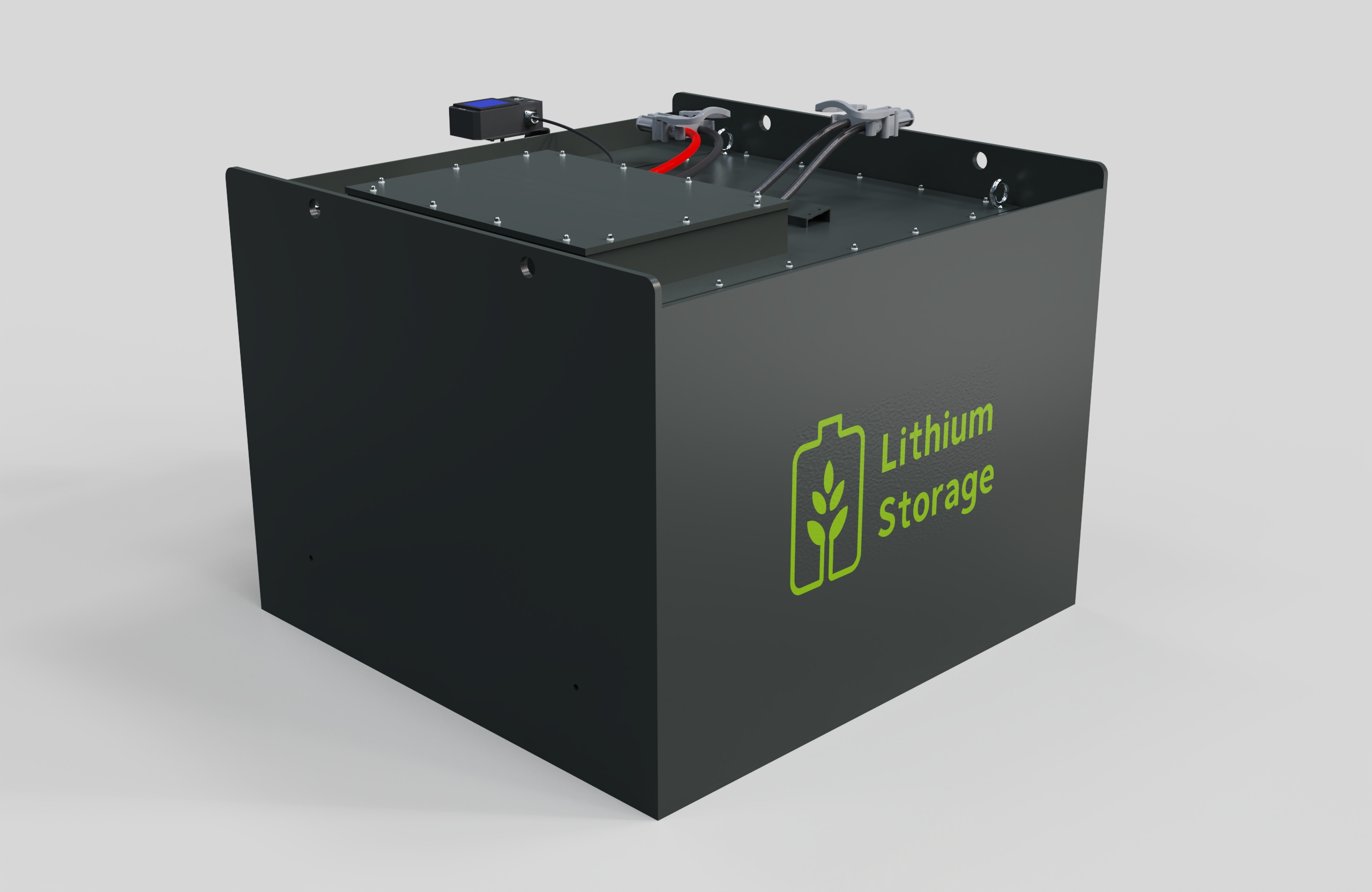
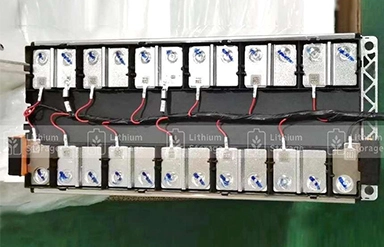
Lithium Storage uses a similar design principle. Its forklift battery system separates the internal energy-storage box from the external enclosure and additional weight. This allows one inner battery design to be adapted to forklifts with different compartment and counterweight requirements.
The added material is not wasted battery weight. It performs a defined vehicle-stability function.
Inner Battery Weight and Installed Battery Weight Are Not the Same
A lithium battery quotation can contain several different weight figures:
These figures should not be treated as interchangeable.
For example, Lithium Storage’s 51.2V 456Ah product page lists 198 kg for inner-pack configurations and 812 kg for a finished truck-specific configuration for a Still RX20-18. The same page describes flexible additional-weight options.
The difference illustrates what happens during a counterbalance-forklift conversion. The energy-storage section can be relatively light, while the complete installed assembly is configured to provide the mass, dimensions and restraint arrangement required by the truck.
A buyer comparing only the 198 kg inner-pack figure with an existing lead-acid battery could therefore reach the wrong conclusion. The figure that matters for installation is the complete approved weight.
Where Lower Battery Weight Is Most Visible
Electric Pallet Trucks
A pallet truck does not use its battery in exactly the same way as a large counterbalance forklift. The battery contributes to the truck’s total mass, but it is not normally required to provide the same large rear counterweight.
In these applications, a compact lithium pack can result in:
Lower vehicle operating mass
Reduced effort during service or battery removal
More compact battery compartments
Lower transport weight
More flexibility in equipment layout
Lithium Storage’s 25.6V 206Ah product page shows how the same inner battery can be packaged into several configurations, with listed weights ranging from 60 kg for an inner pack to higher finished configurations adapted to specific equipment.
The final weight still depends on the pallet-truck model, compartment and stability requirements.
Walkie and Rider Stackers
Stackers combine travel and lifting functions but generally operate with different counterbalance requirements from sit-down counterbalance forklifts.
Lower battery mass can influence:
The battery supplier must still verify the minimum permitted battery weight. Some stackers use a counterbalanced chassis, while others rely on support legs and load wheels.
Tow Tractors and Industrial Vehicles
For equipment that primarily pulls loads rather than counterbalancing lifted loads, reducing onboard battery mass can lower the vehicle’s unladen weight.
The operational effect depends on:
Tow route length
Number of accelerations
Ramp gradients
Trailer weight
Floor condition
Required traction
The battery must still meet the equipment’s traction, axle-load and current requirements.
Purpose-Built Lithium Counterbalance Forklifts
In a truck engineered from the beginning around lithium power, the manufacturer can distribute vehicle mass through the chassis and rear counterweight rather than relying on a traditional lead-acid battery box.
The lower battery mass can then support:
Reduced complete truck weight
Different operator-compartment geometry
More compact battery placement
Revised energy-consumption characteristics
These results should be evaluated from the complete forklift specification rather than applied to a retrofit battery.
How Battery Weight Affects Energy Consumption
A lighter complete vehicle requires less energy to accelerate than a heavier vehicle under otherwise identical conditions. The effect becomes more noticeable where a forklift repeatedly:
Hyster specifically links the reduced weight of its purpose-built lithium J40XNTL to improved acceleration and lower energy consumption during long travel cycles.
This relationship does not mean that replacing a lead-acid battery with lithium will always reduce the truck’s operating mass. When ballast is added to maintain the required counterweight, the finished forklift can remain close to its previous weight.
Energy-consumption calculations should therefore use:
Complete truck weight with the installed battery
—not the weight of the battery cells or inner lithium module.
Lower Battery Weight Does Not Increase Rated Forklift Capacity
A common misunderstanding is that reducing battery weight leaves more capacity available for the load.
Forklift rated capacity is not calculated by simply subtracting battery weight from the truck’s total weight. It depends on the complete stability relationship among:
Load weight
Load center
Mast height
Attachment weight
Wheelbase
Counterweight
Battery weight
Axle position
Truck geometry
Removing battery mass can reduce the available stabilizing moment rather than increase lifting capacity.
The capacity plate remains the controlling reference. A lithium conversion should not be used to claim a higher load rating unless the forklift manufacturer has formally approved and documented the change.
Floor Loading Requires the Complete Truck Weight
Warehouses sometimes consider lithium batteries to reduce floor pressure or mezzanine loading.
This can be relevant for:
Upper-level warehouse floors
Freight elevators
Tail lifts
Mobile loading platforms
Facilities with defined slab-load limits
Trucks transported between sites
However, the calculation must include:
A lightweight inner battery does not reduce floor loading when the finished enclosure includes enough ballast to reproduce the original lead-acid battery weight.
Purpose-built lithium equipment can produce a different result because the chassis and counterweight system are designed around the lighter battery.
Battery Handling and Shipping
Lower module weight can simplify parts of the battery supply and service process even where the finished forklift battery needs ballast.
Lithium Storage’s inner-box and outer-box approach allows customers to receive the energy-storage section separately and, where appropriate, source the outer box and additional weight locally. The company presents this as a way to reduce the international transportation of non-energy-storing ballast.
This arrangement can affect:
International freight cost
Packaging design
Crane or forklift requirements at installation
Local enclosure fabrication
Replacement-module handling
End-of-life material separation
It also creates additional responsibilities. Locally supplied ballast and enclosures must follow approved dimensions, material specifications, fixing methods and weight distribution.
The final battery should be inspected and documented as one complete system before it is installed in the forklift.
Weight Distribution Matters as Much as Total Weight
Two batteries can have the same total mass but distribute that mass differently.
Important factors include:
Center of gravity
Height of the mass
Front-to-rear distribution
Side-to-side balance
Position relative to the axles
Movement inside the enclosure
Battery restraint
Placing all ballast at the top of the enclosure can create a different stability condition from distributing it low in the battery box. Similarly, unsecured ballast can move during braking, cornering or ramp operation.
The approved battery drawing should identify:
Total mass alone is not enough to confirm a safe installation.
How to Compare Lithium and Lead-Acid Battery Weight Correctly
A valid comparison requires the same operating basis.
Compare the Same Forklift
Do not compare a lithium battery for a pallet jack with a lead-acid battery for a counterbalance forklift.
Compare the Same Voltage Platform
A 24V battery and an 80V battery serve different electrical systems and equipment classes.
Compare Usable Energy
Two batteries with the same Ah rating can store different energy when their voltages differ.
Use:
Nominal energy in kWh = Voltage × Ah ÷ 1,000
Also confirm the permitted usable state-of-charge range.
Compare Complete Installed Assemblies
Include:
Cells
Modules
BMS
Contactors
Enclosure
Connectors
Heating system
Display
Ballast
Restraint hardware
Confirm the Forklift Weight Range
The battery must fall within the minimum and maximum weight shown by the truck manufacturer.
Compare Weight Location
Ask for the center-of-gravity drawing, not only the total weight.
Three Common Weight Scenarios
| Scenario | How Lithium Weight Is Used |
|---|
| Compact pallet truck conversion | The finished battery can remain relatively light when the equipment does not require substantial battery counterweight |
| Existing counterbalance forklift conversion | Ballast is commonly added so the finished lithium battery meets the original truck-weight requirement |
| Purpose-built integrated lithium forklift | The truck chassis and counterweight are designed around the lithium system, allowing lower battery mass to influence total vehicle weight |
This is why a statement such as “lithium batteries are lighter than lead acid” is technically incomplete for forklift procurement.
The chemistry can provide a lighter energy-storage pack. The forklift application determines whether the completed installation remains lighter.
 EN
EN
 fr
fr  de
de  it
it  ru
ru  es
es  pt
pt  tr
tr  jp
jp  ar
ar  th
th 



 No.9 East Mozhou Road, Jiangning District, 211111, Nanjing City, China