Lithium-ion batteries are changing how electric forklift fleets are charged, maintained, and scheduled. For Toyota, Crown, and Yale forklifts, the potential advantages are similar: faster charging, opportunity charging, reduced routine battery maintenance, stable power delivery, and fewer battery changes during multi-shift operation.
However, the value of a lithium conversion is not identical for every forklift brand or fleet. Toyota, Crown, and Yale use different truck platforms, battery compartments, voltage classes, communication systems, and integrated energy strategies. The brand name alone cannot determine whether lithium will deliver a strong return on investment.
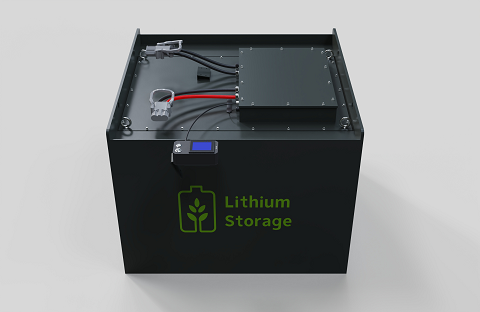
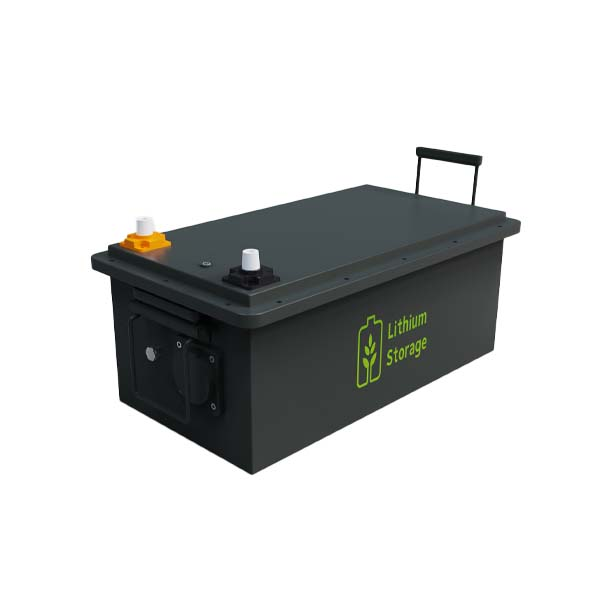
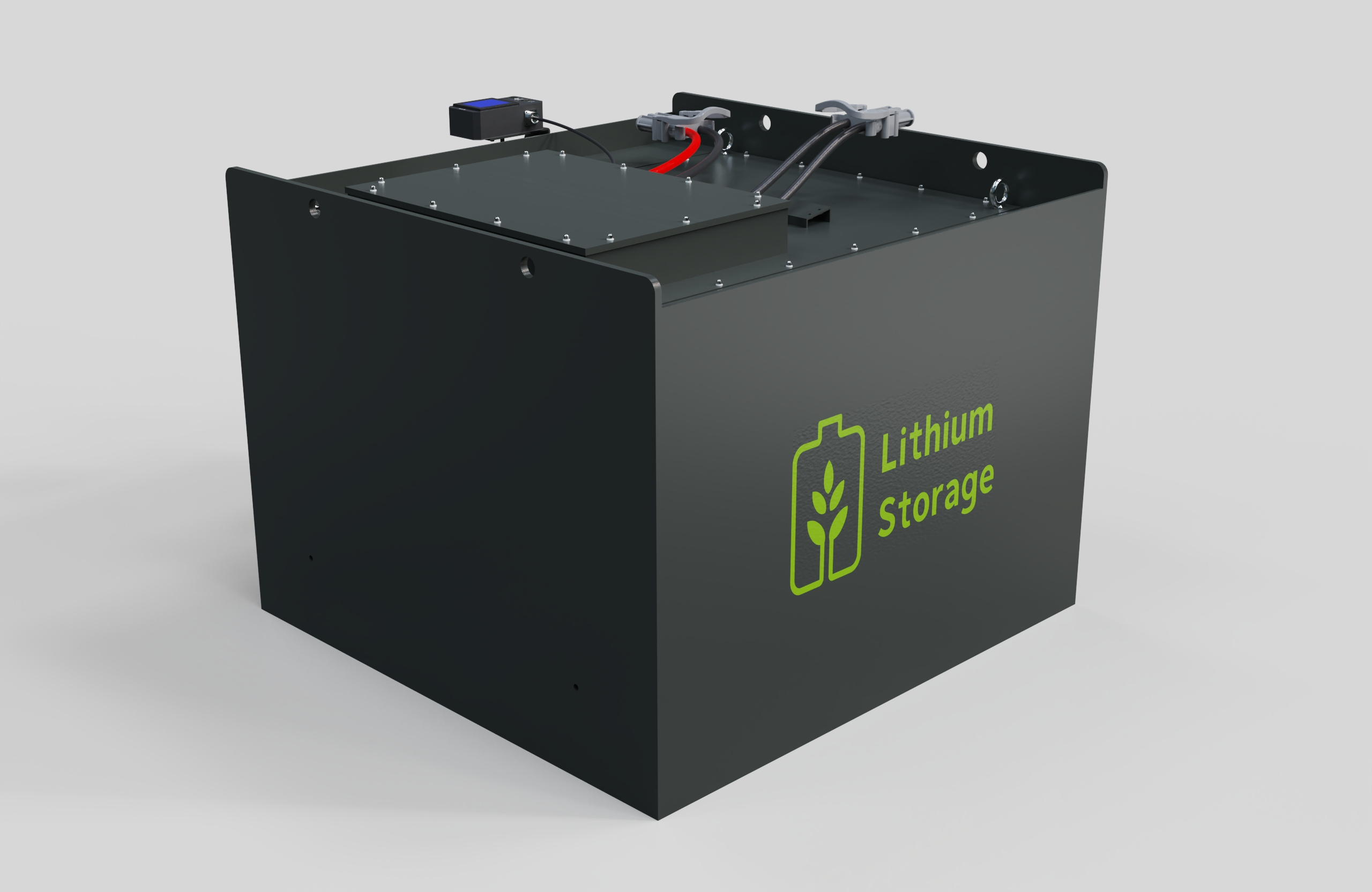
LITHIUM STORAGE develops customizable LiFePO4 forklift batteries for Toyota, Crown, Yale and other material-handling brands. Its Smart FLT range covers 24V, 36V, 48V and 80V-class batteries, with customization of enclosure dimensions, ballast weight, connectors, charging configuration and vehicle communication.
So, which forklift brand benefits most from lithium? For many fleets, Crown has a particularly strong use case in intensive multi-shift and opportunity-charging operations, while Toyota offers broad opportunities across different equipment classes, and Yale increasingly benefits from purpose-built lithium integration.
Toyota vs Crown vs Yale: Quick Comparison
| Factor | Toyota | Crown | Yale |
|---|
| Factory lithium availability | Strong | Strong | Rapidly expanding |
| Opportunity charging | Well suited | Major strength | Well suited |
| Multi-shift operations | Strong fit | Particularly strong fit | Strong fit |
| Integrated battery/truck communication | Available on compatible systems | Strong V-Force integration | Strong integrated battery/charger platform |
| Retrofit opportunity | High across existing fleets | High across warehouse fleets | High, depending on model |
| Main lithium advantage | Broad fleet flexibility | Uptime and opportunity charging | Integrated LFP and space-efficient truck design |
The final decision should still be based on the exact truck model and operating profile.
Why Crown Forklifts Have a Strong Lithium Use Case
Crown places significant emphasis on lithium as part of a complete material-handling energy system rather than treating the battery as an isolated component.
Its V-Force lithium-ion system integrates the forklift, battery, BMS and charger. The truck display can show battery information and event codes, while the charger communicates with the battery management system to control charging.
This integration is particularly relevant for high-throughput warehouses.
Crown specifically positions its lithium-ion systems for multi-shift operations, where batteries can receive frequent opportunity charges during breaks and shift changes. Crown states that this approach can allow one battery to support multiple shifts without the downtime associated with traditional battery swapping.
For operations such as:
a lithium Crown Forklift Battery can therefore deliver value primarily through higher equipment availability.
Crown's Opportunity-Charging Advantage
Consider a forklift operating nearly continuously over two or three shifts.
With conventional lead-acid power, the fleet may require spare batteries, battery-changing equipment and dedicated charging areas.
Crown's lithium approach instead allows operators to charge during normal downtime. The company notes that lithium-ion batteries accept frequent opportunity charging, require no watering and can eliminate the need for battery swapping and dedicated battery rooms in appropriate operations.
For this reason, Crown forklifts working intensive schedules may experience one of the clearest operational benefits from lithium.
Crown Forklift Battery Options for Retrofit Projects
Not every Crown forklift is purchased new with an integrated factory lithium system. Large numbers of existing electric Crown trucks operate with lead-acid batteries, creating an aftermarket lithium replacement opportunity.
LITHIUM STORAGE specifically lists a 36V 684Ah electric forklift battery for Crown forklifts within its Smart FLT range. Its 48V products also include a 48V 560Ah lithium battery intended for brands including Crown and Yale-Hyster.
That does not mean these batteries automatically fit every Crown truck.
An aftermarket Crown Forklift Battery should be matched according to:
Crown model
Original battery voltage
Existing Ah capacity
Battery compartment dimensions
Required battery weight
Continuous and peak current
Power connector
Charger interface
Vehicle communication requirements
For counterbalance models, battery weight deserves particular attention because the battery may contribute to the truck's required counterweight.
How Toyota Benefits from Lithium
Toyota also has a strong lithium strategy.
Toyota currently offers lithium-ion battery configurations in 24V, 36V and 48V classes for compatible material-handling products. Its supported equipment includes products such as the 3-Wheel Electric Forklift, Core Electric Forklift and Stand-Up Rider Forklift.
This creates a broad lithium opportunity because Toyota fleets often include several different types of equipment:
The greatest advantage for a mixed Toyota fleet is therefore not necessarily maximum charging speed. It is the ability to apply lithium across different warehouse functions while reducing reliance on traditional lead-acid maintenance.
Where Toyota Lithium Makes the Most Sense
Toyota forklifts can particularly benefit when the operation has:
Multiple daily shifts.
Opportunity charging can reduce the need for spare batteries.
High battery-maintenance labor.
Lithium eliminates routine watering and conventional lead-acid equalization requirements.
Frequent short idle periods.
Breaks and shift changes become charging opportunities.
Existing electric fleets approaching battery replacement.
A lithium retrofit can sometimes be considered instead of purchasing another lead-acid battery.
However, Toyota stresses compatibility between specific battery systems and truck models, so a lithium conversion should be evaluated using the exact forklift model rather than simply requesting a “Toyota lithium battery.”
Why Yale's Lithium Strategy Is Different
Yale's approach is becoming increasingly interesting because the company is not only offering lithium batteries for existing truck architectures—it is also developing trucks around lithium power.
In June 2026, Yale announced its own LFP lithium-ion forklift batteries and chargers, designed specifically for Yale trucks. Yale emphasizes compatibility between the truck, battery and charger, along with modular capacity options and LFP's thermal-stability and service-life characteristics.
Yale also offers integrated lithium-ion forklifts designed from the beginning around the smaller form factor of lithium batteries. Instead of putting a smaller lithium battery into a traditional lead-acid battery box, Yale can use the reduced battery volume to improve truck packaging, maneuverability and ergonomics on selected models.
This creates an important distinction.
For an existing forklift retrofit, Crown or Toyota may provide very compelling opportunities.
For a new fleet purchase, Yale's integrated lithium architecture may provide additional truck-design benefits that cannot be achieved simply by replacing a lead-acid battery.
Crown vs Toyota vs Yale for Multi-Shift Warehouses
If the main goal is maximizing forklift uptime across multiple shifts, Crown deserves particularly strong consideration.
Its V-Force system is explicitly designed around:
High-rate opportunity charging
Multi-shift operation
Battery-to-truck integration
Battery-to-charger communication
Reduced battery swapping
Lower lead-acid maintenance requirements
Crown also states that properly maintained lithium-ion forklift batteries can offer very long cycling capability and substantially faster charging than lead-acid systems.
Toyota and Yale can achieve similar lithium operational benefits, but Crown has made opportunity charging a particularly central part of its fleet-energy proposition.
For a 24-hour distribution operation, this can make a Crown Forklift Battery upgrade especially attractive.
Which Brand Benefits Most in a Single-Shift Warehouse?
The answer changes for a single-shift operation.
Suppose a forklift works six hours per day and then sits unused overnight.
In this situation, one of lithium's major advantages—rapid opportunity charging—may have less economic value because there is already plenty of time available for overnight charging.
The justification for lithium then shifts toward:
Reduced routine maintenance
Longer battery service life
No watering
Stable voltage during discharge
Reduced battery-room requirements
Future flexibility for additional shifts
Toyota, Crown and Yale can all benefit under these conditions.
The ROI may depend more on the age of the existing lead-acid battery, maintenance labor and planned forklift service life than on the forklift brand itself.
Which Brand Benefits Most from Lithium in New Equipment?
For newly purchased forklifts, Yale has a particularly interesting proposition because some of its integrated lithium trucks are designed around the battery's smaller physical package.
Yale states that these trucks avoid simply placing a lithium battery into a conventional lead-acid battery box. Instead, the truck architecture uses lithium's smaller, lighter form factor to improve packaging and potentially ergonomics and maneuverability.
Crown also offers strong integrated battery, charger and forklift communication through V-Force.
Toyota similarly provides factory-supported lithium batteries for compatible equipment and emphasizes rapid charging and higher energy density.
Therefore, when purchasing a completely new forklift, buyers should compare the entire truck + battery + charger + fleet management system, not battery technology separately.
Which Brand Offers the Best Retrofit Opportunity?
For existing trucks, the equation is different.
The best retrofit candidate is usually a forklift that:
Still has substantial mechanical service life
Uses an aging lead-acid battery
Operates frequently
Has several charging opportunities each day
Accumulates meaningful battery-maintenance costs
Has compatible electrical and communication architecture
LITHIUM STORAGE states that its customizable forklift battery platform supports retrofit applications for Toyota, Crown, Yale, Hyundai, HELI, LINDE, Mitsubishi, NICHIYU, Jungheinrich and other brands.
Its current range includes:
24V systems for compact warehouse equipment, including a 304Ah product listed for Toyota used lift trucks.
36V systems, including a 684Ah battery specifically listed for Crown forklifts.
48V systems, including a 560Ah solution for brands such as Crown and Yale-Hyster.
80V systems for higher-powered electric counterbalance and heavy-duty equipment.
This makes retrofit selection primarily a technical matching problem rather than a brand-ranking exercise.
Do Not Compare Forklift Brands Without Comparing Duty Cycles
Consider three forklifts:
Toyota Forklift A:
One shift, six hours per day, plenty of overnight charging.
Crown Forklift B:
Three shifts, opportunity charging at every break.
Yale Forklift C:
Two shifts, newly purchased as an integrated lithium truck.
The Crown forklift may show the greatest financial improvement from lithium because eliminating battery swaps has immediate productivity value.
The Yale truck may achieve the best overall packaging and vehicle integration because it was designed around lithium from the start.
The Toyota forklift may still benefit substantially, but its ROI may depend more heavily on reduced maintenance and battery replacement cost.
Therefore, asking which brand benefits most is less useful than asking:
Which duty cycle benefits most from lithium?
What to Check Before Ordering a Lithium Replacement
Whether the forklift is Toyota, Crown or Yale, provide the battery manufacturer with complete truck information.
| Information | Why It Matters |
|---|
| Forklift brand/model | Identifies basic compatibility |
| Serial number | Helps distinguish model variants |
| Original voltage | Must match vehicle electrical platform |
| Existing battery Ah | Starting point for capacity selection |
| Battery dimensions | Determines enclosure fit |
| Battery weight | Critical for counterbalance trucks |
| Connector | Determines electrical interface |
| Continuous current | Required for normal operation |
| Peak current | Important during lifting and acceleration |
| CAN protocol | May be required for truck communication |
| Charger | Must match lithium charging requirements |
| Shifts/day | Determines energy requirement |
| Charging breaks | Determines opportunity-charging strategy |
| Temperature | Influences heating/cooling requirements |
A qualified battery supplier should verify these parameters before confirming compatibility.
So, Which Forklift Brand Benefits Most from Lithium?
There is no universal winner, but each brand has a particularly strong lithium use case.
Crown:
A strong candidate for high-utilization and multi-shift warehouses. Crown's V-Force architecture places significant emphasis on integrated BMS/charger communication and opportunity charging, making lithium particularly valuable where eliminating battery changes increases uptime.
Toyota:
A strong choice for mixed fleets covering several equipment classes. Toyota's lithium options span 24V, 36V and 48V configurations for compatible trucks, giving fleet operators substantial flexibility when moving different warehouse functions toward lithium power.
Yale:
Particularly attractive for new equipment designed around lithium. Yale's latest LFP batteries, chargers and integrated lithium trucks emphasize system-level compatibility and use the smaller lithium form factor to improve truck packaging.
For an existing intensive warehouse fleet, Crown may show the most visible productivity benefit when lithium enables opportunity charging and removes battery swapping. But the exact result depends more on operating hours, energy use and charging availability than on the logo on the forklift.
LITHIUM STORAGE supplies customized lithium-ion forklift solutions for all three brands, including specific Crown-compatible 36V and 48V battery configurations. When sourcing a Crown Forklift Battery or lithium replacement for Toyota or Yale equipment, the battery should be matched to the truck's voltage, kWh requirement, peak current, compartment dimensions, counterweight requirement, connectors, CAN communication and charging schedule.
The best lithium upgrade is therefore not the battery designed for the “best” forklift brand. It is the battery system engineered around the forklift's actual duty cycle and integration requirements.
 EN
EN
 fr
fr  de
de  it
it  ru
ru  es
es  pt
pt  tr
tr  jp
jp  ar
ar  th
th 



 No.9 East Mozhou Road, Jiangning District, 211111, Nanjing City, China