Choosing the correct forklift battery voltage is one of the first steps when replacing a lead-acid battery or planning a lithium upgrade for Toyota material-handling equipment. A higher-voltage battery is not automatically more powerful or more suitable. The battery must match the electrical platform of the forklift, including the traction controller, hydraulic system, wiring, contactors, charger, and communication interface.
Toyota currently offers lithium-ion battery solutions in 24V, 36V, and 48V configurations for selected trucks, while Toyota documentation also identifies 48V/80V electric pneumatic forklift platforms. The exact voltage must therefore be confirmed from the truck data plate or manufacturer documentation before any replacement is ordered.
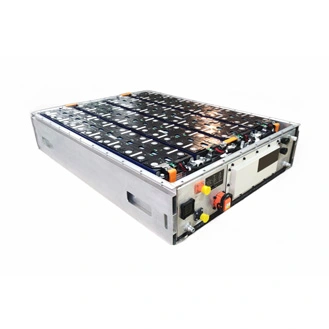
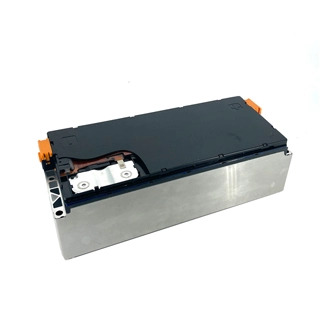
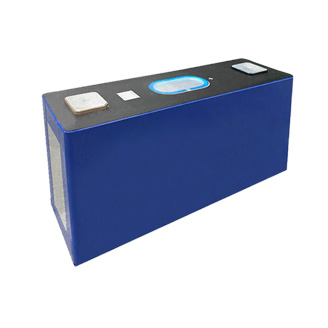
LITHIUM STORAGE supplies 24V, 36V, 48V, and 80V-class LiFePO4 forklift battery systems. Its 48V range includes capacities from 206Ah to 628Ah, with customization for enclosure size, ballast, connectors, charger communication, and vehicle CAN integration.
Why Forklift Battery Voltage Must Match the Truck
Forklift voltage is not simply a battery specification. It is part of the vehicle's complete electrical architecture.
A truck designed for 24V will normally require a 24V-class battery. A 48V forklift should remain on a 48V platform unless the forklift manufacturer approves a complete electrical conversion.
For LiFePO4 systems, the actual nominal battery voltage may appear slightly different from the traditional forklift voltage class:
| Forklift Voltage Class | Typical LiFePO4 Nominal Voltage |
|---|
| 24V | 25.6V |
| 36V | Around 38.4V, depending on design |
| 48V | 51.2V |
| 80V | 83.2V |
These differences are normal. A 51.2V LiFePO4 battery, for example, is commonly used as a 48V Forklift Lithium Battery.
The important rule is that a buyer should never choose an 80V battery for a 48V Toyota forklift simply because the higher voltage appears to offer more power.
24V Toyota Forklift Battery Applications
24V systems are commonly associated with compact warehouse equipment where power demand is relatively moderate.
Examples include:
Toyota's current Order Picker range demonstrates this clearly: two models use 24V batteries, while another high-performance version uses 36V.
A 24V lithium battery is often attractive for light material handling because it can provide:
Fast opportunity charging
Reduced battery maintenance
Compact packaging
Good energy availability for short-distance warehouse work
However, low voltage means more current is required to deliver a given amount of power.
Using the simplified relationship:
Power = Voltage × Current
an 18kW electrical demand would theoretically require approximately:
750A at 24V
500A at 36V
375A at 48V
Actual forklift currents differ because of efficiency, battery voltage under load, controller behavior, and operating conditions, but the calculation illustrates why higher-power trucks tend to use higher-voltage electrical architectures.
36V Toyota Forklift Battery Applications
36V remains important in Toyota warehouse equipment and existing forklift fleets.
Toyota's Core Electric Forklift range, for example, includes models available with 36V or 48V electrical systems, while selected order pickers also use 36V.
36V may be suitable for:
When replacing a 36V lead-acid battery with lithium, retaining the same voltage class is normally the correct approach.
Do not convert an existing 36V truck to 48V simply because 48V lithium batteries are more widely available. The forklift's controller, motors, wiring, display, and charger may not support the higher voltage.
Toyota's own lithium battery portfolio currently includes 36V configurations alongside 24V and 48V systems.
Why 48V Is Important for Electric Forklifts
48V is one of the most common voltage classes for medium-duty electric forklifts.
It provides a useful balance between available power and manageable current, making it suitable for equipment such as:
Electric counterbalance forklifts
Reach trucks
Stand-up riders
Tow tractors
Medium-duty warehouse forklifts
Equipment with more demanding traction or hydraulic loads
Toyota's Core Electric Forklift demonstrates how voltage can affect vehicle performance. Several models are available in both 36V and 48V configurations, with the 48V versions showing higher travel and lift speeds in Toyota's published specifications.
This does not mean a 36V truck can simply be upgraded to 48V. It means Toyota engineered specific vehicle configurations around each voltage platform.
LITHIUM STORAGE 48V Forklift Battery Options
For buyers sourcing a 48V Forklift Lithium Battery, LITHIUM STORAGE currently offers the following 51.2V configurations:
| Nominal Voltage | Capacity | Approx. Nominal Energy |
|---|
| 51.2V | 206Ah | 10.55kWh |
| 51.2V | 228Ah | 11.67kWh |
| 51.2V | 314Ah | 16.08kWh |
| 51.2V | 412Ah | 21.09kWh |
| 51.2V | 456Ah | 23.35kWh |
| 51.2V | 560Ah | 28.67kWh |
| 51.2V | 628Ah | 32.15kWh |
LITHIUM STORAGE's Smart FLT 48V platform also includes support for GPS/GPRS, charger communication commissioning, connector adaptation, integrated displays, additional ballast, IP54 enclosure design, and vehicle CAN communication.
The battery capacity should be selected around actual forklift energy consumption rather than simply choosing the highest available Ah rating.
How Much 48V Battery Capacity Do You Need?
LITHIUM STORAGE provides a general capacity guide based on operating intensity:
Single-shift operation:
Approximately 205–304Ah may suit a standard eight-hour operating day where opportunity charging is available.
Double-shift operation:
Approximately 410–560Ah can provide additional energy for longer operation and charging between shifts.
Triple-shift or 24-hour operation:
Approximately 608Ah and above may be considered for intensive operations such as automotive manufacturing, 3PL logistics, and high-throughput distribution centers.
These figures are starting points, not universal rules.
A Toyota forklift working eight hours with light loads may consume significantly less energy than another truck operating the same hours while continuously lifting heavy pallets or climbing ramps.
Capacity selection should therefore consider:
What About 80V Toyota Forklifts?
80V is normally associated with higher-power electric forklift platforms and demanding material-handling applications.
Toyota documentation includes a specific 48/80V Electric Pneumatic data-plate category, confirming that Toyota has forklift platforms where these higher electrical classes are relevant.
An 80V battery system can be useful where a forklift has:
At the same power level, an 80V system can operate at lower current than a 48V system, which can influence cable, connector, busbar, controller, and thermal design.
However, Toyota's current branded lithium-ion battery offering publicly lists 24V, 36V, and 48V configurations, not a universal 80V lithium retrofit option.
Therefore, buyers should not assume that an aftermarket 80V lithium battery is automatically approved for every Toyota 80V truck. Compatibility needs to be checked against the exact model.
48V vs 80V: Higher Voltage Is Not Automatically Better
A frequent purchasing mistake is assuming that 80V is simply a stronger version of 48V.
In reality, each voltage serves a different vehicle architecture.
| Comparison | 48V System | 80V System |
|---|
| Typical LFP nominal voltage | 51.2V | 83.2V |
| Typical use | Medium-duty warehouse and counterbalance forklifts | Higher-demand counterbalance and intensive equipment |
| Current at same power | Higher | Lower |
| LITHIUM STORAGE capacity range | 206–628Ah | 314–840Ah |
| Charger | Dedicated 48V lithium charger | Dedicated 80V lithium charger |
| Directly interchangeable | No | No |
LITHIUM STORAGE specifically emphasizes that 48V and 80V batteries are not direct substitutes. The forklift's original electrical platform should determine the battery voltage.
Voltage Does Not Determine Runtime by Itself
Another common misconception is that a 48V battery automatically lasts twice as long as a 24V battery.
Runtime depends primarily on usable energy and forklift consumption.
Battery energy is calculated approximately as:
Voltage × Ah ÷ 1,000 = kWh
For example:
25.6V × 456Ah ≈ 11.67kWh
51.2V × 228Ah ≈ 11.67kWh
These batteries have very different voltage and Ah ratings but approximately the same nominal stored energy.
Their runtime would still differ if installed in different forklifts because the trucks have different weights, motors, loads, hydraulic demand, and operating profiles.
This is why buyers should compare kWh and workload, not Ah alone.
Battery Weight Is Especially Important on Toyota Counterbalance Forklifts
Voltage compatibility does not guarantee mechanical compatibility.
Toyota explains that battery weight is an important data-plate specification because the battery contributes to the overall truck weight and, on many counterbalance forklifts, to vehicle stability.
Toyota's current lithium batteries incorporate built-in counterweight and adjustable spacer features to meet truck weight and compartment requirements.
For an aftermarket lithium replacement, buyers should therefore provide:
Battery compartment length
Width
Height
Existing battery weight
Minimum permitted battery weight
Maximum permitted battery weight
Cable outlet position
Battery removal direction
LITHIUM STORAGE's 48V Smart FLT platform can be supplied with additional ballast and customized enclosures for different forklift installations.
Charger Compatibility Changes with Voltage
Every voltage class requires an appropriate charger.
A 48V lithium forklift battery requires a charger configured for the battery's voltage, maximum current, chemistry, connector, and BMS communication.
Toyota currently offers lithium chargers compatible with its 24V, 36V, and 48V batteries, with charger output options from 120A to 540A depending on configuration.
LITHIUM STORAGE likewise offers dedicated lithium chargers for its 24V, 48V, and 80V systems.
When converting from lead-acid to lithium, do not automatically reuse the original charger merely because the nominal voltage appears correct.
Confirm:
Check CAN Communication Before Replacing the Battery
Modern Toyota forklifts may exchange operating information with the battery and charger.
Toyota's current 8/50 lithium batteries use a BMS that communicates critical battery information to compatible Toyota forklifts and chargers.
An aftermarket lithium battery may therefore need to support:
SOC communication
Battery temperature data
Fault status
Charge permission
Current limits
Charger communication
LITHIUM STORAGE lists vehicle CAN communication and charger communication commissioning as part of its 48V Smart FLT capabilities.
This compatibility should be confirmed for the specific Toyota model before the battery is manufactured.
How to Identify the Correct Toyota Forklift Voltage
The safest starting point is the forklift data plate.
Toyota's data-plate guidance shows that electric truck plates may include:
For Toyota sit-down electric pneumatic trucks, Toyota specifically identifies 48/80V Electric Pneumatic battery information on the data plate.
Before requesting a quotation, send the battery supplier:
This is much more reliable than ordering a battery only by forklift brand.
Which Toyota Forklift Battery Voltage Should You Choose?
The answer is straightforward:
Choose the voltage specified for the exact forklift.
Use 24V when the Toyota truck is built around a 24V electrical platform, typically in lighter warehouse equipment.
Use 36V where the existing Toyota model specifies 36V, including selected order-picking and electric forklift platforms.
Use 48V for Toyota models designed around a 48V system, particularly medium-duty electric counterbalance and warehouse forklifts.
Use 80V only where the exact Toyota truck is engineered for an 80V electrical platform and compatibility with the proposed lithium battery has been verified.
For buyers specifically looking for a 48V Forklift Lithium Battery, LITHIUM STORAGE offers 51.2V LiFePO4 systems from 206Ah to 628Ah, together with customized enclosures, ballast, connectors, charger commissioning, and CAN communication support.
The correct selection process is therefore:
Confirm forklift voltage → calculate required kWh → check current demand → measure battery compartment → verify battery weight → match connectors and CAN communication → select the lithium charger.
Following this process helps ensure that a Toyota forklift lithium upgrade is based on real electrical and operational compatibility rather than simply choosing a higher-voltage or larger-capacity battery.
 EN
EN
 fr
fr  de
de  it
it  ru
ru  es
es  pt
pt  tr
tr  jp
jp  ar
ar  th
th 



 No.9 East Mozhou Road, Jiangning District, 211111, Nanjing City, China