Replacing a lead-acid battery in a Toyota electric forklift with a lithium-ion system can reduce routine maintenance, shorten charging time, and support opportunity charging during breaks. However, a lithium conversion is not a simple battery swap. The replacement must match the forklift's voltage, battery compartment, required counterweight, discharge current, connector arrangement, communication system, and charger.
Toyota itself notes that only specific lithium-ion battery brands and models are compatible with specific Toyota material-handling products. Its current lithium solutions include 24V, 36V, and 48V configurations, demonstrating that compatibility must be evaluated at the individual truck level rather than assuming that one lithium battery fits every Toyota forklift.
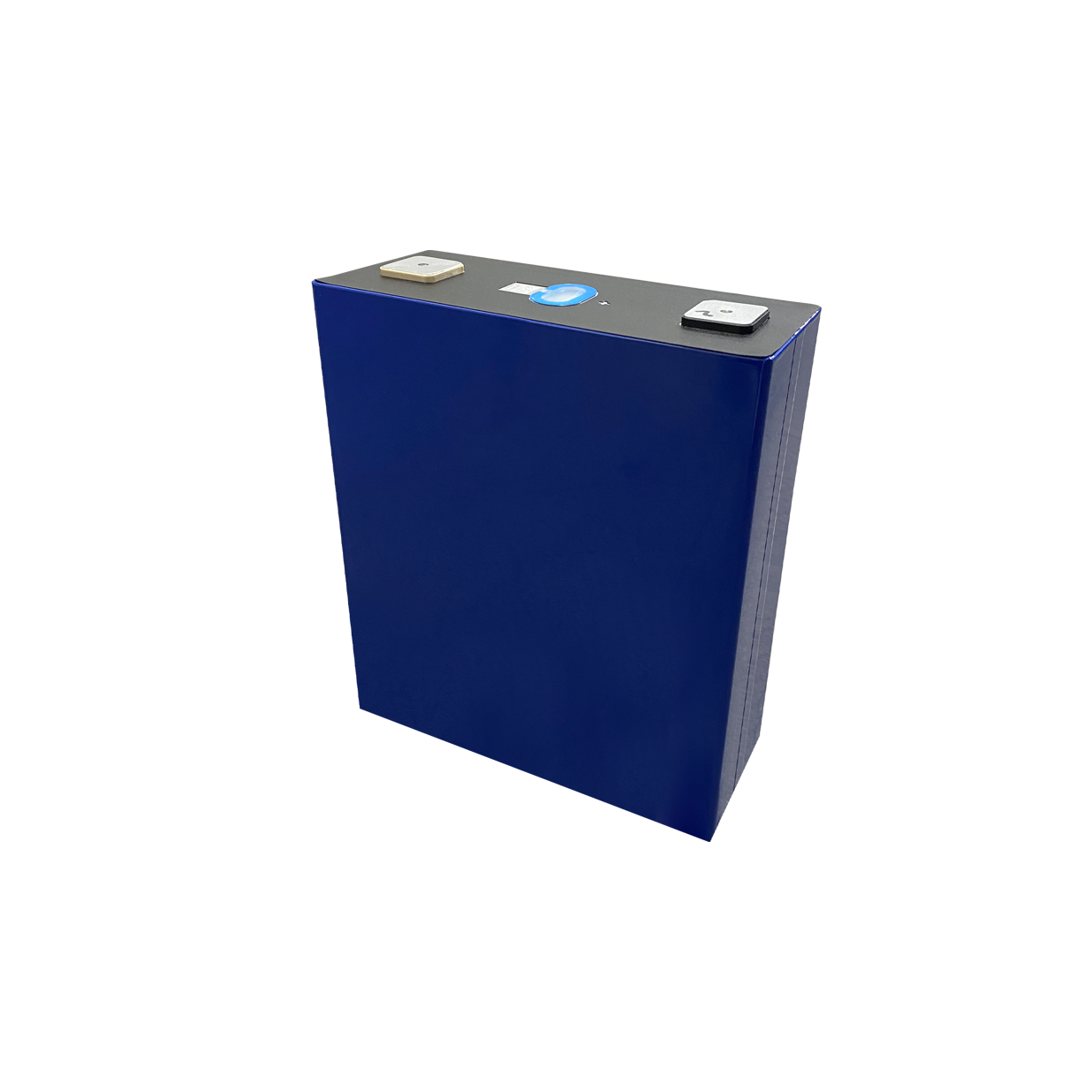
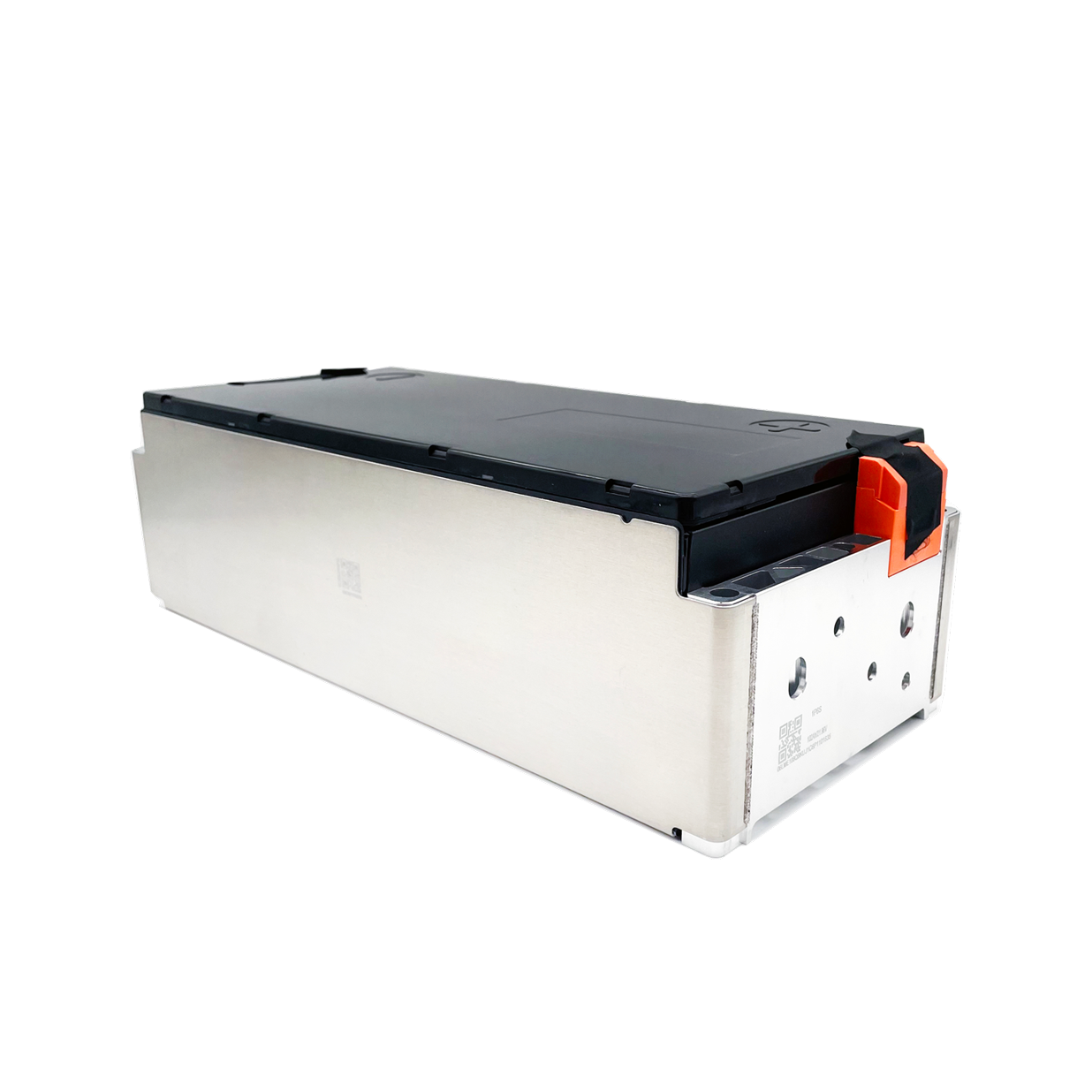
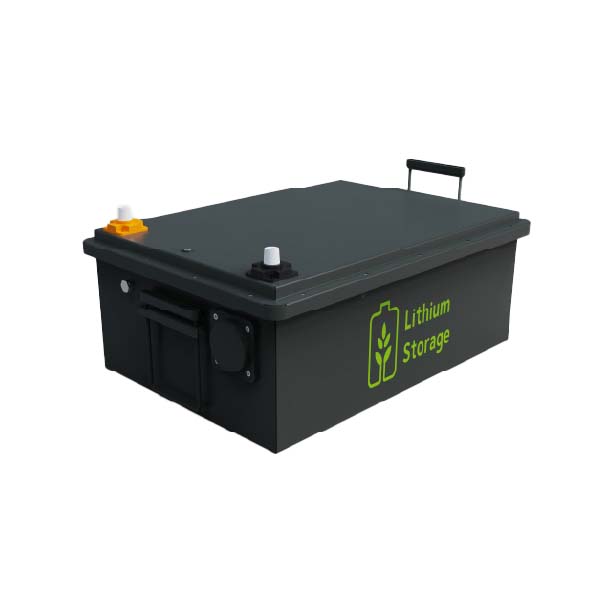
LITHIUM STORAGE provides customizable LiFePO4 forklift batteries for Toyota and other material-handling brands. The company states that it began supplying LFP205Ah and LFP280Ah cells for Toyota forklift electrification projects in 2018 and now offers customized battery enclosures, additional weight, connectors, charger communication, and vehicle CAN integration.
Step 1: Identify the Exact Toyota Forklift
Before selecting a lithium battery, identify the exact truck.
Record:
Toyota emphasizes that the model and serial number on the forklift data plate are important when identifying replacement components and obtaining technical assistance.
Do not request a replacement simply as a “Toyota 48V battery.” Two Toyota forklifts using the same voltage may have different compartment dimensions, battery-weight requirements, cable positions, and communication systems.
For a Forklift Battery Manufacturer, the truck data plate and existing battery label are the starting points for evaluating compatibility.
Step 2: Keep the Original Forklift Voltage
A lithium upgrade normally retains the voltage class specified by Toyota.
Typical electric forklift battery classes include:
24V for pallet trucks and compact warehouse equipment
36V for some reach trucks and existing fleets
48V for many electric counterbalance and warehouse forklifts
Higher-voltage platforms for selected heavy-duty equipment
LiFePO4 batteries may be labeled 25.6V, 38.4V, 51.2V, or 83.2V while corresponding to traditional 24V, 36V, 48V, and 80V forklift classes.
Do not replace a 48V battery with an 80V battery simply to obtain more power. The forklift controller, traction motor, hydraulic system, wiring, instruments, contactors, and charger are designed around a defined voltage range. A voltage conversion requires a broader engineering review rather than a battery-only replacement.
Step 3: Size the Lithium Battery Around Actual Energy Use
The existing lead-acid Ah rating can provide a reference, but it should not be the only basis for selecting lithium capacity.
Battery energy can be estimated using:
Nominal energy (kWh) = nominal voltage × capacity (Ah) ÷ 1,000
For example:
51.2V × 456Ah = 23.35kWh
The required capacity then depends on how much energy the Toyota forklift actually consumes.
Consider:
An undersized battery may require excessive charging and operate repeatedly at low SOC. An unnecessarily large battery increases cost and may create dimensional or weight problems.
For multi-shift fleets, the Forklift Battery Manufacturer should evaluate battery capacity together with opportunity charging rather than automatically specifying enough capacity for an entire day without charging.
Step 4: Measure the Battery Compartment Carefully
Lithium batteries are not necessarily the same physical size as the lead-acid batteries they replace.
Measure:
Length
Width
Height
Maximum allowable battery height
Clearance above the battery
Cable outlet location
Connector position
Battery removal direction
Restraint points
Lifting or fork-access requirements
Even a small dimensional mismatch can cause installation problems. A battery that is too tall may interfere with the seat or battery cover, while an incorrectly positioned cable outlet can create excessive bending or abrasion.
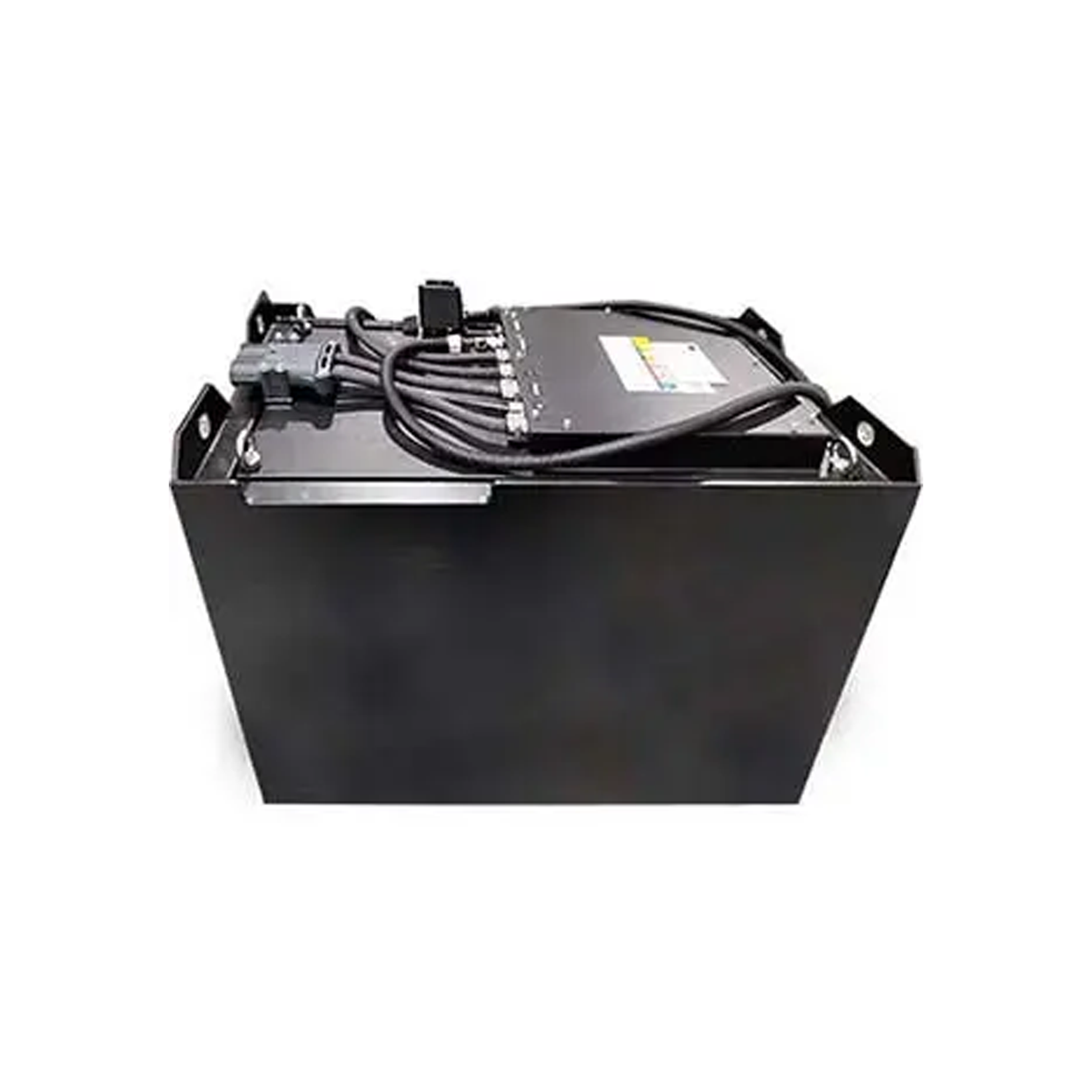
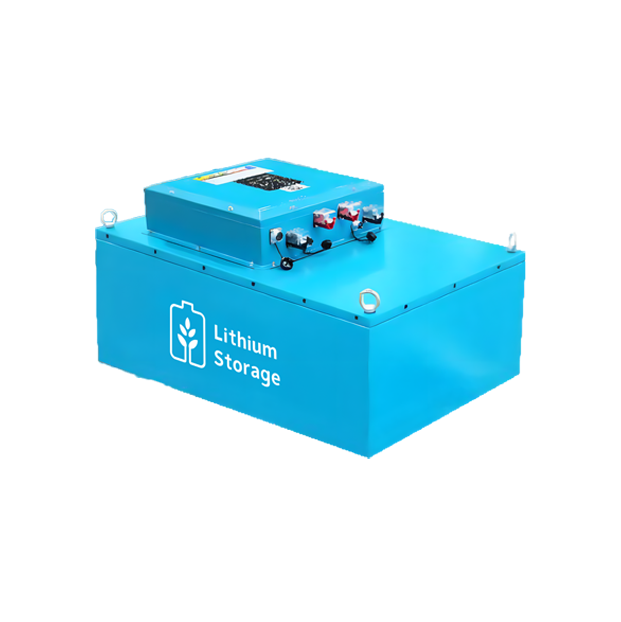
LITHIUM STORAGE uses an inner battery pack plus customizable outer enclosure approach. The internal energy-storage structure can be combined with different external boxes and additional weight to adapt the battery to different forklift models.
This type of customization is particularly useful when converting an existing Toyota lead-acid forklift rather than designing a new truck around a lithium pack.
Step 5: Do Not Ignore Battery Weight
Lithium batteries are normally lighter than comparable lead-acid batteries, but in a counterbalance forklift, lower weight is not necessarily an advantage.
The original battery may form part of the forklift's counterweight.
If the lithium replacement is significantly lighter, it can affect:
Toyota's own lithium battery systems use built-in counterweights and adjustable spacers to meet truck weight and compartment requirements.
A customized replacement should therefore confirm:
Existing battery weight → minimum permitted battery weight → maximum permitted battery weight → required ballast
LITHIUM STORAGE similarly uses additional-weight customization in its forklift battery systems.
Do not assume that the lightest possible lithium replacement is the best choice for a Toyota counterbalance forklift.
Step 6: Confirm Continuous and Peak Current
A battery may provide enough kWh for an entire shift but still be unable to deliver the power required during heavy operation.
High-current events occur during:
Before approving a lithium conversion, confirm:
This is particularly important for larger Toyota electric counterbalance trucks.
A qualified Forklift Battery Manufacturer should match both energy capacity and power capability to the forklift duty cycle.
Step 7: Match the Connector and Cable Arrangement
The power connector should not be treated as a minor accessory.
Confirm:
Connector manufacturer and model
Connector current rating
Positive/negative contact arrangement
Cable cross-section
Cable length
Cable outlet direction
Charging and discharge port configuration
Photographs are useful, but connector identification and dimensions are better.
LITHIUM STORAGE includes charge and discharge connector adaptation among its Toyota-compatible forklift battery customization capabilities.
The connector should also be inspected during installation. Existing truck-side connectors that are worn, burned, loose, or undersized should be corrected rather than simply connected to the new battery.
Step 8: Verify CAN Communication
Modern Toyota forklifts may exchange information with the battery rather than treating it as a simple DC power source.
Possible communication data can include:
State of charge
Battery temperature
Fault status
Current limits
Charging permission
Drive-away protection
Toyota's lithium battery systems use a BMS that communicates critical information with compatible forklifts and chargers.
For an aftermarket conversion, determine whether the exact Toyota model requires:
Vehicle CAN communication
Charger CAN communication
SOC display integration
Specific communication protocol
Charging interlock
LITHIUM STORAGE lists vehicle CAN support and charger communication commissioning among its Smart FLT functions.
Compatibility should be confirmed before production, not after the battery arrives at the warehouse.
Step 9: Replace or Verify the Charger
Do not automatically reuse the original lead-acid charger.
Lithium batteries require a compatible charging profile, voltage range, maximum current, connector, and often BMS communication.
Toyota's current lithium chargers use BMS-controlled charging and are available in different voltage and current combinations to suit different operating requirements.
A lithium conversion should therefore evaluate:
Battery capacity + maximum charge current + charging window + facility AC supply = required charger
For example, a single-shift forklift with several hours of overnight downtime may not need an extremely high-current charger.
A multi-shift forklift with only short lunch and shift-change charging windows may require substantially more charging power.
LITHIUM STORAGE's lithium forklift platform supports fast charging and states that suitable configurations can reach approximately 80% SOC within one hour. Actual charging time depends on battery capacity, starting SOC, charger power, temperature, and BMS limits.
Step 10: Plan Opportunity Charging Before Installation
One of the main reasons to convert a Toyota forklift to lithium is the ability to charge during normal downtime.
Typical opportunities include:
Coffee breaks
Lunch periods
Shift changes
Loading delays
Overnight parking
But the charging schedule should be calculated rather than assumed.
A simple energy check is:
Starting usable energy + energy restored during breaks ≥ daily energy consumption + reserve
If the forklift consumes more energy than the charger can replenish during available breaks, the battery SOC will continue falling even though operators are opportunity charging.
Toyota itself uses operational data such as runtime, idle time, available charge, and amp-hour usage when evaluating lithium battery and charging requirements for fleets.
Step 11: Install and Commission the Lithium Battery
Battery replacement should be carried out by appropriately trained personnel following forklift and battery manufacturer requirements.
Commissioning should verify:
Correct battery voltage
Correct polarity
Secure mechanical fit
Required battery weight
Proper restraints
Connector engagement
CAN communication
SOC display
Charger communication
BMS fault status
Charging operation
Traction operation
Hydraulic operation
The truck should also be tested under representative operating loads rather than checking only whether it powers on.
For a Toyota forklift conversion, installation is not complete until the battery, truck, and charger operate correctly as one system.
Step 12: Monitor the First Weeks of Operation
After conversion, monitor actual fleet performance.
Useful data includes:
SOC at start and end of each shift
Daily energy consumption
Maximum battery temperature
Charging time
Energy restored during opportunity charging
BMS alarms
Peak current
Operator feedback
Remaining SOC before each charging period
Toyota notes that energy studies may collect operational data over several weeks to understand truck usage before making battery and charging recommendations.
The same principle is useful after conversion. If the battery repeatedly reaches low SOC before the end of the shift, capacity or charging infrastructure may need adjustment.
Lead-Acid to Lithium Conversion Checklist
| Item | What to Confirm |
|---|
| Forklift | Toyota model and serial number |
| Voltage | Same electrical class as the original truck |
| Capacity | Based on actual daily energy consumption |
| Current | Continuous and peak power requirements |
| Dimensions | Exact battery compartment fit |
| Weight | Within Toyota's required battery-weight range |
| Connector | Model, current rating and cable arrangement |
| Communication | Vehicle and charger CAN requirements |
| Charger | Lithium-compatible voltage, current and protocol |
| Temperature | Standard, hot or cold-storage conditions |
| Charging strategy | Single shift, opportunity charging or multi-shift |
| Commissioning | Truck, battery and charger tested together |
Is Every Toyota Forklift Suitable for a Lithium Upgrade?
No.
Toyota explicitly states that only specific lithium battery brands and models are compatible with specific Toyota material-handling products.
For an existing truck, compatibility should be confirmed before ordering. Older forklifts, modified electrical systems, unusual battery compartments, or models with specific communication requirements may require additional engineering.
For this reason, avoid purchasing a battery solely because a seller describes it as “compatible with Toyota.”
Compatibility should mean that the supplier has verified:
model + voltage + dimensions + weight + current + connector + communication + charger.
What to Send a Forklift Battery Manufacturer
To obtain a useful lithium-conversion proposal, send:
Toyota model and serial number
Forklift data-plate photo
Existing battery-label photo
Existing battery dimensions
Existing battery weight
Minimum battery weight
Battery voltage and Ah
Connector details
Current charger specification
Daily operating hours
Number of shifts
Typical load
Available charging periods
Working temperature
Any known CAN communication requirements
Providing these details allows the Forklift Battery Manufacturer to design a replacement around the actual Toyota forklift rather than supplying a generic battery.
LITHIUM STORAGE offers customizable LiFePO4 forklift battery systems across 24V, 36V, 48V and 80V classes, with adaptation options for battery enclosures, additional weight, connectors, charger communication and vehicle CAN. Its retrofit portfolio includes Toyota among the supported forklift brands.
A Successful Toyota Lithium Upgrade Starts with Compatibility
Replacing a Toyota lead-acid forklift battery with lithium can provide faster charging, opportunity charging, reduced routine maintenance and longer cycle life. LITHIUM STORAGE states that its lithium forklift solutions offer 3–4 times the cycle life of conventional lead-acid batteries, eliminate watering and routine equalization, and support faster charging.
However, these benefits depend on selecting the right system.
The correct conversion process is:
Identify the Toyota model → confirm voltage → calculate energy requirement → measure the compartment → match battery weight → verify current capability → adapt connectors → confirm CAN communication → match the charger → install and commission → monitor actual operation.
Working with a Forklift Battery Manufacturer that can engineer the enclosure, ballast, electrical connections, BMS communication, and charging system around the specific Toyota forklift helps turn a lithium conversion into a reliable operational upgrade rather than a compatibility problem.
 EN
EN
 fr
fr  de
de  it
it  ru
ru  es
es  pt
pt  tr
tr  jp
jp  ar
ar  th
th 



 No.9 East Mozhou Road, Jiangning District, 211111, Nanjing City, China