LiFePO4 forklift battery usually costs more upfront than a conventional lead-acid battery. However, the purchase price represents only one part of the total cost of powering a forklift fleet.
The total cost of ownership, or TCO, includes the battery, charger, electricity, maintenance labor, battery changing, replacement batteries, charging space, downtime and productivity losses over the equipment’s working life.
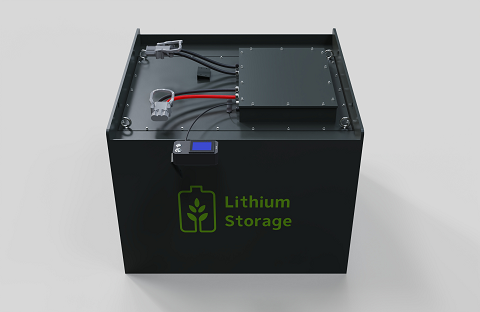
For suitable warehouse and industrial operations, a LiFePO4 Forklift Battery can reduce these ongoing costs through opportunity charging, minimal routine maintenance, longer service life, consistent power delivery and integrated battery management. The financial benefit is generally strongest in fleets operating multiple shifts, accumulating high annual hours or spending significant labor on lead-acid battery maintenance.
What Is Included in Forklift Battery TCO?
A meaningful cost comparison should include all expenses incurred from purchase through replacement.
A basic TCO calculation can be expressed as:
Battery TCO = Initial investment + charging infrastructure + energy cost + maintenance + labor + downtime + replacement cost − residual value
The following items should be included:
| Cost Category | Questions to Consider |
|---|
| Initial battery cost | How many batteries are required for each forklift? |
| Charger cost | Is a new lithium-compatible charger required? |
| Energy consumption | How much electricity is consumed during charging? |
| Battery maintenance | Is watering, equalization or cleaning required? |
| Battery-changing labor | How often are batteries exchanged between shifts? |
| Battery room | Is dedicated charging, storage or ventilation space needed? |
| Replacement frequency | How long will the battery remain useful in the actual application? |
| Downtime | How much operating time is lost to charging, swapping or maintenance? |
| Productivity | Does battery performance decline during the shift? |
| Technical support | Are diagnostics, monitoring and replacement parts available? |
Looking only at the purchase price can make lead-acid batteries appear less expensive. Calculating the complete operating cost can produce a different result, especially in demanding multi-shift fleets.
LiFePO4 vs Lead-Acid Forklift Battery Cost Factors
| Cost Factor | LiFePO4 Forklift Battery | Flooded Lead-Acid Battery |
| Initial purchase price | Usually higher | Usually lower |
| Routine watering | Not required | Required |
| Equalization charging | Not normally required | Required according to battery maintenance practices |
| Acid and corrosion cleaning | Not required under normal use | Can be required |
| Opportunity charging | Well suited when paired with the correct charger | Requires careful charging management |
| Battery changing | Frequently avoidable | Often required in multi-shift fleets |
| Battery room requirements | Can be reduced | Multiple batteries can require charging and storage space |
| Power during discharge | More consistent | Voltage and performance decline as discharge progresses |
| Battery management | Integrated BMS | Usually relies more heavily on external maintenance and charging controls |
| Initial charger investment | Lithium-compatible charger required | Existing lead-acid charger can often be retained |
| Long-term cost suitability | Strongest in intensive operations | Can remain economical in light-use operations |
The correct choice still depends on the number of forklifts, annual operating hours, shift pattern, electricity price and available charging schedule.
1. Eliminating Routine Watering and Equalization
Flooded lead-acid forklift batteries require regular watering, cleaning and charging management. These tasks consume labor and must be performed correctly to avoid reduced battery performance, corrosion and premature failure.
LiFePO4 batteries are sealed systems and do not require routine watering or equalization charging. Toyota and Hyster both identify the removal of watering, equalization and regular battery cleaning as important operational advantages of lithium-ion forklift batteries.
Removing these tasks can reduce costs associated with:
Maintenance labor
Watering equipment
Battery inspection records
Protective equipment
Acid-spill management
Corrosion cleaning
Operator training for battery care
Maintenance-related truck downtime
The savings depend on how much time the fleet currently spends maintaining lead-acid batteries. A small fleet with low annual use will save less than a large operation maintaining dozens of batteries every week.
2. Reducing Battery-Change Labor
A conventional multi-shift forklift operation can require a discharged lead-acid battery to be removed and replaced with a charged battery.
Battery changing can involve:
Driving the truck to the battery room
Waiting for battery-changing equipment
Disconnecting the discharged battery
Removing and storing the battery
Installing a charged replacement
Checking the connector and restraint system
Returning the truck to operation
The process consumes paid operator time even when it runs efficiently. It also requires battery handling equipment and introduces a period when the forklift cannot perform productive work.
LiFePO4 batteries can be charged during scheduled breaks without being removed from the forklift. In suitable operations, this allows one battery to remain in the truck across multiple shifts and reduces or eliminates routine battery exchanges.
Battery-Change Labor Formula
Annual battery-changing labor can be estimated as:
Number of changes per day × minutes per change ÷ 60 × operating days × labor cost per hour
For example, assume that a fleet performs 10 battery changes per day and each complete change takes 15 minutes:
10 × 15 ÷ 60 = 2.5 labor hours per day
Over 300 operating days, this represents:
2.5 × 300 = 750 labor hours per year
This is an illustrative calculation. Buyers should replace these assumptions with measured times from their own battery room.
3. Reducing the Number of Batteries Required
A multi-shift lead-acid operation can require more than one battery for each forklift so that one battery operates while another charges or cools.
Opportunity charging changes this arrangement. Operators can connect a LiFePO4 battery during:
Meal breaks
Shift changes
Scheduled rest periods
Production pauses
Loading-dock downtime
Cleaning periods
Depending on energy consumption and charger output, one lithium battery can support a forklift over two or three shifts without being removed. Hyster notes that this arrangement can replace multiple lead-acid batteries in suitable applications while freeing charging and storage space.
This can reduce capital expenditure on:
Spare traction batteries
Battery stands
Battery-changing equipment
Handling accessories
Battery-room infrastructure
Replacement batteries held in reserve
It does not mean that one LiFePO4 battery will always replace two or three lead-acid batteries. The result depends on the forklift’s energy consumption, battery capacity, charger size and available charging windows.
4. Recovering Productive Operating Time
Downtime is often one of the largest hidden costs in forklift battery ownership.
A forklift can stop producing value while:
Waiting for a charged battery
Undergoing battery replacement
Receiving battery maintenance
Completing an extended charging cycle
Cooling after lead-acid charging
Experiencing reduced performance at a low state of charge
LiFePO4 batteries support rapid and intermediate charging without requiring routine battery exchanges. Toyota states that lithium-ion forklift batteries charge faster than conventional lead-acid batteries and do not require a charging cool-down period.
The resulting savings can appear in two ways:
The fleet completes more work with the same number of forklifts.
The operation avoids purchasing additional forklifts to compensate for charging downtime.
The second benefit can be more valuable than the battery savings themselves. When greater truck availability allows a business to avoid adding one extra forklift, the avoided cost can include the truck, battery, charger, insurance, maintenance and floor space.
5. Maintaining More Consistent Forklift Performance
Battery-related TCO includes productivity, not only direct maintenance expenses.
Lead-acid battery voltage gradually decreases as the battery discharges. This can reduce forklift travel speed, acceleration and hydraulic response toward the end of the shift.
Lithium-ion batteries provide more consistent voltage and power through their usable state-of-charge range. Toyota identifies consistent power delivery as one of the operational differences between lithium-ion and lead-acid forklift batteries.
More stable performance can help operations maintain:
Predictable travel cycles
Consistent lifting speed
Reliable ramp performance
More uniform pallet throughput
Better shift planning
Reduced pressure to replace a partially discharged battery
The value of this benefit is highest in high-throughput warehouses where a small reduction in each handling cycle becomes significant across thousands of daily movements.
6. Extending the Battery Replacement Interval
Battery replacement frequency has a direct effect on TCO.
A longer usable service life can reduce:
The number of batteries purchased during the forklift’s life
Installation and commissioning expenses
Disposal and recycling coordination
Production interruptions during replacement
Procurement and administrative costs
LiFePO4 chemistry is used in material-handling applications because it supports frequent charging, high cycle use and long operating life when correctly sized and managed. Hyster’s current integrated forklift battery systems use lithium iron phosphate chemistry for fast charging, temperature tolerance and multi-shift applications.
However, buyers should not compare cycle-life claims without examining the test conditions.
Ask the supplier to state:
Depth of discharge used in the test
Charging and discharging rate
Test temperature
Remaining capacity used to define end of life
Whether the result refers to cells or the complete battery pack
Expected annual operating hours
Warranty limits
A battery advertised for a high number of cycles can still deliver poor value if it is undersized, overheated or charged with incompatible equipment.
7. Reducing Battery-Room Space and Equipment Costs
Lead-acid fleets operating multiple shifts can require dedicated areas for:
When LiFePO4 batteries remain installed in the forklifts and are charged near the work area, part of this dedicated battery-room space can be reduced or reassigned.
Potentially avoidable infrastructure includes:
Toyota notes that reducing the need for spare batteries and battery exchanges can also reduce the storage space and labor associated with lead-acid fleet operation.
The financial value depends on the facility. Recovered floor space can be especially valuable in high-rent warehouses or operations where expansion is limited.
8. Reducing Charging-Related Energy Losses
Electricity cost is determined by more than the battery’s rated capacity.
Fleet energy cost depends on:
Energy consumed by the forklift
Charger efficiency
Battery charging efficiency
Equalization requirements
Battery temperature
Charging behavior
Utility rates
Peak-demand charges
Charger power factor
Energy lost during cooling or overcharging
LiFePO4 systems do not require routine equalization charging, eliminating one energy-consuming process associated with flooded lead-acid battery maintenance. Their charging schedule can also be organized around planned breaks and lower-cost electricity periods where utility pricing allows.
Annual charging cost can be estimated as:
Annual battery energy input × electricity cost per kWh
A more complete calculation should include:
Forklift energy demand ÷ combined battery and charger efficiency
Do not accept a general claim that lithium will reduce electricity costs by a fixed percentage. Actual savings should be calculated using charger data and measured fleet energy consumption.
9. Preventing Damage Through the Battery Management System
A LiFePO4 forklift battery normally includes an integrated battery management system.
The BMS monitors operating conditions such as:
It can reduce or interrupt charging and discharging when the battery approaches its programmed limits.
This helps protect the battery from conditions that can shorten its service life, including:
Overcharging
Excessive discharge
Overcurrent
Short circuit
High temperature
Low-temperature charging
Cell imbalance
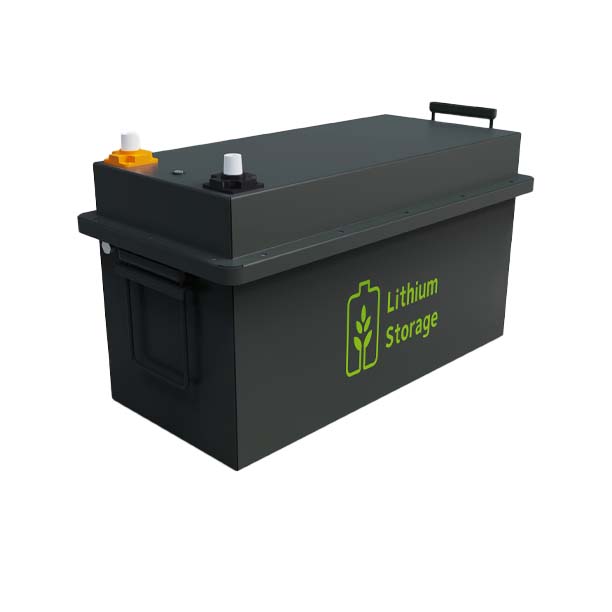
LITHIUM STORAGE states that its forklift battery systems use BMS monitoring and protection and offer communication commissioning, connector adaptation and remote or onsite support.
The BMS does not eliminate the need for correct battery sizing. Repeatedly triggering current or temperature protection can indicate that the battery is too small, the charger is incompatible or the application exceeds the approved design.
10. Using Remote Data to Reduce Unplanned Downtime
Connected battery systems can provide operating data to fleet managers and technical support teams.
Depending on the system, monitored data can include:
State of charge
Battery voltage
Cell temperature
Current
Charging history
Operating hours
Fault records
Battery location
Software status
Remote diagnostics can help identify abnormal operation before it results in extended downtime. It can also reduce the time required to determine whether a problem comes from the battery, charger, connector or forklift.
This can lower service costs by supporting:
Faster fault identification
More targeted technician visits
Preventive maintenance planning
Improved charger utilization
Better operator charging compliance
More accurate battery replacement planning
Remote monitoring is not valuable by itself. Buyers should confirm who reviews the data, how alarms are handled, whether subscriptions apply and what technical response the supplier provides.
Where the TCO Savings Are Usually Greatest
LiFePO4 batteries generally deliver their strongest financial case in operations with:
Two or three shifts
High annual operating hours
Frequent battery changes
Significant battery-maintenance labor
Limited warehouse floor space
Short scheduled breaks suitable for charging
High forklift utilization
High downtime costs
Expanding fleet requirements
Strict cleanliness requirements
The savings can be smaller in operations where a forklift:
Runs only a few hours each week
Uses one inexpensive lead-acid battery
Has no battery-changing labor
Operates in a facility with low space costs
Will be retired soon
Has no suitable charging windows
Requires major electrical upgrades to support lithium charging
LiFePO4 should therefore be selected based on a fleet-specific TCO calculation rather than a general assumption that lithium is always the less expensive option.
How to Calculate LiFePO4 Forklift Battery ROI
Start by collecting current lead-acid operating data.
Current Fleet Data
Record:
Number of forklifts
Batteries per forklift
Battery purchase price
Battery replacement interval
Annual maintenance labor
Watering and cleaning expenses
Battery changes per day
Time required per battery change
Annual operating days
Battery-room floor area
Battery-handling equipment cost
Annual charging electricity
Downtime related to batteries
Number of spare forklifts
Proposed LiFePO4 System Data
Record:
Lithium battery purchase price
Number of batteries required
Charger purchase and installation cost
Electrical infrastructure upgrades
Expected annual energy cost
Maintenance cost
Expected service interval
Warranty period
Remote monitoring or subscription cost
Training and commissioning cost
Simple Payback Formula
Payback period = Additional initial investment ÷ Annual operating savings
For example, assume a lithium system costs $12,000 more initially but reduces annual maintenance, battery changing, replacements and downtime by $4,000:
$12,000 ÷ $4,000 = 3 years
This example is for explaining the calculation only. Actual battery and labor costs vary substantially by country, forklift size and operating conditions.
Avoid These TCO Calculation Mistakes
Comparing One Lithium Battery with One Lead-Acid Battery
In a multi-shift operation, the proper comparison can be one lithium battery against two or more lead-acid batteries, charging stands and changing equipment.
Ignoring Charger and Electrical Installation Costs
A lithium-compatible charger is normally required. The project can also require new circuits, distribution panels or charger locations.
Assuming Every Break Provides Charging Time
Opportunity charging works only when operators consistently connect the forklift and chargers deliver enough energy during the available period.
Ignoring Minimum Battery Weight
A lithium battery can require integrated ballast to satisfy the forklift manufacturer’s counterweight requirement. This must be included in the battery design and price.
Using Advertised Cycle Life as the Only Lifetime Metric
Battery life also depends on operating hours, temperature, energy throughput, charging rate and depth of discharge.
Excluding Downtime
Downtime and lost productivity can represent a larger financial cost than battery maintenance.
Ignoring Warranty Limitations
Compare warranties by years, cycles, operating hours, remaining capacity and exclusions rather than years alone.
 EN
EN
 fr
fr  de
de  it
it  ru
ru  es
es  pt
pt  tr
tr  jp
jp  ar
ar  th
th 


 No.9 East Mozhou Road, Jiangning District, 211111, Nanjing City, China