Choosing between a 48V and an 80V lithium forklift battery starts with one non-negotiable rule: the battery voltage must match the electrical platform of the forklift.
An 80V battery is not automatically an upgrade from a 48V battery, and a 48V battery is not necessarily underpowered for demanding warehouse work. Forklift manufacturers design the motors, controllers, wiring, hydraulic systems, displays, connectors, and chargers around a specific voltage range. Unless the truck manufacturer approves a full electrical conversion, a forklift built for 48V should use a compatible 48V Forklift Lithium Battery, while an 80V truck should remain on an 80V platform.
Once compatibility has been confirmed, buyers can compare the two systems based on forklift type, load intensity, travel distance, lifting frequency, shift pattern, charging opportunities, and battery capacity.
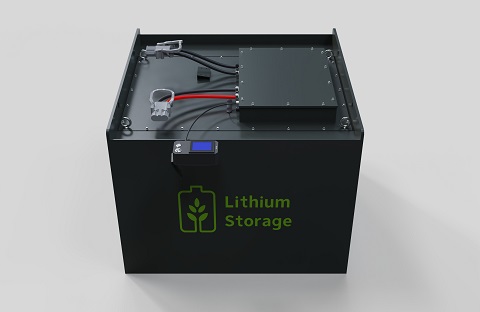
48V vs 80V Forklift Batteries at a Glance
| Comparison Point | 48V Lithium Forklift Battery | 80V Lithium Forklift Battery |
|---|
| Typical nominal LFP voltage | 51.2V | 83.2V |
| Common equipment | Compact and medium electric counterbalance forklifts, some reach trucks and tow tractors | Medium- and higher-capacity counterbalance forklifts and intensive material-handling equipment |
| Typical operating profile | Indoor warehouse work, moderate travel and lifting, one- or two-shift use | Longer travel, frequent lifting, heavier loads and intensive multi-shift work |
| Current at the same power level | Higher | Lower |
| Common battery capacities from Lithium Storage | 206–628Ah | 314–840Ah |
| Charger requirement | Dedicated 48V lithium charger | Dedicated 80V lithium charger |
| Can replace the other voltage directly? | No | No |
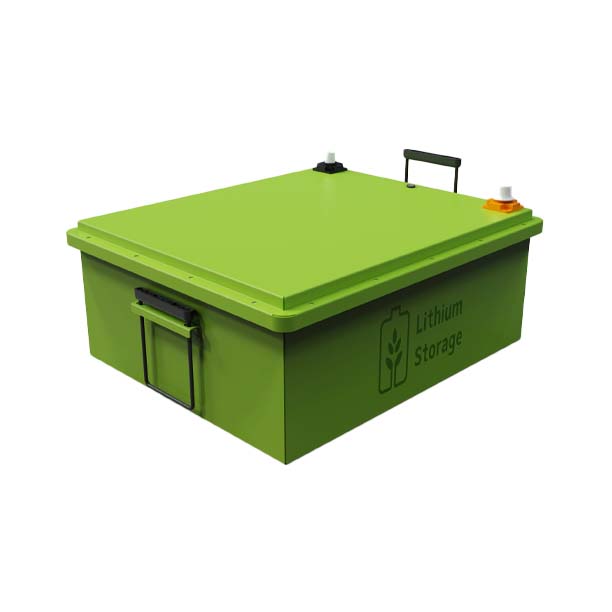
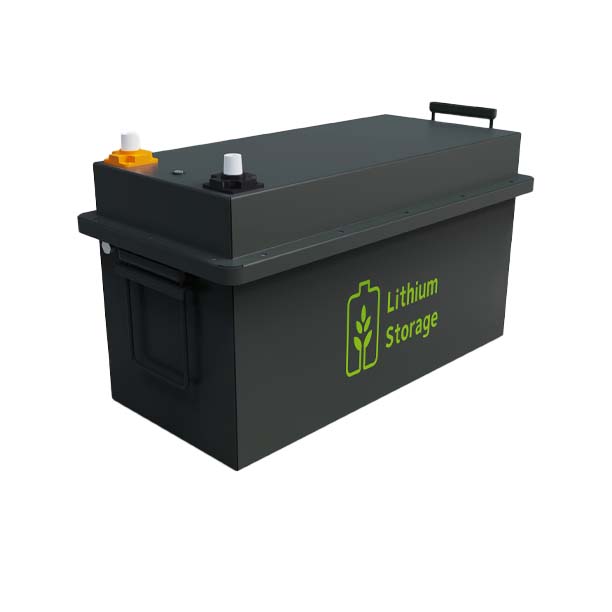
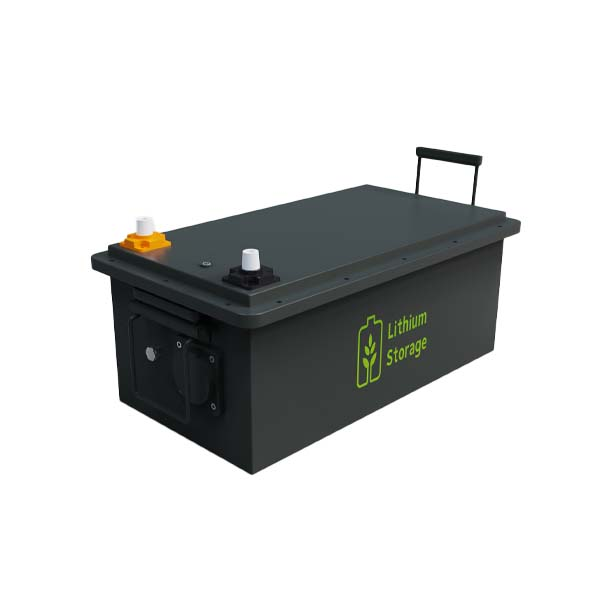
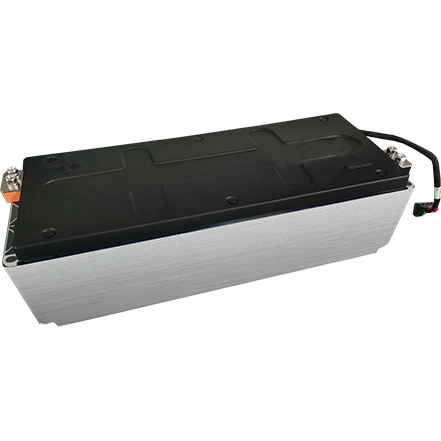
Lithium Storage currently lists 48V-class forklift battery configurations from 206Ah to 628Ah and 80V-class configurations from 314Ah to 840Ah. The available range allows the enclosure, capacity, ballast, connectors, charger, and communication system to be configured for different forklift models and operating conditions.
The Most Important Difference: Forklift Compatibility
The forklift data plate, operating manual, existing battery label, or OEM technical documentation should identify the correct battery voltage.
Installing a different voltage can affect:
Traction motor speed and torque
Hydraulic pump performance
Motor controller limits
Electrical wiring and contactors
Dashboard and battery discharge indicators
Regenerative braking
Charging interlocks
CAN communication
Protection and fault settings
For example, Hyster lists 48V battery systems for several 1.5- to 2.5-ton models in its J1.5–3.5UT electric forklift range, while its 3.0-ton model is listed with an 80V system. This reflects the design of that particular truck range rather than a universal rule that every 3-ton forklift must use 80V.
Other forklift platforms offer several voltage options for the same general truck series. Hyster’s E80–120XN heavy indoor forklift range, for example, lists 36V, 48V, and 80V battery configurations. This demonstrates why voltage cannot be selected by lifting capacity alone. The exact model configuration must be checked.
When a 48V Lithium Forklift Battery Fits Best
A 48V battery system is widely used in compact and medium electric forklifts that require a balance of maneuverability, lifting performance, runtime, and charging flexibility.
A 48V Forklift Lithium Battery is commonly suitable for operations involving:
Indoor warehouse transport
Medium-capacity electric counterbalance forklifts
Moderate travel distances
Regular pallet loading and unloading
Frequent but not continuous hydraulic lifting
One- or two-shift schedules
Opportunity charging during breaks
Operations where compact truck dimensions are important
Linde’s Ei16–Ei20 P electric forklifts, for example, use a 48V drive platform and are designed for load capacities in the compact forklift range. Linde also combines the platform with a permanently installed lithium-ion battery and optional onboard charging for opportunity charging.
Typical 48V Applications
A 48V system is often appropriate for:
General distribution warehouses
Retail logistics centers
Food and beverage warehouses
Manufacturing material supply
Loading-dock operations
Narrow indoor travel routes
Medium-duty fleet replacement projects
It can also be suitable for intensive work when the battery capacity and charging strategy are correctly configured. Voltage alone does not determine runtime or productivity.
Available 48V Capacity Range
Lithium Storage’s 48V-class range includes the following capacities:
51.2V 206Ah
51.2V 228Ah
51.2V 314Ah
51.2V 412Ah
51.2V 456Ah
51.2V 560Ah
51.2V 628Ah
This range covers compact industrial vehicles as well as larger forklift batteries for longer shifts and more demanding material-handling cycles.
When an 80V Lithium Forklift Battery Fits Best
An 80V battery system is generally used in forklifts designed for higher traction and hydraulic power demands.
Typical operating conditions include:
Heavy or repetitive loads
Long travel routes
Frequent acceleration and braking
High lift cycles
Regular ramp or incline use
Hydraulic attachments
Outdoor and indoor combined operation
Two- or three-shift schedules
High-throughput distribution or manufacturing
Linde’s E20–E35 electric forklift range uses 80V battery platforms across models with load capacities from approximately 2.0 to 3.5 tons. Available battery capacities vary by model and application, demonstrating that 80V systems can be configured with different energy reserves rather than one standard Ah rating.
Typical 80V Applications
An 80V system is often selected for:
High-volume distribution centers
Automotive manufacturing plants
Building-material warehouses
Beverage and paper handling
Longer outdoor transport routes
Equipment using clamps, rotators, or other attachments
Operations replacing internal-combustion forklifts with electric models
However, the presence of demanding work does not automatically justify converting a 48V forklift to 80V. The truck itself must be designed and approved for an 80V electrical platform.
Available 80V Capacity Range
Lithium Storage’s 80V-class battery range includes:
83.2V 314Ah
83.2V 412Ah
83.2V 456Ah
83.2V 560Ah
83.2V 628Ah
83.2V 684Ah
83.2V 840Ah
These configurations are intended for different electric counterbalance forklifts and demanding industrial truck applications.
Does 80V Provide More Power Than 48V?
Voltage influences how electrical power is delivered, but voltage alone does not tell buyers how much work a forklift can complete.
Electrical power can be expressed as:
Power = Voltage × Current
For the same power demand, a higher-voltage system requires less current.
For example, ignoring conversion losses:
Lower current can reduce resistive losses and make it easier to deliver high power through appropriately designed motors, controllers, cables, connectors, and contactors.
This does not mean that an 80V battery automatically makes a forklift faster or stronger. Actual performance is controlled by the complete truck design, including:
A well-engineered 48V forklift can outperform an unsuitable or poorly configured 80V system in its intended application.
Do Not Compare Amp-Hours Alone
A common purchasing mistake is comparing a 48V and an 80V battery only by their amp-hour ratings.
Battery energy should be compared in kilowatt-hours:
Nominal energy = Nominal voltage × Capacity ÷ 1,000
Consider these two examples:
| Battery | Calculation | Nominal Energy |
| 51.2V 560Ah | 51.2 × 560 ÷ 1,000 | 28.67kWh |
| 83.2V 314Ah | 83.2 × 314 ÷ 1,000 | 26.12kWh |
Although the 80V-class battery has a higher voltage, the 48V battery in this example stores more nominal energy.
A second comparison shows the opposite result:
| Battery | Calculation | Nominal Energy |
| 51.2V 456Ah | 51.2 × 456 ÷ 1,000 | 23.35kWh |
| 83.2V 412Ah | 83.2 × 412 ÷ 1,000 | 34.28kWh |
Therefore:
Voltage determines compatibility and influences power delivery.
Amp-hours indicate stored charge.
Kilowatt-hours provide a better comparison of total nominal energy.
Usable runtime depends on both stored energy and actual truck consumption.
Which Voltage Is Better for One-Shift Operation?
For a standard single-shift warehouse, either voltage can work if it matches the forklift.
A 48V truck is often sufficient when:
Loads are moderate.
Travel distances are relatively short.
Lift cycles are regular but not continuous.
The truck returns to a charging point during breaks.
The operation uses compact or medium counterbalance forklifts.
An 80V truck can still be used in a single-shift operation when the equipment is designed for heavy loads, long routes, ramps, attachments, or other high-power tasks.
Shift length does not determine voltage by itself. It mainly affects the required battery capacity and charging plan.
Which Voltage Is Better for Multi-Shift Operation?
Both 48V and 80V lithium batteries can support multi-shift operation when properly sized and paired with a suitable charger.
Lithium batteries can be opportunity-charged during:
Meal breaks
Shift changes
Operator handovers
Cleaning periods
Planned production stops
Loading-dock downtime
Hyster states that lithium-ion battery options are available for selected 48V and 80V forklifts and that opportunity charging can support two- or three-shift handling without routine battery exchanges.
For multi-shift use, buyers should calculate:
Energy consumed during each shift
Available charging time
Charger output
Maximum battery charging current
Required state-of-charge reserve
Peak traction and hydraulic demand
Working temperature
Expected operational interruptions
A higher voltage does not solve an undersized battery or insufficient charging infrastructure.
48V vs 80V for Heavy Loads
An 80V system is frequently associated with heavier forklift classes, but lifting capacity is not the only factor.
Evaluate:
A 48V forklift can handle substantial loads when designed for them. Conversely, an 80V battery should not be installed in a lighter 48V truck merely because the warehouse occasionally handles a heavy pallet.
The forklift’s rated capacity, stability calculation, motor system, and approved battery specification remain decisive.
How Battery Voltage Affects Charging Infrastructure
A 48V and an 80V lithium battery require different chargers.
The charger must match:
A charger labeled for 48V cannot directly charge an 80V battery. Likewise, an 80V charger must not be connected to a 48V battery.
Warehouses planning a mixed-voltage fleet should decide whether to:
Install separate 48V and 80V charging stations
Use clearly identified connectors and parking positions
Select approved multi-voltage charging equipment
Standardize voltage within specific operational zones
Introduce charger access controls to prevent connection errors
The charger and battery should be commissioned as an integrated system rather than purchased independently.
Battery Weight and Forklift Stability
The original lead-acid battery frequently contributes to the forklift’s counterweight. Because lithium batteries can be lighter, a replacement battery must still meet the forklift manufacturer’s minimum battery-weight requirement.
Before ordering either voltage, confirm:
Existing battery weight
Minimum permitted battery weight
Maximum permitted battery weight
Battery compartment dimensions
Battery restraint system
Center-of-gravity requirements
Removal direction
Cable outlet location
Additional ballast or a customized enclosure can be required to maintain forklift stability and rated lifting performance.
Lithium Storage offers flexible additional-weight configurations across its forklift battery range, allowing the battery enclosure and final weight to be adapted to different truck requirements.
Communication Is as Important as Voltage
Modern forklift lithium batteries commonly communicate with the truck and charger through CAN bus.
Correct communication supports:
State-of-charge display
Charge-current control
Discharge-current limits
Temperature protection
Fault warnings
Contactor control
Charger interlocks
Battery data monitoring
Remote diagnostics
A battery can match the truck voltage but still be incompatible if the communication protocol, connector pinout, or control logic is incorrect.
Lithium Storage’s 48V range supports vehicle CAN communication, charger commissioning, configurable charge and discharge connectors, integrated displays, and remote-support functions.
Decision Guide: Choose 48V When…
A 48V lithium battery is generally the better fit when:
The forklift is rated for 48V.
The fleet uses compact or medium electric counterbalance trucks.
Work is mainly performed inside a warehouse.
Travel routes are moderate.
Loads and lift cycles are not continuously at the truck’s maximum rating.
Maneuverability and compact truck design are priorities.
One- or two-shift work is supported by opportunity charging.
The existing 48V truck fleet remains mechanically suitable.
The correct capacity can then be selected based on actual runtime requirements.
Decision Guide: Choose 80V When…
An 80V lithium battery is generally appropriate when:
The forklift is rated for 80V.
The truck handles heavier or repetitive loads.
Travel routes are long.
Ramps or inclines are common.
High lift cycles create significant hydraulic demand.
Attachments increase energy consumption.
The operation runs two or three shifts.
The truck is designed to replace an internal-combustion forklift in demanding work.
Higher continuous traction and hydraulic output are required.
The final battery capacity should still be calculated from the duty cycle rather than selected only by voltage.
Information to Provide Before Requesting a Battery
To determine whether your operation requires a 48V or 80V battery configuration, send the battery supplier:
Forklift brand
Forklift model
Serial number
Forklift data-plate photograph
Existing battery voltage
Existing battery capacity
Battery dimensions
Battery weight
Minimum required counterweight
Connector model
Cable position
Charger specifications
CAN communication requirements
Operating hours per shift
Number of shifts
Average and maximum load
Maximum lift height
Travel distance
Ramp conditions
Working temperature
Available charging periods
This information allows the supplier to verify electrical compatibility and determine the required capacity, enclosure, ballast, BMS, connectors, and charger.
Frequently Asked Questions
Can I replace a 48V forklift battery with an 80V lithium battery?
Not as a direct replacement. The motors, controller, wiring, instruments, hydraulic system, and charger must be designed for 80V. A voltage conversion should only be carried out with formal engineering approval from the forklift manufacturer or another qualified party.
Is an 80V forklift always more powerful than a 48V forklift?
No. Voltage is only one part of the system. Forklift performance also depends on motor power, controller settings, battery discharge capability, truck design, gearing, hydraulic components, and operating limits.
Can a 48V forklift handle multi-shift warehouse work?
Yes. A correctly sized 48V lithium battery combined with opportunity or fast charging can support multi-shift work. The battery capacity and charger output must be calculated from actual daily energy consumption.
Does an 80V battery always run longer?
No. Runtime depends primarily on usable kilowatt-hours and the forklift’s energy consumption. A high-capacity 48V battery can store more energy than a smaller 80V battery.
Can 48V and 80V forklifts share the same charger?
Only when the charging equipment is specifically designed and approved for both voltage platforms. Standard single-voltage chargers are not interchangeable.
Why are lithium forklift batteries labeled 51.2V or 83.2V?
The commercial categories “48V” and “80V” refer to the traditional forklift voltage classes. Lithium iron phosphate packs commonly use nominal pack voltages of approximately 51.2V and 83.2V because of their cell arrangement.
Should I choose the largest available battery capacity?
Not automatically. An oversized battery can increase purchase cost, physical size, and weight. The battery should provide enough usable energy for the duty cycle while fitting the compartment and charging schedule.
Final Answer: Which Voltage Fits Your Operation?
Choose a 48V lithium battery when your forklift is designed for a 48V system and performs compact- to medium-duty warehouse work, regular pallet handling, or multi-shift operation with suitable charging opportunities.
Choose an 80V lithium battery when the forklift is specifically designed for 80V and the operation involves heavier loads, longer travel distances, frequent lifting, ramps, attachments, or sustained high-power demand.
The right decision is not based on which voltage is higher. It is based on which voltage the forklift requires and which battery capacity can complete the daily workload.
For fleets using 48V equipment, Lithium Storage provides 48V Forklift Lithium Battery configurations from 206Ah to 628Ah, with customizable dimensions, ballast, connectors, charger matching, vehicle communication, and remote-support functions. A complete review of the forklift, battery, and charging system helps ensure compatibility, runtime, and reliable fleet operation.
 EN
EN
 fr
fr  de
de  it
it  ru
ru  es
es  pt
pt  tr
tr  jp
jp  ar
ar  th
th 

 No.9 East Mozhou Road, Jiangning District, 211111, Nanjing City, China