Forklift Lithium Battery Manufacturer│LITHIUM STORAGE Forklift Lithium Battery Manufacturer│LITHIUM STORAGE
KB19

Standard Battery Pack vs Custom Pack for Commercial EV Fleets

Commercial EV fleet projects often reach the same decision point: should the vehicle use an existing standardized battery platform or should the battery be designed specifically around the chassis?

There is no universal winner. A standard pack generally reduces engineering time, certification burden and supply-chain complexity. A custom pack provides greater freedom over dimensions, voltage, cooling, mounting and weight distribution. For fleet buyers, the right decision depends on vehicle volume, packaging constraints, powertrain architecture and how much engineering cost can be justified across the program.

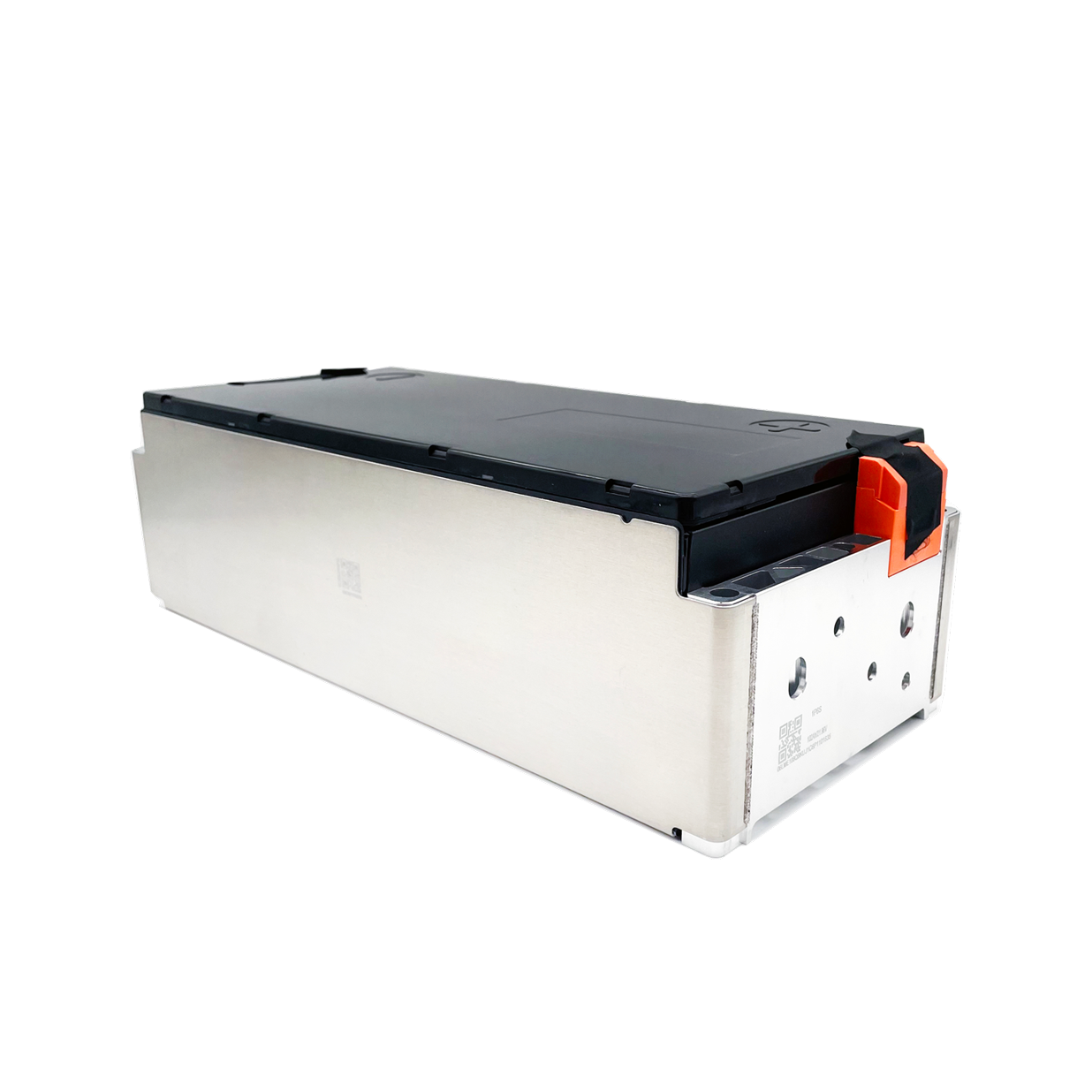
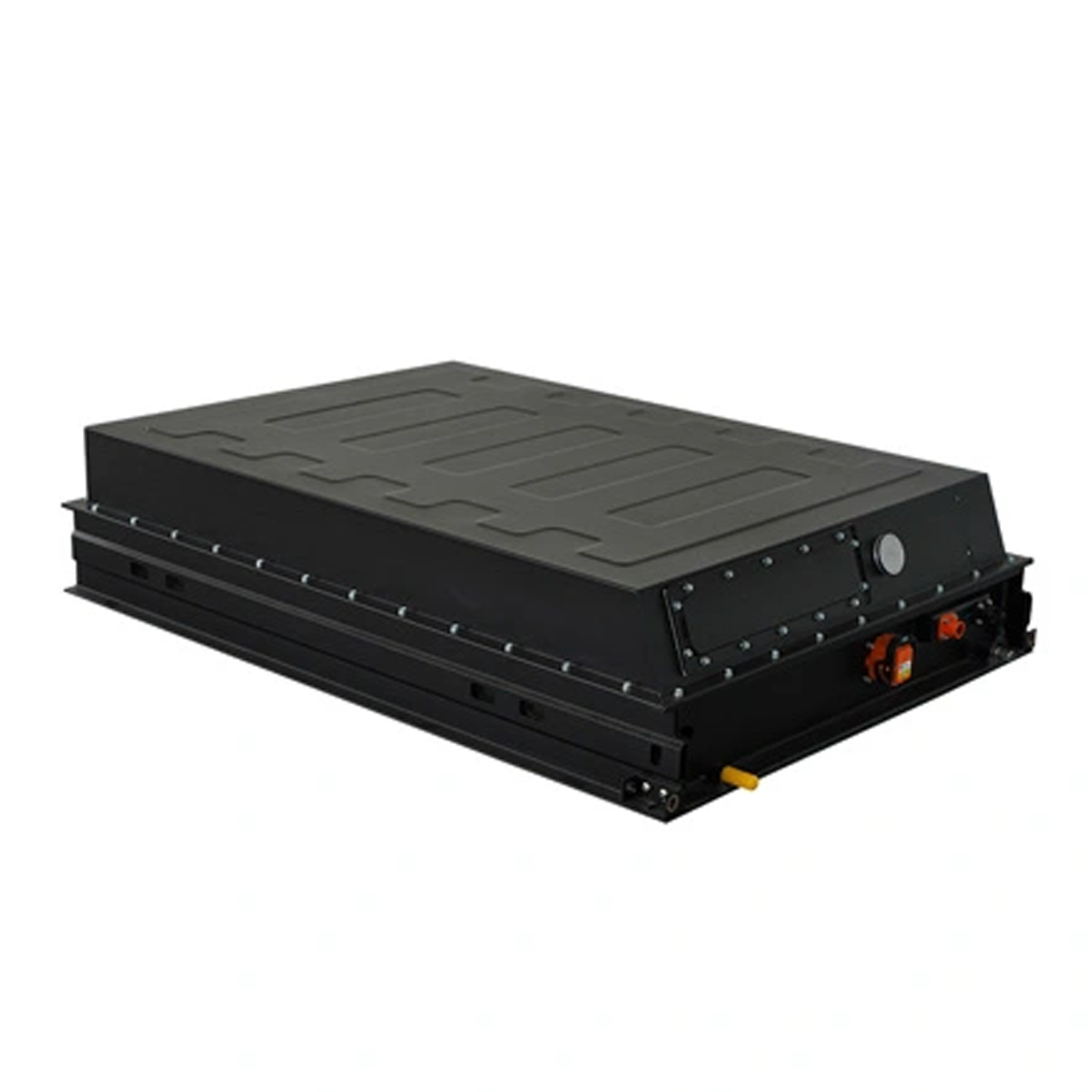
LITHIUM STORAGE's Flexi Pack C&D provides a useful example of the standard-pack approach. The platform uses LFP205Ah, LFP230Ah, LFP280Ah and LFP302Ah prismatic cells in two fixed pack envelopes for electric trucks, buses and heavy-duty vehicles. The manufacturer positions the system as a mass-produced, configurable alternative to a completely new battery design.

What Is a Standard Commercial EV Battery Pack?

A standard battery pack uses predefined:

  • Mechanical dimensions

  • Cell configurations

  • Cooling architecture

  • Electrical interfaces

  • Production tooling

  • Validation processes

The vehicle designer adapts the vehicle around one or more available pack configurations.

LITHIUM STORAGE's Standard Pack C and D illustrate this structure:

ParameterStandard Pack CStandard Pack D
Pack size1070 × 635 × 249 mm1020 × 635 × 249 mm
Cell options205Ah / 230Ah / 280Ah / 302Ah LFP205Ah / 230Ah / 280Ah / 302Ah LFP
Nominal voltage options115.2V / 153.6V105.6V / 144V
Energy range31.49–35.33kWh29.52–33.12kWh
Weight207–220kg195–207kg
Thermal managementLiquid cooling + electric heatingLiquid cooling + electric heating

A Standard Lithium Battery Pack Manufacturer can therefore give the vehicle engineering team known dimensions, mass and electrical parameters early in the project.

Why Fleets Often Prefer a Standard Pack

The biggest advantage is reduced development complexity.

A completely new battery enclosure may require mechanical design, prototype tooling, thermal analysis, vibration validation, sealing validation, electrical integration and additional certification work.

LITHIUM STORAGE states that its Flexi Pack has been used in commercial-vehicle projects and positions the standard design as a way to reduce development and certification costs compared with a fully customized pack. Its Flexi Pack also carries MSDS and UN38.3 documentation for transportation.

For an OEM developing several truck variants, standardized battery packs can also simplify:

Spare parts: fewer pack formats need to be stocked.

Technician training: the same service procedures can apply across several models.

Production: mounting points and cooling interfaces can be standardized.

Procurement: volume can be consolidated into a smaller number of battery SKUs.

Future replacement: a proven format may be easier to source throughout the vehicle service life.

When a Custom Pack Becomes Necessary

A standard pack works only if the chassis can accommodate it.

A custom solution may be justified when:

  • Existing chassis space cannot fit standard dimensions.

  • Axle-weight distribution requires a unique battery shape.

  • Very high ground clearance is required.

  • Battery packs must fit between frame rails.

  • Vehicle voltage cannot be achieved efficiently with standard pack combinations.

  • Specialized cooling is required.

  • Crash protection dictates a particular enclosure.

  • Vehicle production volume is large enough to justify development cost.

For example, a converted diesel truck may have several irregular spaces where fuel tanks, exhaust aftertreatment and transmission components were previously installed. A custom enclosure may use those spaces more efficiently than rectangular standardized packs.

Standard Does Not Mean Only One Voltage

One misconception is that standardization eliminates electrical flexibility.

LITHIUM STORAGE's two fixed pack formats support multiple cell and series combinations. Standard Pack C can be supplied at 115.2V with 280Ah/302Ah cells or 153.6V with 205Ah/230Ah cells, while Pack D offers 105.6V and 144V configurations.

The vehicle system can then combine multiple packs according to the high-voltage architecture.

This creates a useful middle ground between completely fixed batteries and completely bespoke packs.

Custom Pack Advantages

A properly engineered custom battery can improve:

Packaging efficiency
The battery follows available chassis geometry.

Weight distribution
Mass can be placed where it produces the best axle loading and center of gravity.

Energy capacity
Unused space can be reduced.

Electrical architecture
Pack voltage can be designed around the inverter and charging system.

Thermal design
Cooling plates and coolant routes can be optimized for the application.

The disadvantage is that every change creates engineering work.

The Hidden Cost of Customization

Custom-pack cost is not limited to cells and enclosure materials.

The project can involve:

  • Mechanical design

  • Tooling

  • BMS calibration

  • Prototype manufacturing

  • Thermal validation

  • Vibration/shock testing

  • Vehicle integration

  • Certification

  • Documentation

  • Pilot production

A fleet purchasing 20 specialized vehicles may struggle to recover these costs.

An OEM planning thousands of vehicles may justify them easily.

Consider Time to Market

Standard packs are particularly useful when project schedule is important.

The battery supplier already knows:

  • Pack structure

  • Cell grouping

  • Cooling arrangement

  • Production method

  • Standard components

A custom project normally adds several engineering and validation loops.

For a fleet electrification project where the truck chassis can accommodate the existing Flexi Pack envelope, working with a Standard Lithium Battery Pack Manufacturer may therefore reduce project risk and shorten development.

Standard Packs Are Also Easier to Scale Across Vehicles

Suppose an OEM has:

  • 180kWh delivery truck

  • 300kWh refuse vehicle

  • 420kWh regional truck

Instead of designing three completely different battery packs, the engineering team may use different quantities and electrical combinations of the same standardized pack family.

This can reduce component diversity dramatically.

Which Option Should a Fleet Choose?

Project SituationBetter Starting Point
Low/medium production volumeStandard pack
Short development scheduleStandard pack
Multiple vehicle variantsStandard pack
Existing standard pack fits chassisStandard pack
Extremely constrained packagingCustom pack
Unique voltage architectureCustom pack
High annual production volumeCustom pack may be justified
Strict axle-weight optimizationCustom pack
Conversion project with irregular spaceOften custom or hybrid

The most practical approach is often standard pack + customized vehicle integration, rather than customizing every battery component.

LITHIUM STORAGE's commercial-vehicle platform follows this strategy by combining fixed Flexi Pack C&D formats with multiple LFP capacities and a smart PDU architecture.

For commercial EV fleets, the right question is therefore not simply “standard or custom?” It is:

How much battery customization creates measurable vehicle value, and is that value large enough to justify additional development, validation and supply-chain complexity?


Latest News & Blog in Lithium Storage

+86-18686976230
info@lslithiumbattery.com
0086-025-8773-9887
Register to download
close