When comparing LFP and NCM lithium battery packs, purchase price alone does not tell the full story. Battery chemistry affects raw-material cost, energy density, cooling requirements, pack size, expected cycle life, and ultimately the total cost of operating the battery over its service life.
LFP (lithium iron phosphate) is generally associated with lower-cost cathode materials and long cycle life, while NCM (nickel cobalt manganese) provides higher energy density and allows more energy to be installed in a smaller and lighter battery pack. For industrial vehicles, forklifts, commercial vehicles, and energy storage systems, the lower-cost option therefore depends on the application rather than chemistry alone.
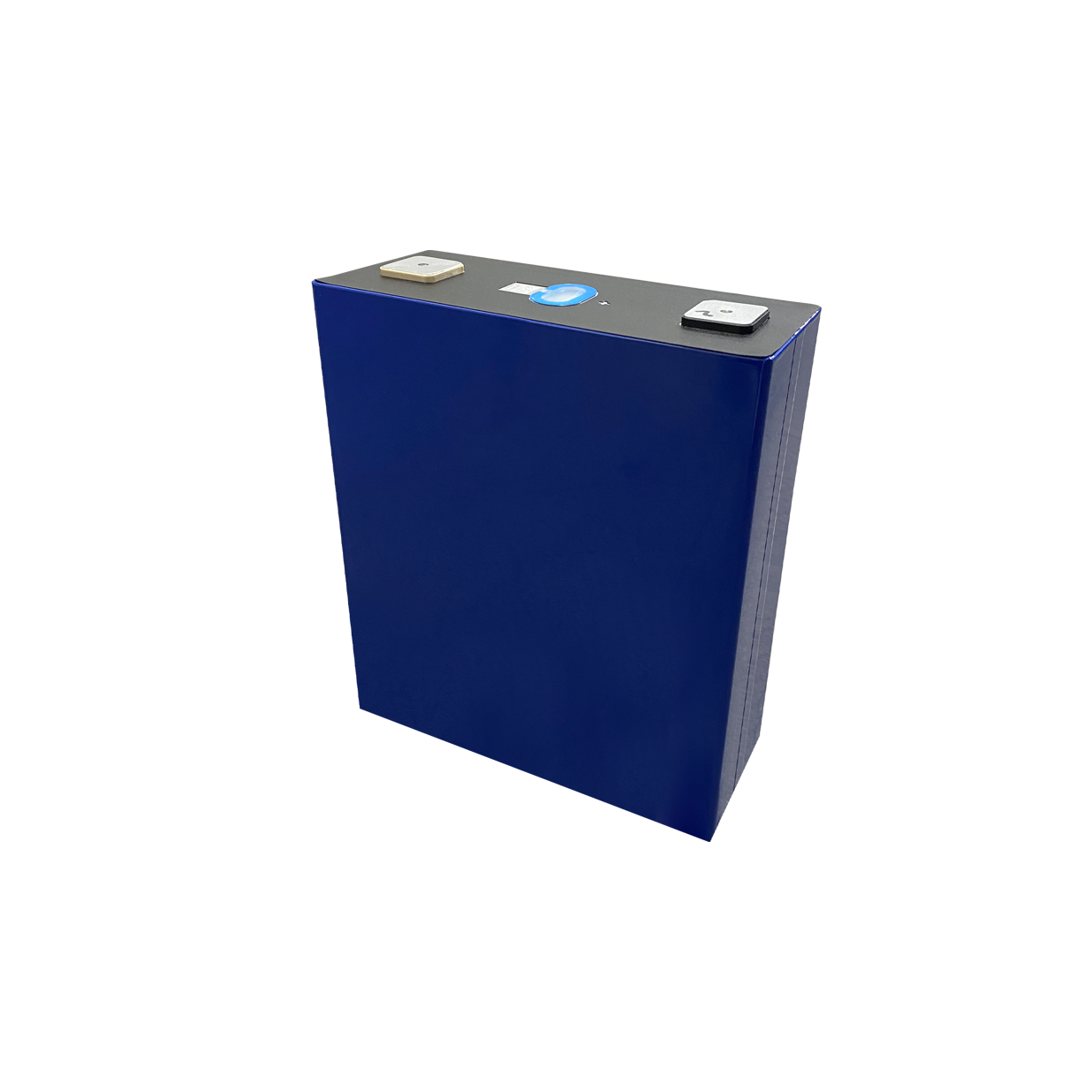
Lithium Storage manufactures LFP cells from 40Ah to 302Ah for applications including forklifts, AGVs, electric buses, trucks, marine systems, and energy storage.
Why Are LFP Cells Usually Less Expensive to Produce?
The first difference comes from cathode materials.
LFP batteries use lithium, iron, and phosphate. Iron and phosphate are relatively abundant materials and do not require nickel or cobalt.
NCM batteries use different proportions of nickel, manganese, and cobalt. Nickel and cobalt are generally more expensive and have historically experienced greater price volatility and supply-chain risk.
A comparative study of LFP and NMC battery technologies found that LFP generally benefits from lower raw-material costs, while NMC has higher cathode-material costs due primarily to nickel and cobalt.
At the chemistry level, this gives LFP a clear cost advantage.
However, that does not mean every finished LFP battery pack will automatically be cheaper.
LFP vs NCM Cost: The Main Differences
| Cost Factor | LFP | NCM |
|---|
| Cathode material cost | Generally lower | Generally higher |
| Nickel/cobalt exposure | None in LFP cathode | Uses nickel and cobalt |
| Energy density | Lower | Higher |
| Cells required for same compact energy target | Potentially more | Potentially fewer |
| Thermal-management requirements | Generally less demanding | Usually more demanding |
| Typical cycle-life potential | Higher | Lower than LFP in many applications |
| Replacement frequency | Can be lower in high-cycle use | Application-dependent |
| Best economic fit | High-cycle, safety-focused systems | Space- and weight-constrained systems |
These are general chemistry-level characteristics. Actual pack cost depends on cell format, system voltage, cooling architecture, BMS, enclosure, production volume, and performance requirements.
Why Energy Density Can Change the Cost Calculation
One important reason not to compare batteries only by raw-material price is energy density.
NCM stores more energy per kilogram and per liter than LFP.
Lithium Storage's NCM102Ah cell is rated at approximately 220 Wh/kg and 506 Wh/L, while its NCM177Ah cell reaches approximately 240 Wh/kg and 550 Wh/L. Both are NCM523 cells designed for applications where battery space and weight are important.
Higher energy density can reduce the number or physical volume of cells required to achieve a specified energy capacity.
For example, if an electric vehicle requires a large amount of energy but has a tightly restricted battery compartment, an NCM pack may reduce:
Battery enclosure volume
Structural material
Cell interconnections
Overall pack weight
Vehicle weight penalties
This is why NCM can remain economically attractive even when its cathode materials cost more.
Research into battery manufacturing costs has also shown that lower-energy-density LFP cells can sometimes require more passive components per kWh because more cell volume is needed to provide the same energy.
Therefore, the correct comparison is not simply:
LFP cell price vs NCM cell price
but rather:
total system cost for the required usable kWh.
Pack-Level Components Can Reduce or Increase the Difference
A finished lithium battery contains far more than cells.
Depending on the application, the complete system may include:
Battery modules
Busbars and connectors
Battery management system
Contactors and fuses
Electrical distribution hardware
Cooling or heating components
Sensors
Mechanical enclosure
Wiring harnesses
Communication interfaces
Chargers or charging interfaces
NCM's higher thermal sensitivity generally places more emphasis on temperature monitoring and thermal management.
LFP also requires appropriate BMS and thermal design, but its higher inherent thermal stability can be advantageous in applications where battery safety and simplified thermal control are priorities. Lithium Storage describes LFP as particularly suited to applications requiring high safety and long cycle life, including energy storage and specialized vehicles.
The cost difference between the two chemistries can therefore become smaller—or larger—once these pack-level requirements are included.
Initial Price Is Only Part of the Cost
For industrial buyers, a better metric is often total cost of ownership (TCO).
Consider a forklift that operates almost every working day.
The battery's financial impact includes:
Initial purchase cost
What does the complete pack cost to purchase?
Useful cycle life
How many equivalent cycles can it complete before usable capacity falls below the fleet's requirements?
Replacement cost
How many batteries will the vehicle consume during its planned service life?
Charging cost
How efficiently can the battery support the intended charging strategy?
Downtime
Will declining battery capacity or replacement create operational interruptions?
Maintenance and thermal management
How complex is the battery system to operate and maintain?
LFP's generally longer cycling capability can make it economically attractive for equipment that accumulates thousands of cycles.
Lithium Storage notes that LFP cycle life varies considerably with depth of discharge, temperature, current rate, and end-of-life capacity criterion, so buyers should always compare cycle-life claims using the same test conditions.
A Simple Lifecycle Cost Example
Suppose two battery packs provide the same usable energy:
If Battery B avoids one full replacement during the equipment's operating life, its total ownership cost may be lower even though the original invoice was higher.
The opposite can also occur.
If equipment will be used only occasionally and will never approach the battery's cycle-life limit, paying extra for very long cycle capability may provide little economic benefit.
That is why battery cost per lifetime delivered kWh can be more meaningful than purchase price per kWh.
Where LFP Usually Has the Strongest Cost Advantage
LFP tends to be particularly competitive in applications where space and weight are not the primary restrictions.
Electric Forklifts
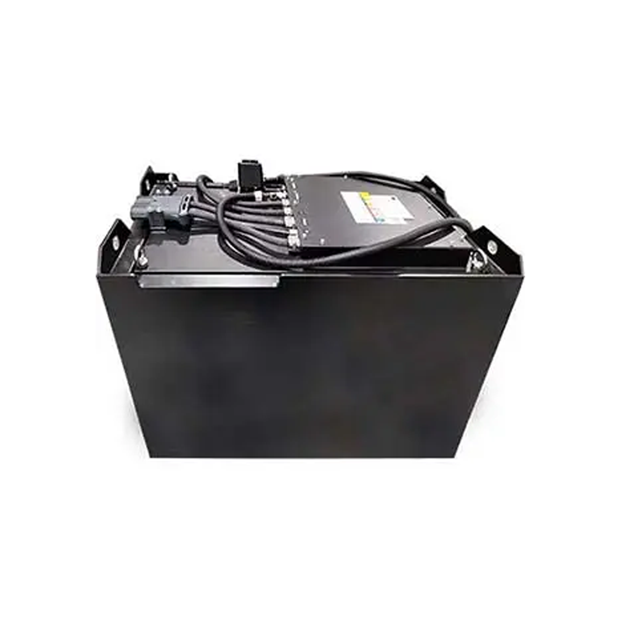
Forklifts often operate frequently and can accumulate large numbers of charge-discharge cycles. LFP's cycle life and thermal stability are valuable in this environment.
Battery weight can also contribute to the counterbalance requirement of some forklifts, meaning NCM's lower weight does not necessarily provide a major advantage.
Lithium Storage lists its 205Ah, 230Ah, 280Ah, and 302Ah LFP cells as suitable for applications including forklifts, electric buses, and trucks.
Energy Storage Systems
Stationary ESS installations are generally less sensitive to battery mass than electric vehicles.
As a result, LFP's lower material cost, cycle-life potential, and thermal stability often outweigh its lower energy density.
AGVs and Industrial Equipment
For frequently used equipment where predictable cycling performance matters more than maximum driving range, LFP can offer an attractive lifecycle-cost structure.
Lithium Storage also provides a 40Ah power-type LFP cell intended for high-power applications such as AGVs.
When Can NCM Be Worth the Higher Material Cost?
NCM becomes more attractive when every kilogram or liter of battery space matters.
Examples include:
Passenger electric vehicles
Compact commercial vehicles
Specialty mobile equipment
Vehicles requiring maximum range
Systems with tightly limited battery compartments
Lithium Storage's NCM102Ah and NCM177Ah cells have similar width and height but different thicknesses and are positioned for passenger vehicles and other applications with restricted installation space.
In these applications, using LFP to achieve the same energy capacity may require a larger or heavier pack.
If that leads to reduced payload, shorter driving range, larger enclosures, or vehicle redesign, NCM's higher cell cost may be justified at system level.
Raw-Material Price Volatility Also Matters
Battery procurement contracts may extend over several years, so price stability matters as well as today's quotation.
NCM is exposed to nickel and cobalt markets. These materials can experience significant commodity-price fluctuations and supply-chain uncertainty.
LFP cathodes avoid nickel and cobalt, providing a different raw-material cost structure. The comparative battery study cited earlier identifies the availability and lower cost of iron and phosphate as an important factor behind LFP's economic competitiveness.
For OEMs ordering large battery volumes, reduced exposure to expensive cathode metals can improve procurement predictability.
Why You Should Not Compare Battery Packs Only by $/kWh
A low quoted price per kWh can hide important differences.
Before comparing LFP and NCM quotations, check whether both suppliers are quoting the same:
A 100 kWh battery with 90 kWh usable energy is not directly comparable with a 100 kWh pack that allows only 80 kWh of recommended usable capacity.
Likewise, a cell-level quotation should not be compared directly with a complete battery-pack price.
How to Choose the More Cost-Effective Chemistry
A useful starting point is to identify the project's biggest economic constraint.
Choose LFP when the priorities are:
Long cycle life
High-frequency use
Thermal stability
Lower cathode-material cost
Stationary or industrial applications
Lifecycle cost rather than minimum weight
Consider NCM when the priorities are:
Neither chemistry is automatically the cheapest in every application.
What to Send an LFP Battery Manufacturer for a Cost Evaluation
When requesting a quotation from an LFP Battery Manufacturer, providing only voltage and Ah capacity is not enough for an accurate system-level comparison.
Useful information includes:
Required nominal voltage
Required usable kWh
Continuous and peak current
Daily operating hours
Expected cycles per year
Required service life
Battery compartment dimensions
Maximum or minimum battery weight
Charging strategy
Ambient temperature
Communication protocol
Certification requirements
Expected annual order volume
These details allow the supplier to determine whether cell capacity, module layout, and battery architecture can be optimized around the actual application.
Lithium Storage's LFP portfolio covers 40Ah to 302Ah cells and supports customization of capacity, dimensions, terminals, and battery integration for different projects.
Is LFP Really Cheaper Than NCM?
At the raw-material level, LFP generally has the cost advantage because it avoids expensive nickel and cobalt.
At the battery-pack level, however, the answer becomes more application-specific.
LFP's lower energy density can require more physical battery volume for the same kWh, while NCM can reduce weight and space requirements. Conversely, LFP's longer cycle-life potential and thermal stability can lower replacement and lifecycle costs in high-utilization industrial applications.
For forklifts, energy storage, AGVs, industrial vehicles, and other frequently cycled systems, working with an experienced LFP Battery Manufacturer makes it possible to compare not just initial cell price but usable energy, expected cycle life, pack integration, and total ownership cost.
The lowest-cost battery is ultimately not the chemistry with the lowest price per cell—it is the battery system that delivers the required performance at the lowest cost over the equipment's actual operating life.
 EN
EN
 fr
fr  de
de  it
it  ru
ru  es
es  pt
pt  tr
tr  jp
jp  ar
ar  th
th 

 No.9 East Mozhou Road, Jiangning District, 211111, Nanjing City, China