Lithium-ion batteries used in cold storage warehouses, refrigerated logistics, outdoor industrial vehicles, and sub-zero energy systems face a very different operating environment from batteries working at room temperature. As temperature falls, internal resistance rises, lithium-ion transport slows, available capacity decreases, and charging becomes increasingly difficult.
Both LFP (lithium iron phosphate) and NCM (nickel cobalt manganese) cells are used in industrial battery systems, but they do not behave identically in the cold. LFP is widely chosen for its long cycle life and thermal stability, while NCM can have an advantage in low-temperature power and usable capacity. For engineers and procurement teams, however, chemistry is only one part of the decision.
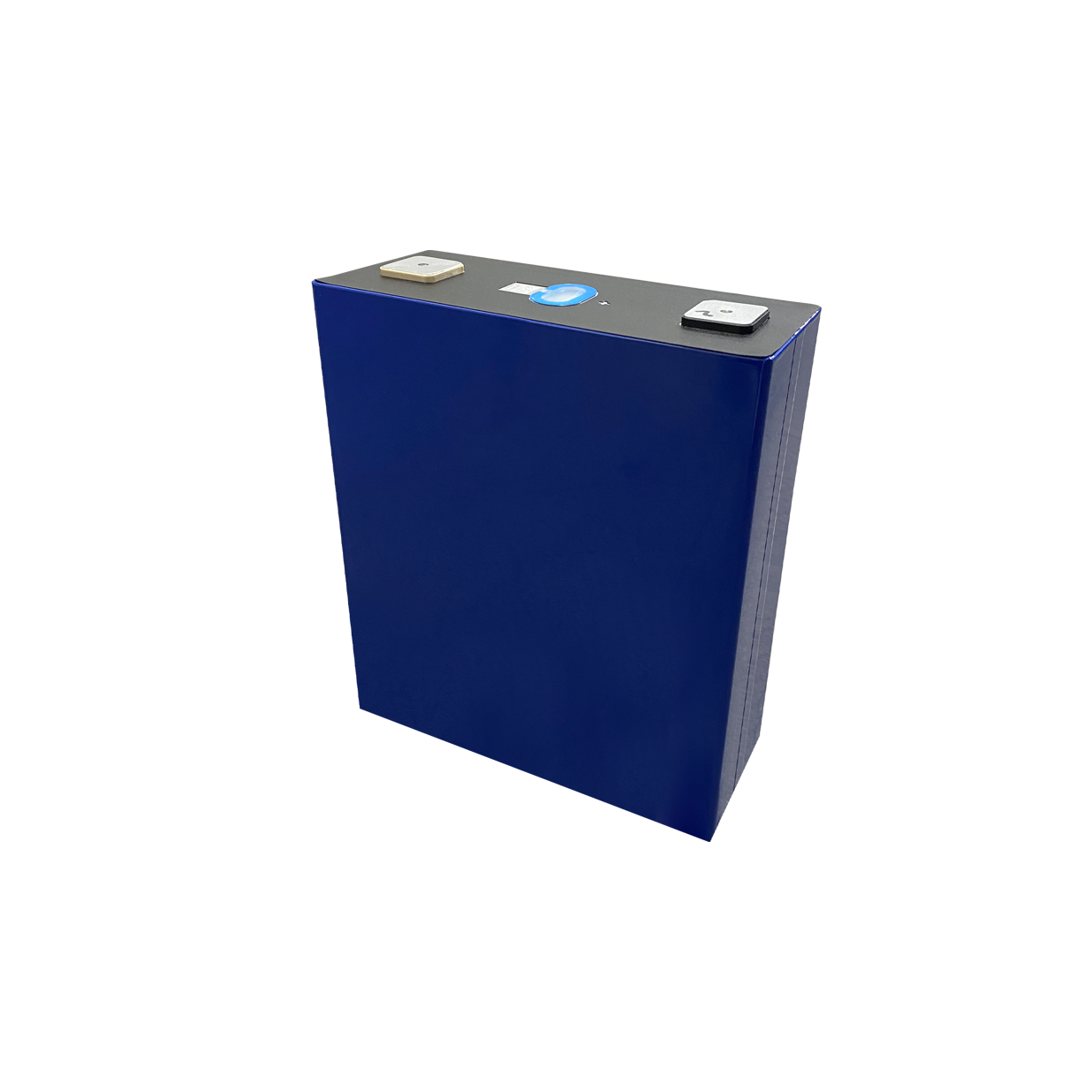
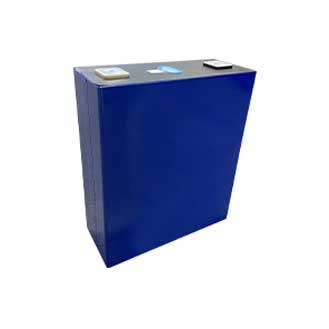
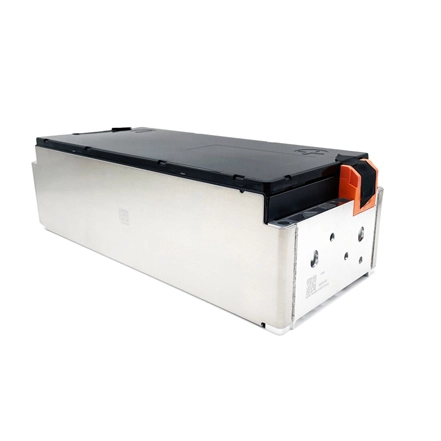
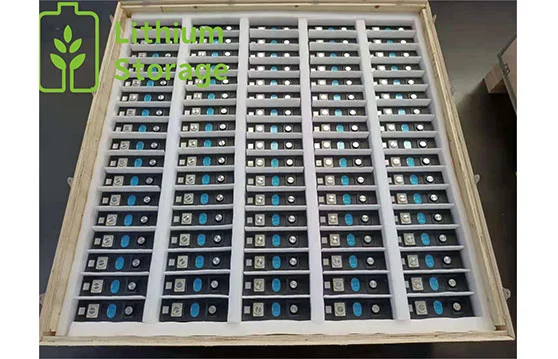
Lithium Storage supplies prismatic LFP cells from 40Ah to 302Ah for forklifts, AGVs, electric buses, trucks, energy storage, marine systems, and industrial power applications.
Why Does Lithium-Ion Battery Performance Drop in the Cold?
Below 0°C, several processes inside a lithium-ion cell become slower.
The electrolyte becomes more viscous, lithium-ion diffusion decreases, charge-transfer resistance increases, and electrode reaction kinetics slow down. As a result, the battery may show:
Lower usable capacity
Greater voltage drop under load
Reduced peak power
Slower charging capability
Increased internal resistance
Longer charging time
Research on low-temperature lithium-ion batteries identifies reduced ion diffusion, sluggish charge-transfer kinetics, and lithium plating during cold charging as major challenges.
These effects become increasingly important in applications such as refrigerated warehouses, where forklifts or AGVs may operate for hours at temperatures well below freezing.
LFP vs NCM: Which Performs Better at Low Temperature?
At the chemistry level, NCM generally has an advantage in low-temperature discharge performance, while LFP usually provides stronger thermal stability and longer cycle-life potential.
A simplified comparison is:
| Low-Temperature Factor | LFP Cells | NCM Cells |
|---|
| Cold discharge capability | Good with proper design, but capacity drops more noticeably | Generally stronger |
| Low-temperature power | More affected by increased resistance | Often better |
| Charging below 0°C | Usually restricted or requires heating | Some designs permit sub-zero charging |
| Thermal stability | Strong advantage | Requires stricter thermal control |
| Cycle-life potential | Generally longer | Usually lower than LFP |
| Energy density | Lower | Higher |
| Typical cold-storage solution | Heating + controlled charging | Chemistry may offer wider cold operation, but still requires BMS control |
This is a general chemistry comparison rather than a specification for every cell. Electrode formulation, electrolyte, cell construction, SOC, discharge rate, and thermal-management strategy can substantially change actual cold-weather performance.
What Do Actual Cell Specifications Show?
Lithium Storage's standard LFP205Ah, LFP280Ah, LFP302Ah, and deep-cycle LFP280Ah cells specify:
Charging: 0°C to 55°C
Discharging: -30°C to 55°C.
This distinction is critical.
An LFP cell may be capable of supplying power at -20°C or -30°C, but that does not mean it should be charged at those temperatures.
By comparison, Lithium Storage's NCM243Ah cell specifies an operating range of:
Charging: -20°C to 55°C
Discharging: -30°C to 55°C.
This particular NCM design therefore provides a wider specified charging-temperature range than the cited LFP products.
Buyers should not generalize this specification to every NCM cell. The correct operating limits must always come from the individual product datasheet.
Why Is Charging More Difficult Than Discharging?
This is one of the most important issues when designing batteries for cold storage.
During discharge, lithium ions move from the graphite anode toward the cathode. The battery can normally continue delivering power at temperatures considerably below freezing, although available capacity and power are reduced.
Cold charging is more problematic.
At low temperature, lithium ions may not intercalate into the graphite anode quickly enough. If charging current is too high, metallic lithium can deposit on the anode surface—a process known as lithium plating.
Lithium plating can cause:
Lithium Storage's own technical guidance notes that charging below 0°C requires particular caution because low temperature increases battery resistance and can create lithium-plating concerns.
This is why a forklift may continue working inside a -20°C freezer but still need heating before or during charging.
Does LFP Work in a -20°C Cold Storage Warehouse?
Yes—but the battery system must be designed for it.
Lithium Storage's cited LFP cells have specified discharge operation down to -30°C, so LFP chemistry can be used in sub-zero environments when the complete battery system is engineered correctly.
The key issue is charging.
For an LFP forklift operating at -20°C, a practical battery design may require:
Battery heating pads
Insulated enclosure
BMS-controlled preheating
Temperature sensors distributed through the pack
Charging-current restrictions
Automatic charging lockout below the permitted cell temperature
Lithium Storage's battery systems explicitly note that external heating is required for charging below 0°C on certain LFP configurations.
Therefore, asking whether LFP “works at -20°C” is not precise enough. The better questions are:
Can it discharge at -20°C?
and
How will the battery be warmed before charging?
Where NCM Has an Advantage in Cold Environments
NCM chemistry can be attractive when the application requires stronger cold-temperature performance together with high energy density.
Potential applications include:
Refrigerated transport
Outdoor electric vehicles
Cold-region mobile machinery
Compact industrial vehicles
Equipment requiring maximum energy from limited battery space
Lithium Storage's NCM102Ah and NCM177Ah cells provide gravimetric energy densities of approximately 220 Wh/kg and 240 Wh/kg, respectively, substantially emphasizing the energy-density advantage of NCM over conventional LFP.
Where cold performance, installation volume, and battery weight are all significant constraints, NCM deserves consideration.
However, NCM's better cold performance does not eliminate the need for temperature management. High charging rates at very low temperatures can still accelerate lithium plating and degradation in lithium-ion batteries generally.
Why LFP Can Still Be Better for Cold-Storage Forklifts
Cold storage is not only a low-temperature application—it is also frequently a high-cycle industrial application.
A forklift may work across multiple shifts, recharge during breaks, and accumulate thousands of equivalent cycles over its service life.
This gives LFP several advantages:
Longer Cycle-Life Potential
Lithium Storage's standard LFP205Ah and LFP280Ah cells are rated at ≥4,000 cycles under their specified 0.5C/0.5C, 100% DOD test conditions, while the deep-cycle 280Ah model is rated at ≥6,000 cycles under its stated test conditions.
Strong Thermal Stability
Although cold environments reduce overheating concerns during normal operation, batteries still encounter heat during charging and high-current operation. LFP's inherent thermal stability remains valuable for industrial fleet safety.
Suitable for High-Frequency Operation
Cold-storage forklifts typically prioritize reliability and lifecycle economics over maximum Wh/kg. A heated LFP battery can therefore be more economical than choosing NCM solely for better intrinsic cold performance.
This is one reason an LFP Cells Manufacturer should evaluate the complete duty cycle rather than recommending chemistry only according to ambient temperature.
How Much Capacity Is Lost in the Cold?
There is no universal percentage.
The available capacity at -10°C or -20°C depends on:
Lithium Storage discusses low-temperature LFP development showing that optimized material systems can significantly improve discharge performance at -20°C. Its technical article emphasizes improvements to the positive electrode, negative electrode, electrolyte, and binder rather than treating cold performance as determined solely by the LFP chemistry label.
Therefore, buyers should request low-temperature discharge curves for the specific cell rather than relying on a generic statement such as “LiFePO4 works at -30°C.”
Battery Heating Can Matter More Than Chemistry Alone
For many industrial systems, the most effective approach is not trying to find a chemistry completely unaffected by cold. Instead, designers actively manage cell temperature.
A cold-weather battery pack may incorporate:
Heating pads: raise cell temperature before charging.
Thermal insulation: slows temperature loss while the equipment is parked.
BMS temperature control: prevents charging outside the permitted range.
Temperature sensors: detect differences between cells or modules.
Controlled charging current: reduces stress when cells are still cool.
For stationary battery systems and industrial vehicles, Lithium Storage already specifies external heating where charging is required below the normal LFP charging-temperature threshold.
In a -20°C warehouse, this pack-level thermal strategy may be more important than the nominal chemistry comparison.
What Should Cold-Storage Buyers Ask a Cell Supplier?
When sourcing batteries for a freezer warehouse or another cold environment, do not ask only for nominal capacity and operating temperature.
Provide the LFP Cells Manufacturer with:
Minimum ambient temperature
Typical operating temperature
Time continuously spent inside cold storage
Required discharge current
Peak lifting or traction current
Required pack voltage and kWh
Daily operating hours
Charging location temperature
Opportunity-charging schedule
Battery compartment dimensions
Required heating strategy
Target cycle life
Also request cell-specific information such as low-temperature discharge capacity, recommended charging current versus temperature, and BMS temperature thresholds.
LFP or NCM for Cold Storage: Which Should You Choose?
If the only priority is intrinsic low-temperature performance, NCM may have an advantage, particularly for charging and power delivery in certain cell designs.
But cold-storage equipment usually requires a broader comparison.
Choose LFP when your priorities include:
Frequent industrial cycling
Long service life
High thermal stability
Forklift and AGV operation
The ability to integrate battery heating
Lower lifecycle cost
Consider NCM when your priorities include:
Stronger intrinsic low-temperature behavior
Higher energy density
Limited battery compartment space
Reduced battery weight
Mobile applications where maximum Wh/kg is important
For cold-storage forklifts and industrial equipment, LFP should therefore not be rejected simply because its standard charging limit may start at 0°C. A properly designed pack can discharge in sub-zero environments and use controlled heating before charging.
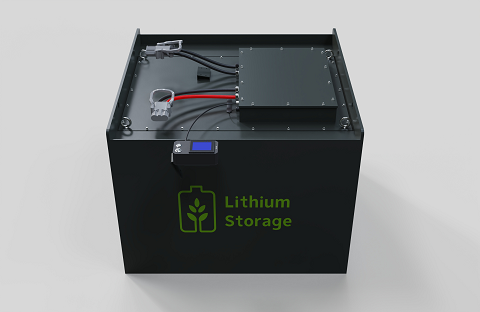
Lithium Storage offers LFP cells from 40Ah to 302Ah, including capacities suitable for forklifts, AGVs, trucks, buses, and energy-storage systems. As an LFP Cells Manufacturer, the company can support cell selection and battery-integration requirements according to operating temperature, current demand, capacity, dimensions, and application needs.
For cold-storage projects, the best battery is ultimately not the chemistry with the lowest published operating temperature—it is the system that maintains usable capacity, safe charging, reliable power delivery, and acceptable cycle life throughout the actual cold-weather duty cycle.
 EN
EN
 fr
fr  de
de  it
it  ru
ru  es
es  pt
pt  tr
tr  jp
jp  ar
ar  th
th 

 No.9 East Mozhou Road, Jiangning District, 211111, Nanjing City, China