Material handling equipment is increasingly expected to operate longer, recharge faster, and spend less time out of service. In warehouses, distribution centers, manufacturing plants, ports, and cold-storage facilities, forklifts, pallet trucks, AGVs, and other electric equipment may operate across multiple shifts with only short breaks between tasks.
These operating conditions are helping LFP (lithium iron phosphate) battery modules gain traction as an alternative to conventional lead-acid batteries and other lithium-ion chemistries. LFP combines long cycle-life potential, strong thermal stability, opportunity-charging capability, and flexible module configurations—characteristics that align closely with high-utilization material handling.
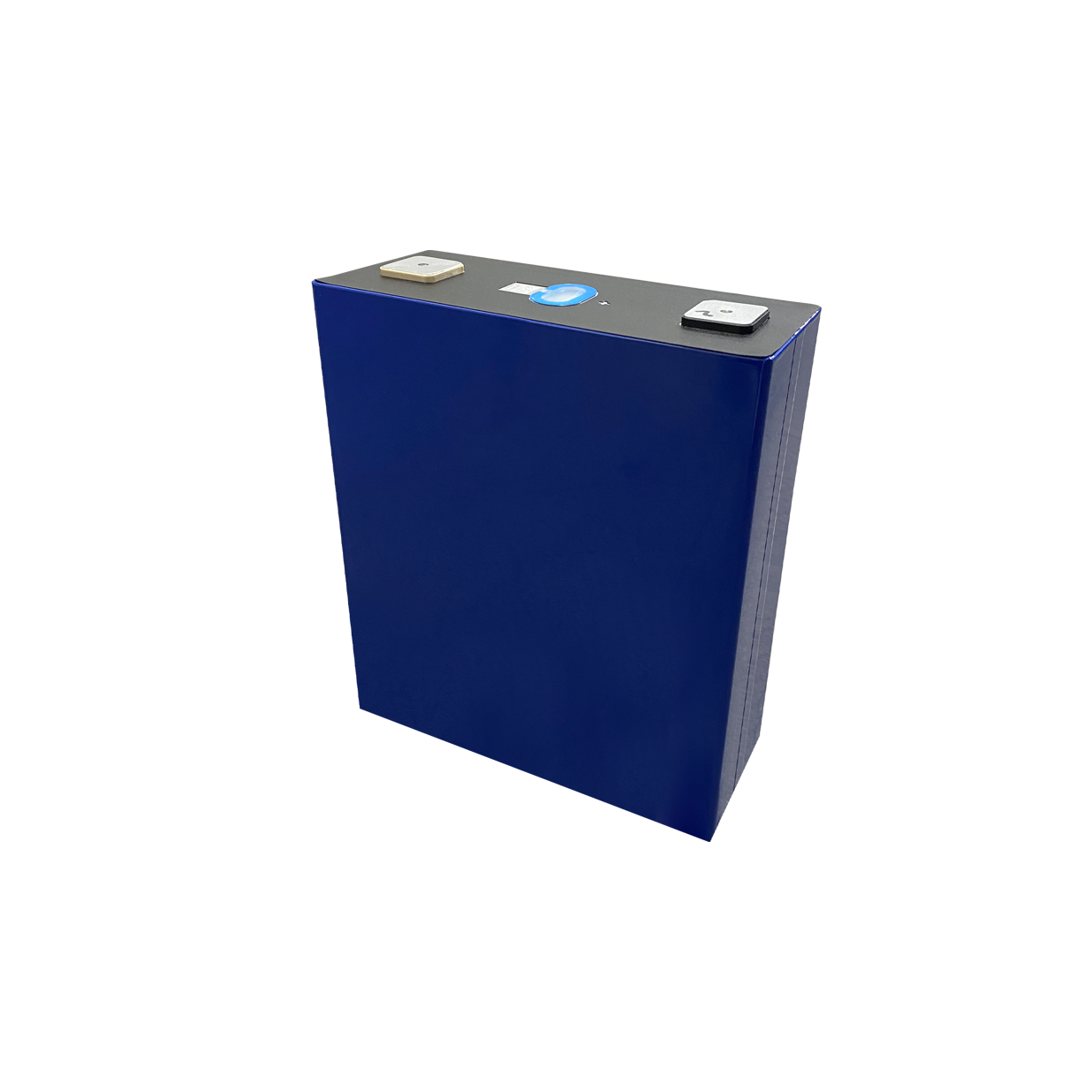
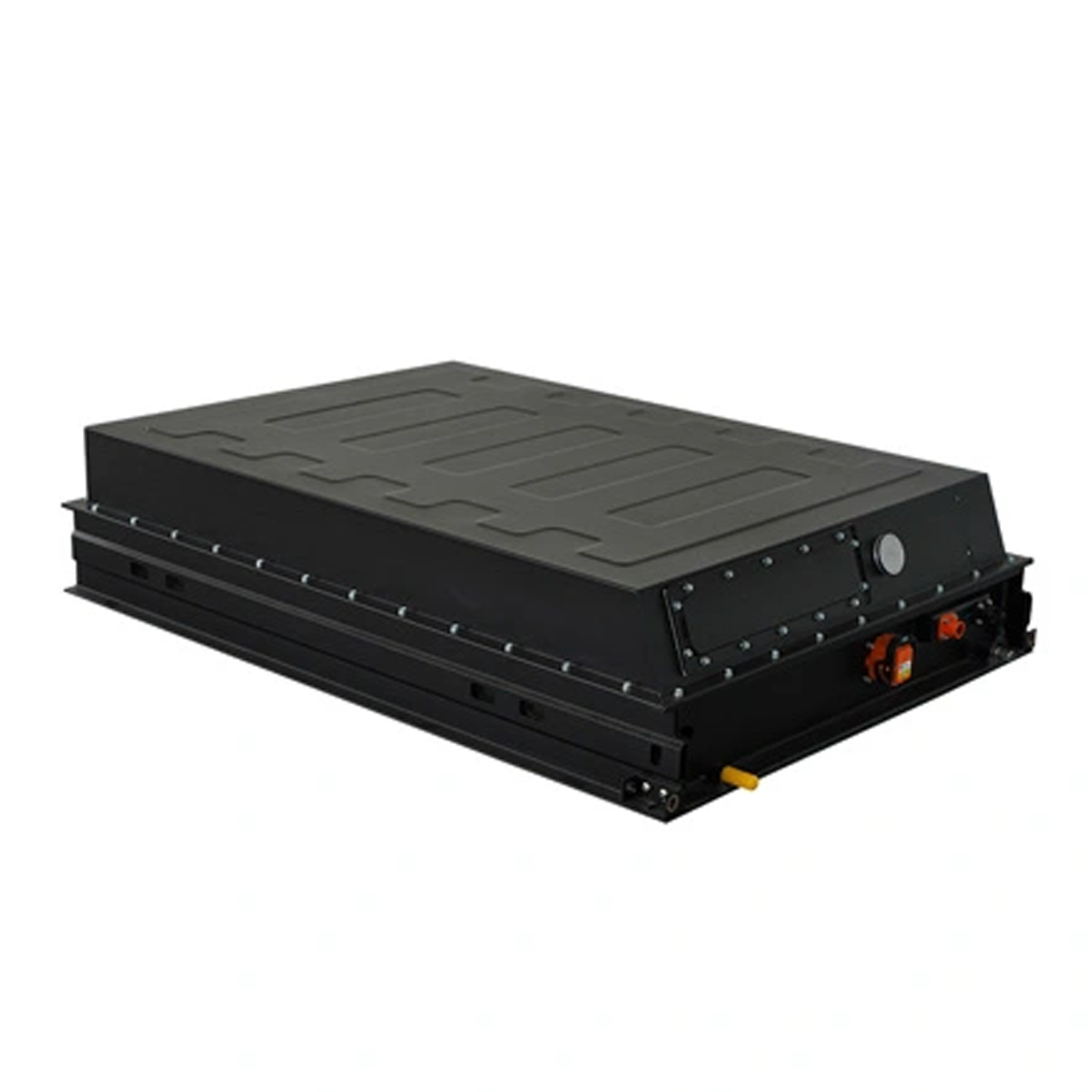
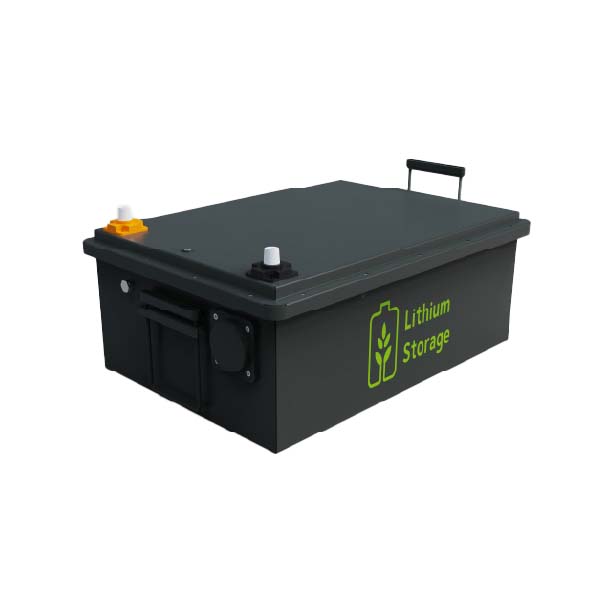
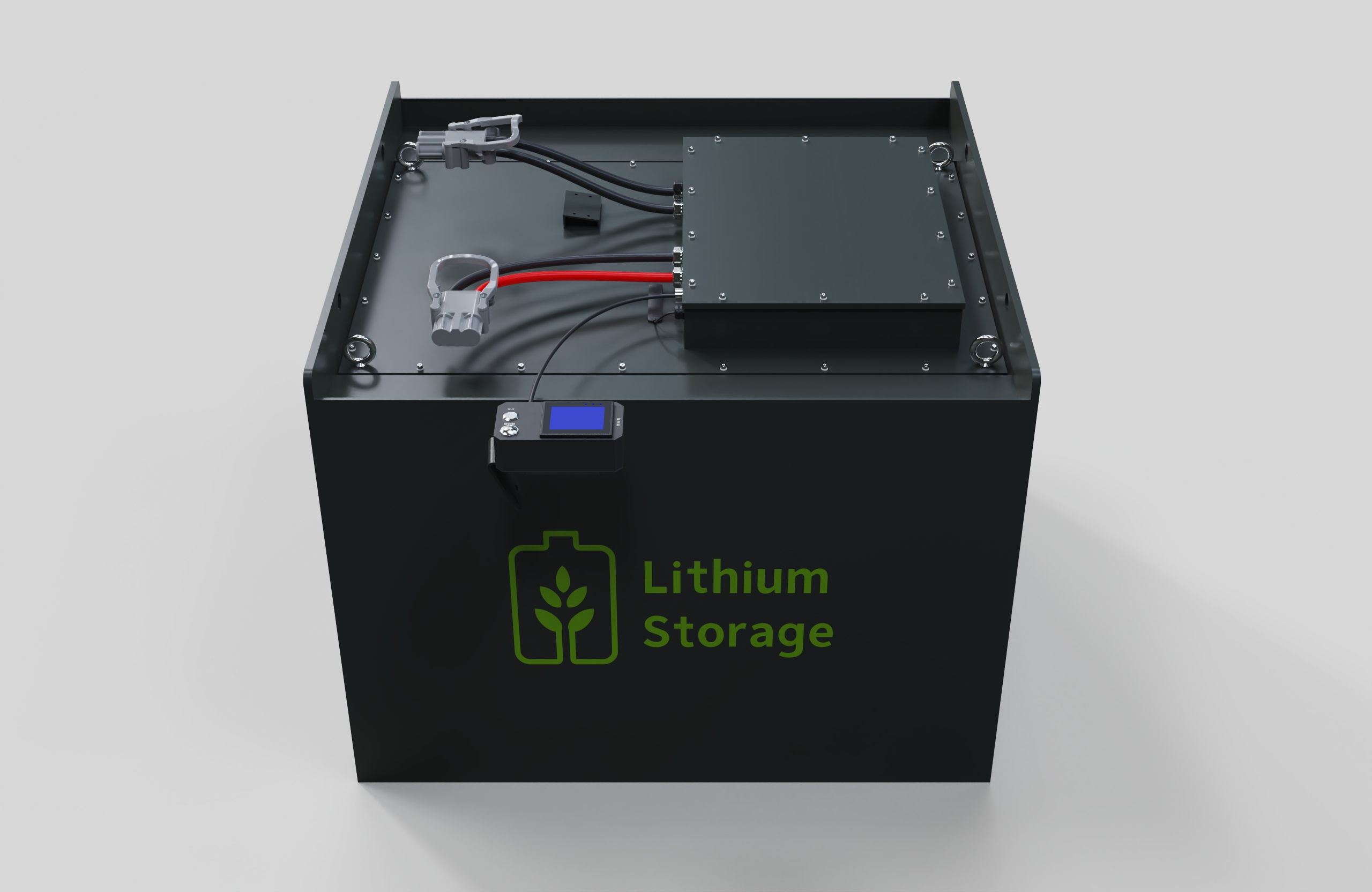
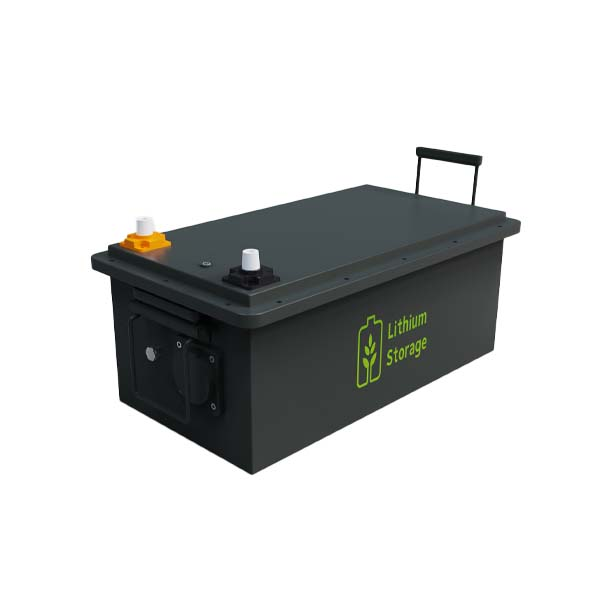
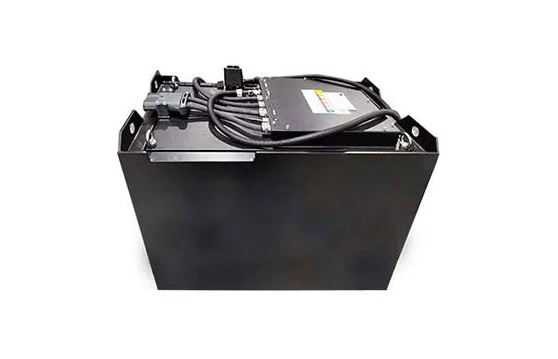
LITHIUM STORAGE manufactures standard and customized LFP modules from 50Ah to 302Ah, with banding and frame-welded structures for industrial vehicles, commercial vehicles, forklifts, and energy-storage applications.
Material Handling Has a Different Battery Duty Cycle
A forklift battery does not operate like a passenger-EV battery.
In a busy logistics facility, equipment may need to:
Start and stop hundreds of times per shift
Deliver high current during acceleration and lifting
Operate for one, two, or three shifts
Recharge during lunch or operator breaks
Perform repeated partial charge/discharge cycles
Work in cold stores or demanding industrial environments
Remain available with minimal maintenance downtime
This makes availability and lifetime energy throughput more important than simply maximizing Wh/kg.
Major material-handling OEMs are also expanding lithium-ion adoption. Hyster's 2026 lithium-ion forklift platform specifically uses LFP chemistry and highlights fast charging, long lifespan, temperature tolerance, and suitability for multi-shift applications. Crown likewise identifies lithium-ion systems as particularly useful for multi-shift operation because they can accept frequent opportunity charging during breaks and shift changes.
1. LFP Supports High-Frequency Cycling
Cycle durability is one of the strongest reasons LFP fits material handling.
Forklifts can accumulate cycles much faster than many other electric vehicles. If a truck effectively uses one full battery cycle per operating day over 300 days per year, it could accumulate around:
300 cycles/year × 8 years = 2,400 equivalent cycles
More demanding multi-shift fleets may reach significantly higher lifetime energy throughput.
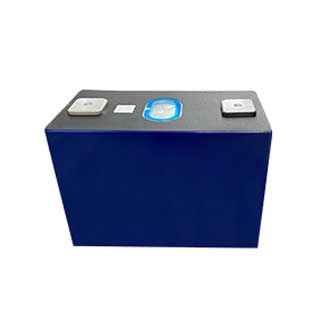
LITHIUM STORAGE's standard 280Ah LFP cell is specified at 4,000 cycles under its stated test conditions, while its deep-cycle 280Ah version is rated for 6,000 cycles and is also identified as suitable for material-handling equipment.
These figures should not be treated as universal guarantees for every forklift pack. Actual service life depends on depth of discharge, temperature, charging rate, SOC window, pack design, and operating conditions.
The important point is that LFP chemistry is well aligned with applications where the battery is expected to cycle repeatedly for years.
2. Opportunity Charging Can Reduce Battery Swapping
Traditional lead-acid forklift fleets may require battery swapping, dedicated battery rooms, watering, equalization, and cooling periods depending on the operating model.
Lithium-ion changes that workflow.
Opportunity charging allows operators to recharge during natural downtime such as:
Crown defines opportunity charging as charging during available periods throughout a shift and notes that lithium-ion systems can use these charging windows without requiring battery swapping.
LITHIUM STORAGE states that its LiFePO4 forklift battery systems can charge to approximately 80% within one hour, depending on the battery and charger configuration.
For high-utilization fleets, this can change battery sizing strategy. Instead of installing enough capacity for an entire day with no charging, operators may be able to replenish energy throughout the working schedule.
3. LFP Can Reduce Routine Battery Maintenance
Material handling managers do not evaluate battery cost only by the purchase price. Labor and maintenance also matter.
Lead-acid batteries commonly require activities such as:
Watering
Electrolyte checks
Cleaning
Equalization
Ventilation management
Battery changing
Lithium-ion batteries are sealed and do not require watering. Hyster and Crown both highlight zero or substantially reduced routine battery maintenance as an operational benefit of lithium-ion forklift systems.
LITHIUM STORAGE likewise describes its forklift lithium batteries as maintenance-free compared with conventional lead-acid systems.
For a small fleet, the labor saving may be moderate. Across dozens or hundreds of trucks, however, removing recurring battery-service tasks can become operationally significant.
4. LFP's Thermal Stability Fits Industrial Environments
Battery safety becomes especially important when large numbers of electric vehicles operate inside warehouses, factories, or logistics centers.
LFP's phosphate-based cathode chemistry offers relatively strong thermal stability compared with higher-energy-density chemistries such as NCM. This does not eliminate the need for a BMS, temperature monitoring, electrical protection, or proper pack engineering, but it provides a useful chemistry-level safety margin.
Hyster specifically cites LFP's improved heat stability and long life as reasons for using the chemistry in forklift applications.
For material handling, this characteristic is attractive because equipment may operate:
The chemistry therefore fits applications where safety and predictable long-term operation often matter more than achieving the maximum possible energy density.
5. Modular Design Makes Different Forklift Platforms Easier to Support
Material handling equipment is highly diverse.
A compact pallet truck and a heavy counterbalance forklift may require very different:
Voltages
Ah capacities
Battery box dimensions
Discharge currents
Weight ranges
Mechanical structures
This is where modularity becomes important.
LITHIUM STORAGE's LFP module range covers 50Ah, 100Ah, 135Ah, 230Ah, 280Ah, and 302Ah configurations. Standard modules include 1P4S and 1P8S arrangements, with nominal module energies ranging from approximately 1.28 kWh to 7.731 kWh, depending on model.
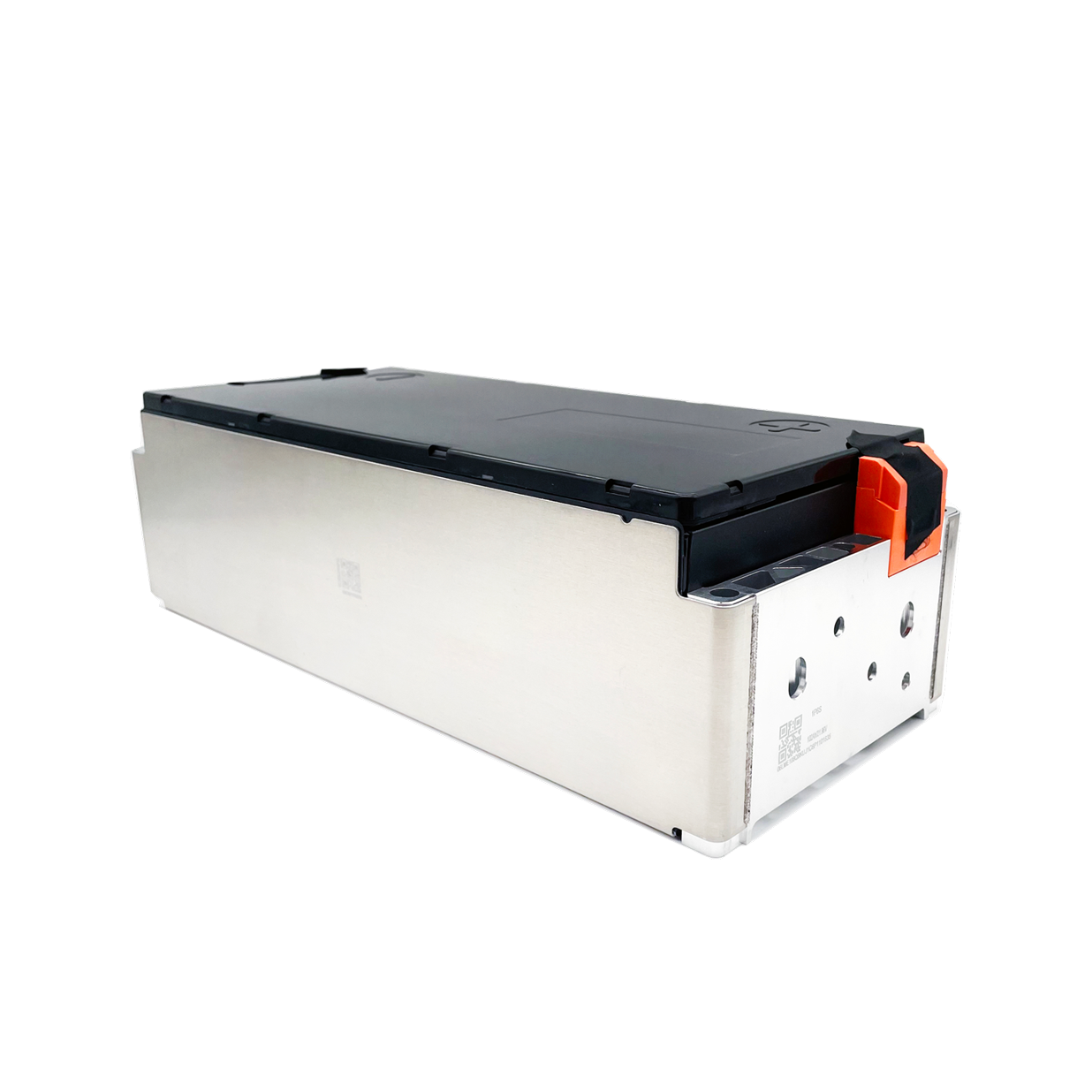
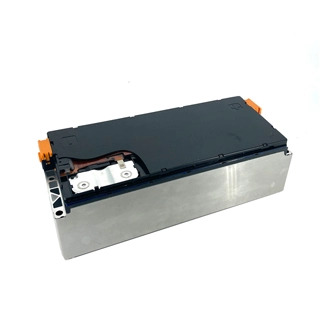
Its banding-module platform is specifically identified for commercial vehicles, material handling equipment such as forklifts, and energy storage, and allows dimensions to be customized more flexibly than fixed VDA frame-welded modules.
For forklift OEMs and battery pack integrators, this means system design can begin with a suitable module architecture rather than developing every battery from individual cells.
6. Banding Modules Offer Flexibility for Industrial Vehicles
LITHIUM STORAGE distinguishes between two main module constructions:
| Module Type | Main Characteristics | Typical Application |
|---|
| Frame-welded module | Standardized VDA dimensions, high structural strength | Passenger and commercial vehicles |
| Banding module | More flexible dimensions and configuration | Forklifts, commercial vehicles, energy storage |
The company's banding modules can also be customized in series/parallel arrangement, connector configuration, end plates, wiring, and other structural details.
This flexibility is particularly relevant to the material-handling market because legacy forklift battery compartments were not originally designed around one universal lithium module format.
An experienced LFP Module Manufacturer can therefore adapt the module architecture around the available battery enclosure and vehicle requirements.
7. Stable Voltage Helps Maintain Equipment Performance
Forklifts require reliable power not only for traction but also for lifting, steering, hydraulic systems, and electronic controls.
Lithium-ion batteries generally maintain a flatter discharge-voltage profile than lead-acid batteries. LITHIUM STORAGE highlights stable power output throughout discharge as one of the advantages of its forklift lithium systems.
In practical operation, this can help equipment maintain more consistent performance as battery SOC decreases.
For high-throughput warehouses, avoiding noticeable performance decline late in the shift can be valuable because vehicle productivity is tied directly to pallet movements and operating time.
8. LFP Works Well with BMS-Based Fleet Management
Modern material handling batteries increasingly function as intelligent power systems rather than passive energy sources.
The BMS can monitor:
Individual cell voltage
Module temperature
Pack voltage
Current
State of charge
Fault conditions
LITHIUM STORAGE specifically recommends evaluating these BMS functions when purchasing forklift batteries.
This also supports integration with vehicle controllers and fleet-management systems.
Hyster's current lithium platform, for example, integrates battery data with truck telemetry so fleet managers can access battery status alongside vehicle operating information.
For larger warehouses, this ability to track battery condition can support charging management, maintenance planning, and fleet utilization.
9. LFP Can Simplify Multi-Shift Operations
A major advantage of lithium-powered material handling is the potential to operate one battery across several shifts.
Traditional multi-shift lead-acid fleets may use:
1 forklift + multiple batteries + battery-changing equipment
A lithium fleet may be designed around:
1 forklift + 1 battery + strategically located chargers
provided that the duty cycle and available charging windows support the model.
Crown states that its lithium-ion systems can handle single or multiple shifts without the downtime associated with battery changing when opportunity charging is properly integrated.
This can reduce requirements for:
One Crown customer case reported eliminating its battery room and additional lead-acid inventory after moving to an opportunity-charged lithium system, recovering substantial warehouse space in the process.
The exact savings depend heavily on fleet size and utilization, but the operational model explains why lithium adoption is increasingly attractive for high-throughput facilities.
10. LFP Is Suitable for More Than Conventional Forklifts
Material handling includes much more than counterbalance trucks.
LFP modules can also be configured for:
Electric pallet trucks
Reach trucks
Stackers
Tow tractors
AGVs
AMRs
Airport ground-support equipment
Automated warehouse vehicles
Industrial utility vehicles
LITHIUM STORAGE's LFP40Ah power cell is intended for higher-power applications such as AGVs, while its larger 205Ah, 230Ah, 280Ah, and 302Ah cells are positioned for forklifts, buses, and trucks.
This broad capacity range gives an LFP Module Manufacturer more flexibility to support both compact automated equipment and higher-capacity motive-power systems.
What Should Buyers Consider Before Selecting an LFP Module?
LFP is well suited to material handling, but choosing a module only by Ah capacity is not enough.
Forklift OEMs and battery-system integrators should provide:
Required system voltage
Required usable kWh
Battery compartment dimensions
Continuous traction current
Peak lifting current
Maximum charging current
Number of shifts
Hours per shift
Opportunity-charging windows
Ambient temperature
Minimum required battery weight
Vehicle communication protocol
Target service life
Applicable certification requirements
Battery weight deserves particular attention in counterbalanced forklifts. Unlike passenger EVs, reducing battery mass is not always beneficial because the battery can form part of the truck's required counterweight. Any lithium conversion should therefore respect the vehicle manufacturer's specified battery-weight range.
Why LFP Modules Are Becoming a Natural Fit for Material Handling
The growth of LFP in material handling is not driven by one specification.
It comes from the combination of:
Long cycle-life potential for equipment that runs every day.
Opportunity charging that can reduce battery swapping and downtime.
Low routine maintenance compared with flooded lead-acid batteries.
Thermal stability suitable for industrial environments.
Flexible module architecture for different forklift battery compartments.
BMS integration for modern fleet and vehicle management.
Scalable capacities covering pallet trucks, AGVs, forklifts, and larger industrial vehicles.
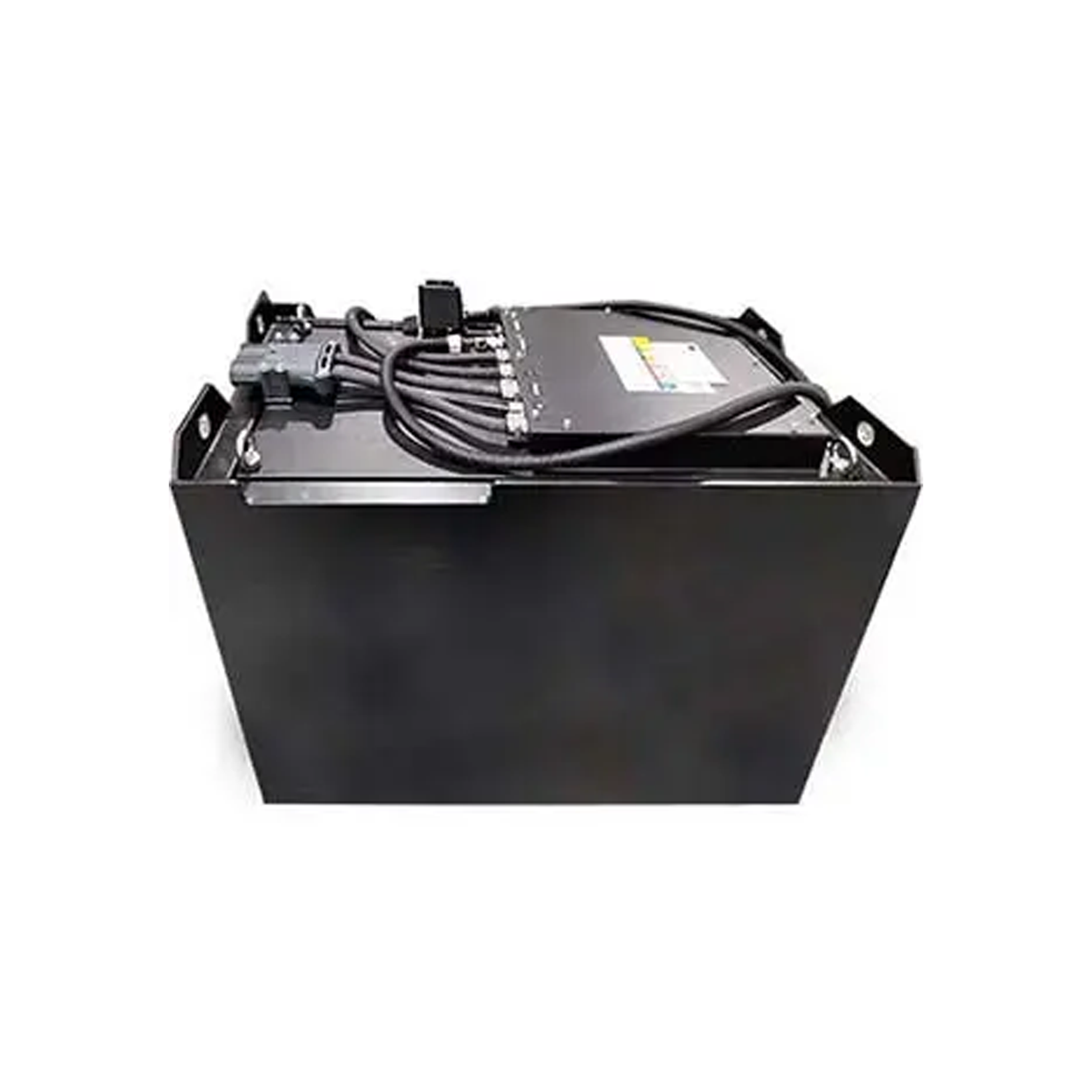
LITHIUM STORAGE has supplied LFP solutions for forklift applications since 2018 and today manufactures LFP cells, standard and custom modules, BMS-equipped battery packs, and complete 24V, 48V, and 80V forklift battery systems.
For forklift OEMs, battery integrators, and fleet operators, working with an experienced LFP Module Manufacturer allows the battery architecture to be matched to the real duty cycle rather than simply replacing one battery chemistry with another.
As material handling moves toward higher utilization, automation, opportunity charging, and lower-maintenance power systems, LFP modules are gaining traction because their strengths align closely with what warehouses and industrial fleets actually need: reliable energy, repeated cycling, flexible integration, and maximum equipment uptime.
 EN
EN
 fr
fr  de
de  it
it  ru
ru  es
es  pt
pt  tr
tr  jp
jp  ar
ar  th
th 


 No.9 East Mozhou Road, Jiangning District, 211111, Nanjing City, China