One of the major advantages of a Lithium Ion Forklift Battery is that it requires far less routine maintenance than a conventional flooded lead-acid battery. There is no electrolyte watering, acid-level checking, or periodic equalization in normal lithium-ion operation. However, “maintenance-free” does not mean that operators can ignore charging practices, connectors, temperature, physical condition, or battery-management warnings.
For warehouses, distribution centers, manufacturing plants, and other high-utilization material-handling operations, a few simple practices can help maintain battery performance, prevent avoidable downtime, and extend useful service life.
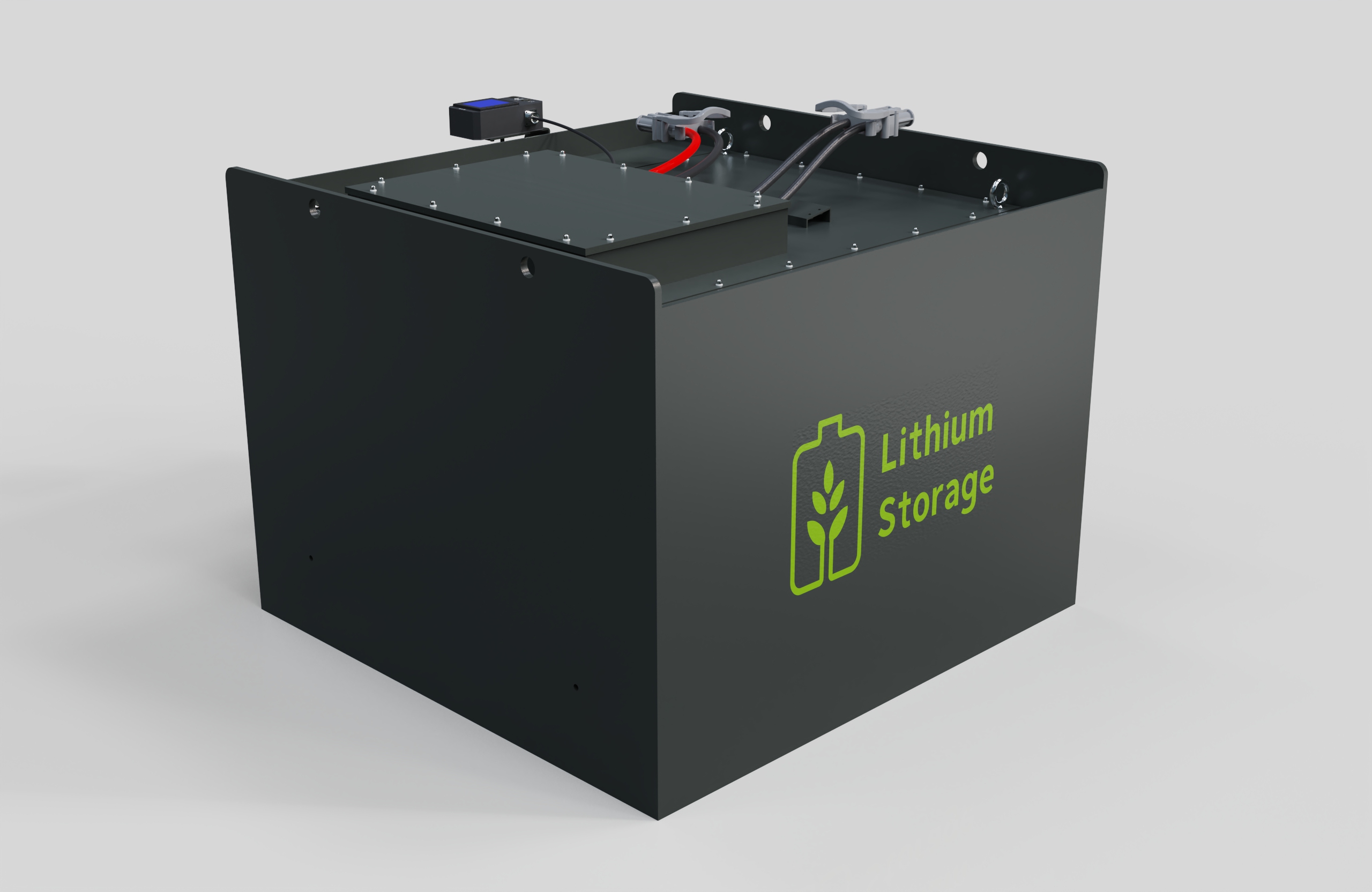
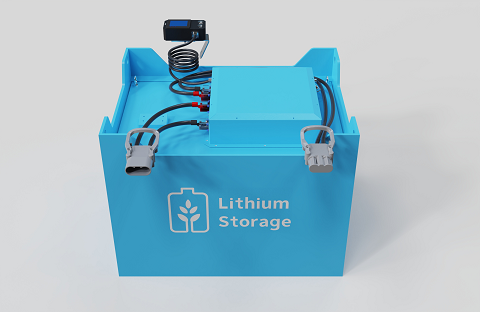
LITHIUM STORAGE provides LiFePO4 forklift battery systems for material-handling equipment, including 24V, 36V, 48V, and 80V-class solutions, with customized capacity, enclosure dimensions, weight, connectors, and communication options for different forklift platforms.
1. Use the Correct Charger and Follow a Consistent Charging Strategy
Charging practice is one of the most important factors affecting lithium forklift battery performance.
A forklift battery should always be paired with a charger configured for the correct:
A charger labeled with the same nominal voltage is not automatically compatible. Modern lithium forklift batteries may communicate with the charger through CAN bus or another interface to manage charge current, temperature, state of charge, and protection functions.
LITHIUM STORAGE states that its lithium forklift batteries support rapid charging, with some configurations capable of reaching approximately 80% charge within one hour, depending on the battery and charging system.
Take Advantage of Opportunity Charging
Unlike conventional lead-acid batteries, lithium-ion batteries are well suited to opportunity charging. Operators can connect the forklift during natural downtime such as:
Toyota notes that opportunity charging can support multi-shift operations by using available breaks to replenish the battery instead of interrupting production for battery changes.
For a Lithium Ion Forklift Battery, frequent controlled partial charging can therefore be more practical than waiting until the battery is almost empty.
However, fleet managers should still calculate whether the available charger output and charging windows can replace the energy consumed during each shift. Fast charging capability alone will not solve an undersized charger or insufficient facility power.
2. Keep the Battery Within Its Specified Temperature Range
Temperature has a major influence on lithium-ion battery charging, discharge capability, and aging.
Excessive heat can accelerate degradation, while low temperatures can increase internal resistance and restrict charging capability. Toyota specifically advises keeping lithium-ion forklift batteries away from elevated temperatures and following the battery manufacturer's specified charging temperature range.
For normal operation, fleet managers should monitor:
Warehouse ambient temperature
Battery temperature during charging
Battery temperature during high-current lifting
Cold-storage exposure
Charger location and ventilation
Temperature alarms reported by the BMS
This becomes particularly important in refrigerated warehouses.
A forklift may be capable of discharging inside a freezer while charging is restricted until the cells are warmed to an acceptable temperature. A battery intended for cold-storage operation may therefore need integrated heating, insulation, temperature sensors, and BMS-controlled charging protection.
LITHIUM STORAGE offers battery customization that can include heating for low-temperature applications.
Never assume that because a battery can operate at a certain low temperature it can also be charged at that temperature. Charging and discharging temperature limits should be checked separately against the specific battery specification.
3. Inspect Connectors, Cables, Enclosures, and Mounting Regularly
Lithium batteries eliminate many electrochemical maintenance tasks, but the battery is still installed in a vehicle exposed to vibration, impact, dust, repeated charging connections, and continuous movement.
A regular visual inspection should check:
Crown identifies damaged charging cables and connectors as an important cause of charging problems and notes that poor cable management can cause premature wear, connection failures, and excessive heat at charging interfaces.
Operators should never pull a charging connector by the cable or allow charging cables to be repeatedly driven over, crushed, or sharply bent.
Pay Particular Attention After an Impact
Forklifts work in environments where collisions can occur. Battery enclosures can potentially be damaged by dock incidents, truck impacts, tip-overs, or incorrect battery handling.
Hyster's lithium-ion battery guidance states that a battery exposed to significant physical damage, water, fire, or similar events should be inspected by appropriately trained personnel before returning it to service.
If the battery shows swelling, deformation, unusual odor, abnormal heating, damaged cables, or persistent BMS faults, remove the truck from normal operation and follow the battery manufacturer's service procedure rather than continuing to use it.
4. Pay Attention to the BMS—Do Not Ignore Warnings
The Battery Management System is central to a modern Lithium Ion Forklift Battery.
Depending on battery design, the BMS can monitor and control:
Lithium Storage emphasizes BMS functions and communication compatibility as important specifications when matching a lithium battery to a forklift.
Operators should therefore be trained to recognize battery warnings rather than simply restarting the truck whenever an alarm appears.
Repeated warnings may indicate issues such as:
High temperature: operating load, ambient conditions, or charging may be causing excessive heat.
Low temperature: charging may be temporarily restricted.
Low state of charge: the operating and opportunity-charging schedule may need adjustment.
Cell voltage imbalance: professional inspection may be required.
Communication fault: the battery, forklift controller, charger, or CAN connection may not be communicating correctly.
Over-current warning: the application may be exceeding the specified continuous or peak battery current.
Modern forklift systems can also integrate battery information with vehicle telemetry. Hyster, for example, uses battery-to-truck communication to provide state-of-charge and battery-temperature information to operators and fleet managers.
Regularly reviewing battery data can help identify problems before they become unscheduled downtime.
5. Store the Battery Correctly During Extended Downtime
Not every forklift operates continuously throughout the year. Seasonal warehouses, backup trucks, project equipment, and temporary fleets may sit unused for weeks or months.
Long-term storage should follow the battery manufacturer's instructions rather than simply parking the forklift with an empty battery.
Before extended storage:
Place the battery within the recommended state-of-charge range.
Turn off the battery or equipment as specified.
Disconnect unnecessary loads where permitted.
Store in a clean and dry environment.
Avoid direct sunlight and external heat sources.
Protect connectors from moisture and contamination.
Periodically check battery state of charge if required.
Recharge according to the manufacturer's storage schedule.
Hyster recommends that lithium-ion forklift batteries be charged in clean, dry, well-ventilated areas away from direct sunlight, moisture, excessive heat, and corrosive chemicals or gases.
The same environmental controls are sensible when equipment will remain parked for an extended period.
Do not intentionally leave a lithium forklift battery deeply discharged for prolonged storage. The BMS itself consumes a small amount of energy, and extended storage at very low SOC can eventually allow cell voltage to fall below the desired range.
Lithium Forklift Batteries Need Different Maintenance Than Lead-Acid
One of the most common mistakes is applying lead-acid maintenance practices to lithium batteries.
| Maintenance Item | Flooded Lead-Acid | Lithium-Ion Forklift Battery |
|---|
| Add water | Required periodically | Not required |
| Check electrolyte | Required | Not required |
| Equalization charging | Typically required periodically | Not used in the same way |
| Acid spill management | Required | No liquid acid watering routine |
| Opportunity charging | Application-dependent and can affect life | Well suited |
| BMS monitoring | Usually not comparable | Central to battery operation |
| Cable/connector inspection | Required | Required |
| Temperature monitoring | Important | Particularly important |
| Physical inspection | Required | Required |
Hyster describes lithium-ion forklift batteries as requiring no routine watering or similar lead-acid maintenance, while Toyota likewise notes that sealed lithium-ion cells remove watering and equalization requirements.
This reduction in routine maintenance is one of lithium technology's strongest advantages, but proper operating discipline remains essential.
Build a Simple Maintenance Checklist for Operators
For daily fleet management, lithium battery care does not need to be complicated.
Before or during each shift, operators can verify:
Battery SOC: Is there enough charge for the planned work?
Battery display: Are there any active BMS warnings?
Cable and connector condition: Is there visible damage or overheating?
Enclosure: Are there signs of impact, deformation, or abnormal heat?
Charging plan: Are scheduled opportunity-charging periods being used?
Periodic fleet-level checks can then review charger condition, connector wear, fault histories, operating temperatures, SOC patterns, and battery performance.
This approach is much more useful than waiting until runtime noticeably decreases.
Maintenance Habits That Can Shorten Battery Life
Even a high-quality lithium battery may experience reduced service life if it is consistently operated outside its intended conditions.
Avoid practices such as:
Using an unapproved charger
Ignoring repeated BMS alarms
Routinely operating the battery to extremely low SOC
Charging outside the permitted temperature range
Allowing cables and connectors to become damaged
Continuing operation after serious battery impact
Exposing the battery to excessive heat or moisture
Leaving the battery deeply discharged during long storage
Proper battery care is therefore primarily about charging, operating conditions, inspection, and monitoring, rather than traditional mechanical maintenance.
Match Battery Maintenance to the Fleet Duty Cycle
A pallet truck used occasionally for one shift has different battery requirements from an 80V counterbalance forklift operating three shifts per day.
Fleet managers should evaluate:
LITHIUM STORAGE supplies customized forklift batteries across 24V, 36V, 48V, and 80V platforms, with battery capacity, enclosure dimensions, counterweight, connectors, communication, and low-temperature options configurable for different vehicle requirements.
Matching the battery and charger to the actual duty cycle is one of the most effective ways to avoid operating conditions that accelerate battery aging.
Keep Your Lithium Ion Forklift Battery Working Reliably
Lithium forklift batteries require less routine maintenance than lead-acid batteries, but their long-term performance still depends on how they are used.
The five essential practices are straightforward:
Use the correct charger and opportunity-charge intelligently.
Keep the battery within its specified temperature range.
Inspect cables, connectors, and the enclosure regularly.
Monitor BMS warnings and operating data.
Follow the correct procedure during extended storage.
LITHIUM STORAGE provides LiFePO4 forklift battery solutions for pallet trucks, stackers, reach trucks, electric counterbalance forklifts, and other material-handling equipment. Its customizable Lithium Ion Forklift Battery platform is designed to replace lead-acid systems while supporting fast charging, stable power output, reduced routine maintenance, and longer service life.
A well-maintained lithium battery does not require complicated daily servicing. What matters most is correct charging, suitable operating temperature, early identification of physical or electrical problems, and disciplined fleet management.
 EN
EN
 fr
fr  de
de  it
it  ru
ru  es
es  pt
pt  tr
tr  jp
jp  ar
ar  th
th 


 No.9 East Mozhou Road, Jiangning District, 211111, Nanjing City, China