Choosing between LFP (lithium iron phosphate) and NCM (nickel cobalt manganese) batteries for industrial equipment is not simply a question of which chemistry is better. The correct choice depends on what the equipment needs most: long cycle life, thermal stability, high energy density, compact dimensions, lower weight, or a balance of several factors.
LFP is widely selected for applications where frequent cycling, safety, and long service life are priorities. NCM, by contrast, offers significantly higher gravimetric and volumetric energy density, making it attractive for mobile equipment and vehicles where battery space and weight directly affect performance.
For procurement teams and engineers, the practical question is therefore: Which chemistry provides the better system-level result for your specific industrial application?
LFP vs NCM: The Main Differences
LFP and NCM are both lithium-ion chemistries, but their cathode materials give them different performance characteristics.
| Factor | LFP Battery | NCM Battery |
|---|
| Energy density | Lower | Higher |
| Thermal stability | Generally higher | Requires more careful thermal management |
| Cycle life | Generally longer | Generally shorter |
| Cell voltage | Approx. 3.2–3.3 V nominal | Approx. 3.6–3.7 V nominal |
| Weight for the same energy | Higher | Lower |
| Space required for the same energy | Usually greater | Usually smaller |
| Typical priority | Life, safety, repeated cycling | Energy density, weight and compactness |
| Common uses | ESS, forklifts, industrial equipment | EVs, mobile machinery, space-limited systems |
A comparative review of LFP and NCM technologies reports typical gravimetric energy-density ranges of approximately 90–160 Wh/kg for LFP and 150–260 Wh/kg for NCM, while LFP generally provides longer cycle life and greater thermal stability.
These differences explain why neither chemistry is universally superior.
When Is LFP Better for Industrial Equipment?
LFP is often the more practical choice when equipment operates for long hours and the battery is charged and discharged frequently.
Typical examples include:
Electric forklifts
AGVs and AMRs
Warehouse equipment
Floor-cleaning machines
Stationary energy storage
Backup power
Industrial machinery with daily cycling
Equipment operating where thermal safety is a major concern
The principal advantage is lifecycle performance.
If an industrial vehicle is charged and discharged every working day, battery replacement frequency can have a significant effect on total ownership cost. The generally longer cycle life of LFP can therefore outweigh its lower energy density.
LFP also has higher inherent thermal stability than NCM. This can simplify safety management, although a complete battery system still requires a properly designed BMS, electrical protection, thermal management, enclosure, and cell monitoring.
For stationary equipment or machines where battery weight does not strongly affect productivity, LFP's combination of cycle life and stability often makes it the logical choice.
When Does NCM Have an Advantage in Industrial Use?
Industrial does not always mean stationary or slow-moving.
Some industrial applications have strict limitations on battery volume and weight. In these cases, NCM cells can offer an important engineering advantage because more energy can be stored within a given mass or installation space.
Typical examples may include:
Electric commercial vehicles
Specialized mobile machinery
Compact electric vehicles
Automated equipment with limited battery compartments
High-energy mobile platforms
Applications where reducing battery mass improves range or payload
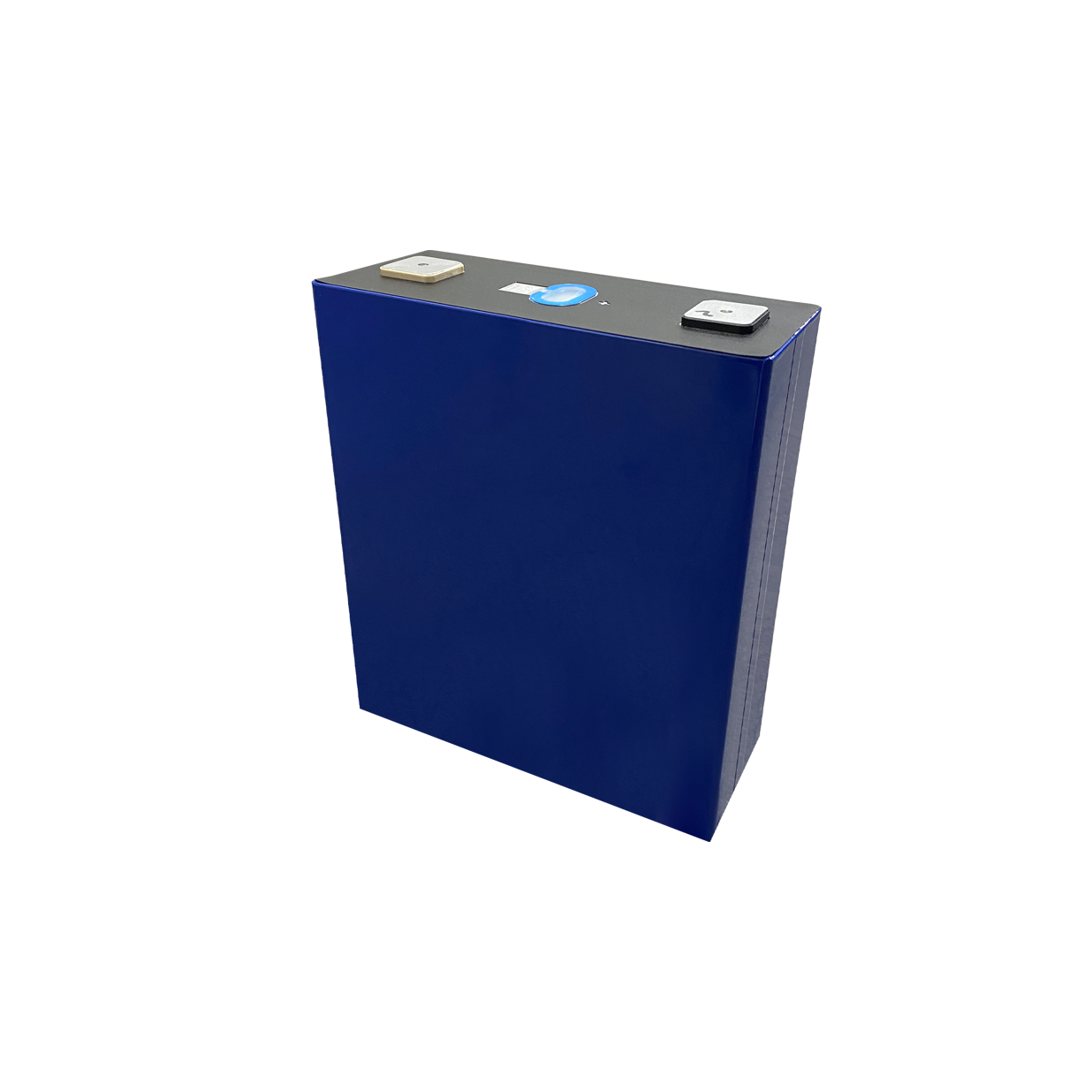
Lithium Storage's NCM102Ah and NCM177Ah cells are based on NCM523 chemistry and VDA-dimensional concepts. The company lists gravimetric and volumetric energy densities of 220 Wh/kg and 506 Wh/L for the NCM102Ah, and 240 Wh/kg and 550 Wh/L for the NCM177Ah.
This is the key reason to consider NCM for industrial mobility: the chemistry can help engineers obtain more usable energy without increasing battery size proportionally.
Why Energy Density Matters More Than It May Seem
Suppose two industrial vehicles need the same usable battery energy.
If the lower-energy-density chemistry requires a larger and heavier pack, the difference can affect more than just battery cost. It may influence:
For warehouse equipment with ample battery space, these differences may be relatively unimportant.
For an electric truck, compact industrial vehicle, or other mobile platform where installation volume is tightly constrained, they can become critical.
This is where an experienced NCM Cells Manufacturer can be relevant: cell selection needs to be evaluated together with module dimensions, voltage architecture, available installation space, thermal-management strategy, and target range rather than using capacity alone.
What About Safety?
Safety is one of the strongest arguments commonly made for LFP.
Its phosphate-based cathode structure is generally more thermally stable, while NCM chemistry is more sensitive to elevated temperatures and severe abuse. Comparative research therefore typically ranks LFP above NCM in terms of inherent thermal stability.
However, industrial battery safety cannot be judged by chemistry alone.
A safe NCM battery system depends on several additional layers of engineering:
Cell consistency: cells with similar capacity, internal resistance, and electrochemical behavior reduce imbalance within the module.
BMS protection: voltage, current, state of charge, and temperature must be continuously monitored.
Thermal management: heat generated during charging and discharging needs to be controlled.
Mechanical protection: cells and modules must be protected against impact, vibration, deformation, and penetration.
Electrical design: overcharge, over-discharge, short-circuit, and over-current protection remain essential.
The decision should therefore be framed as different safety margins and engineering requirements, rather than “LFP is safe and NCM is unsafe.”
NCM Can Be Better Where Vehicle Range Matters
A mobile industrial vehicle must carry its own battery weight.
Increasing battery weight can reduce payload and affect energy consumption, which means the higher energy density of NCM can provide system-level advantages.
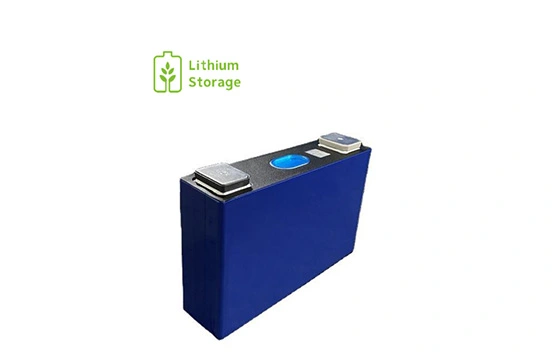
Lithium Storage specifically positions its NCM102Ah and NCM177Ah products for passenger vehicles and other vehicles with limited installation space. Both cells share similar width and height dimensions while using different thicknesses, allowing engineers to evaluate different capacities around established packaging constraints.
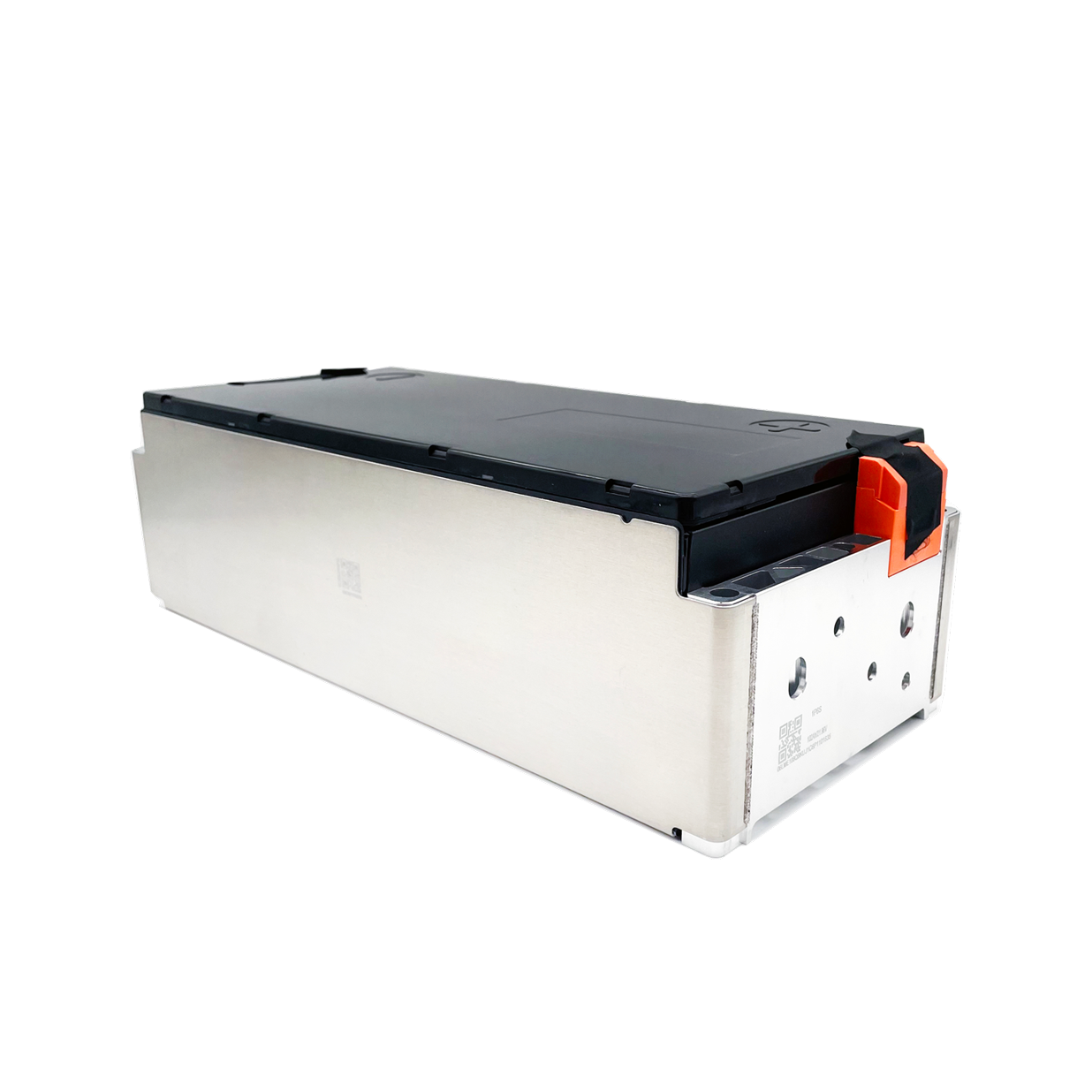
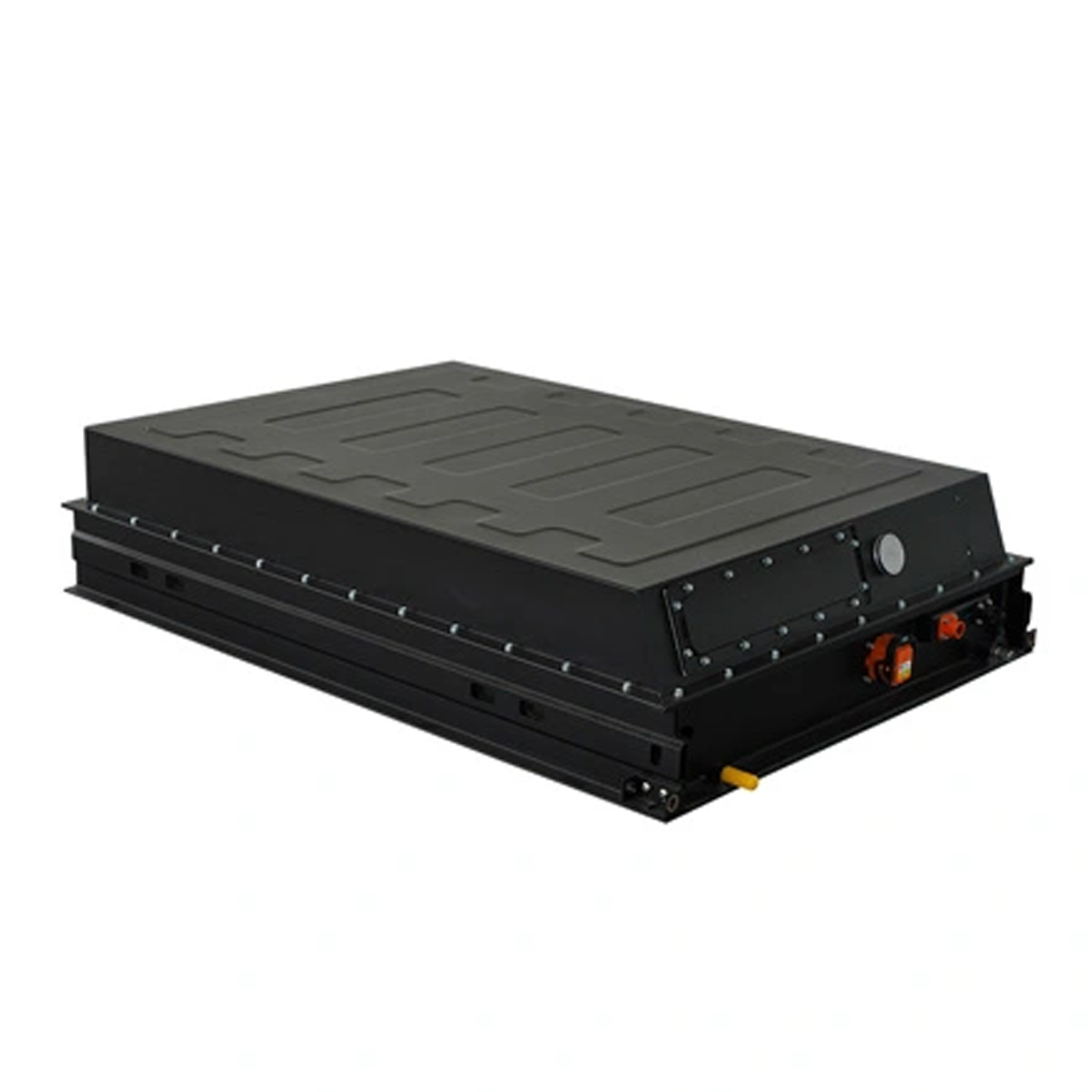
Lithium Storage also offers NCM modules, including VDA-format configurations for electric vehicles, buses, trucks and light electric vehicles.
For mobile industrial applications, evaluating a cell together with its available module architecture can shorten the system-design process compared with considering an isolated cell specification.
How Important Is Cycle Life?
Cycle life matters especially when equipment operates continuously.
A warehouse forklift may complete far more charging cycles over its operating life than a vehicle that is driven only occasionally. In such situations, LFP's longer cycle-life potential can translate into fewer battery replacements.
NCM may still be selected when space, energy density or vehicle range is more important than maximizing cycle count.
Therefore, ask:
How many full or partial cycles will the equipment complete per year?
If daily cycling is intensive and the equipment has enough room for a larger pack, LFP often makes more economic sense.
If annual cycling is more moderate but compactness and range are critical, NCM may provide the better balance.
Consider Operating Temperature and Cooling
Industrial batteries rarely work under laboratory conditions.
They may experience:
Hot warehouses
Outdoor summer operation
Cold climates
Fast charging
High discharge loads
Limited airflow
Dust and vibration
Because NCM generally requires more attention to thermal management, the pack design must ensure that cells remain within the specified temperature range during both charging and discharge.
This does not automatically make NCM unsuitable for industry. It simply means that cooling strategy, sensor placement, BMS thresholds, and pack architecture become more important parts of the system design.
Compare Total System Cost, Not Only Cell Price
Purchasing teams sometimes compare LFP and NCM using only price per cell or price per kWh.
For industrial projects, a better comparison includes:
Cell cost
Required number of cells
Pack weight
Pack volume
Cooling-system cost
BMS requirements
Expected cycle life
Replacement interval
Equipment downtime
Payload or range impact
A lower-cost cell does not necessarily result in the lowest-cost equipment platform.
Likewise, a higher-energy-density NCM cell may justify its cost if it allows a smaller battery, longer range, or greater payload.
Which Chemistry Fits Different Industrial Applications?
A practical starting point is:
Forklifts and Material Handling
LFP is usually favored because long cycle life, repeated daily charging and thermal stability tend to be more important than achieving minimum battery weight.
Stationary Energy Storage
LFP is generally preferred because space and weight are usually less restrictive, while cycle life and safety are major priorities.
Commercial and Electric Vehicles
Both can work. LFP may be preferred for lifecycle and safety, while NCM becomes attractive when range, vehicle weight or battery-space constraints dominate.
Compact Mobile Equipment
NCM deserves stronger consideration when the equipment must carry substantial energy within a restricted battery compartment.
Heavy-Duty Industrial Machinery
The answer depends on operating profile. Equipment with enough installation space and very high cycle requirements may favor LFP; mobile equipment that needs maximum energy per kilogram may benefit from NCM.
What Should You Ask an NCM Cell Supplier?
Before selecting a cell, provide the manufacturer with more than the required Ah capacity.
Useful project information includes:
Required system voltage
Required usable energy
Continuous and peak discharge current
Charging rate
Target operating time
Available battery dimensions
Maximum acceptable battery weight
Ambient temperature range
Expected cycle frequency
Cooling method
Target application and vehicle type
Certification requirements
Lithium Storage currently lists NCM102Ah, NCM177Ah and NCM243Ah cells, along with multiple NCM module configurations. Its NCM102Ah and NCM177Ah products use NCM523 chemistry, while available product certification documentation varies by cell and module model.
The company also states that its cell manufacturing platform currently includes 26 GWh of production capacity across 17 production lines, with additional capacity under construction, supported by MES and ERP-based manufacturing traceability.
So, Is LFP or NCM Better for Industrial Use?
The answer depends on what the industrial application needs most.
Choose LFP when your priority is:
Long cycle life
High thermal stability
Frequent charging and discharging
Stationary or weight-tolerant equipment
Lifecycle-oriented operation
Consider NCM when your priority is:
Higher energy density
Reduced battery weight
Smaller installation volume
Longer range from a limited battery space
Mobile industrial or electric vehicle applications
For industrial projects with tight packaging constraints, NCM can offer advantages that LFP cannot easily match. The higher energy density of Lithium Storage's NCM cells makes them particularly relevant to electric vehicles and other mobile systems where every kilogram and liter of battery space matters.
Instead of asking which chemistry is universally better, engineering and procurement teams should compare energy requirement, cycle life, available space, weight limit, safety strategy, operating temperature and lifecycle cost together. An experienced NCM Cells Manufacturer can then help determine whether NCM cells or modules provide the right balance for the intended industrial platform.
 EN
EN
 fr
fr  de
de  it
it  ru
ru  es
es  pt
pt  tr
tr  jp
jp  ar
ar  th
th 



 No.9 East Mozhou Road, Jiangning District, 211111, Nanjing City, China