Forklift Lithium Battery Manufacturer│LITHIUM STORAGE Forklift Lithium Battery Manufacturer│LITHIUM STORAGE
KB19

How to Choose Lithium Batteries for Electric Truck Conversions

Converting a diesel commercial truck to battery-electric power requires much more than installing enough lithium cells to reach the desired kWh. The battery system must satisfy vehicle voltage, range, peak motor power, regenerative charging, axle weight, packaging, thermal management, high-voltage distribution and functional safety requirements.

For buyers working with a Commercial Vehicle Lithium Battery Manufacturer, battery selection should therefore begin with the vehicle duty cycle and powertrain architecture.

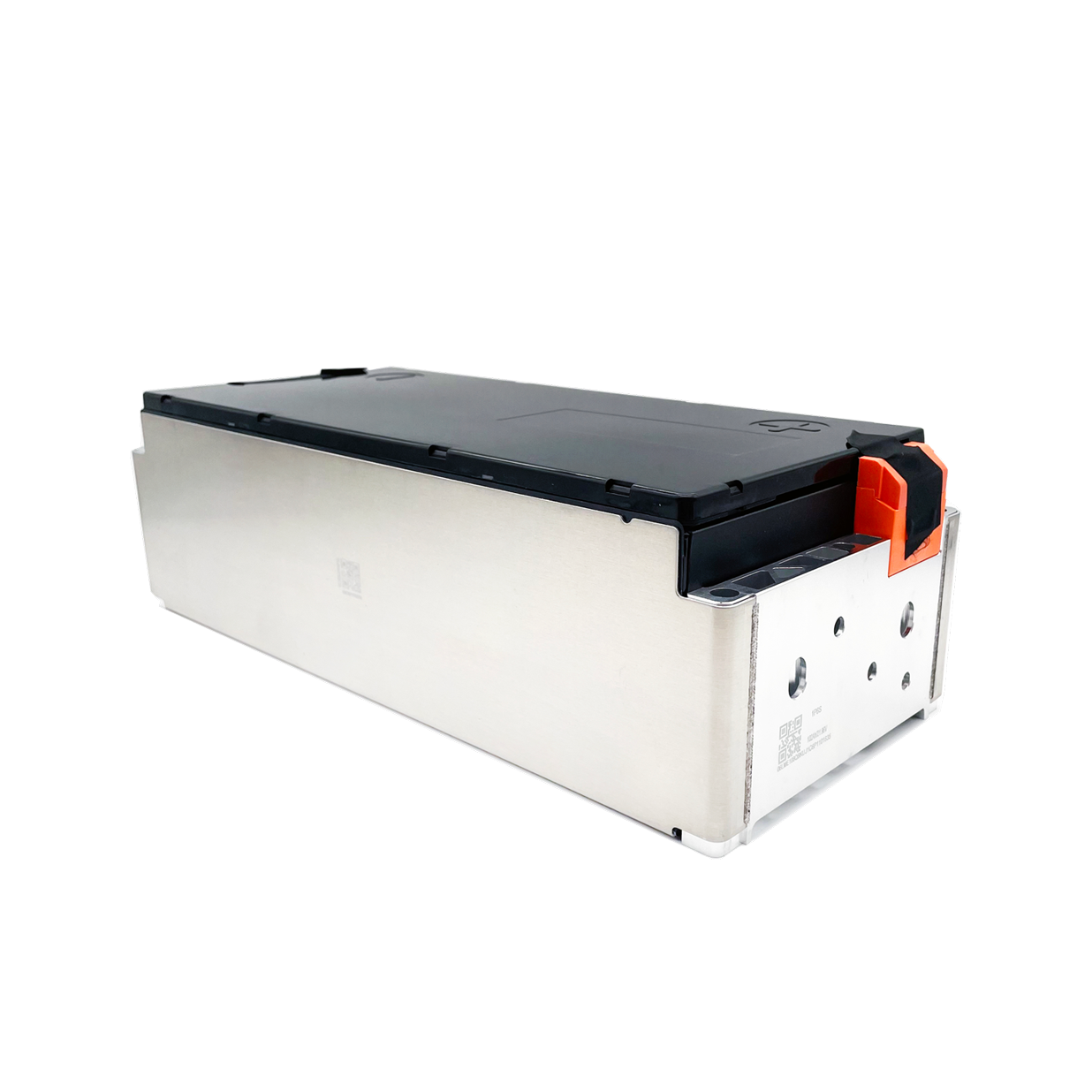
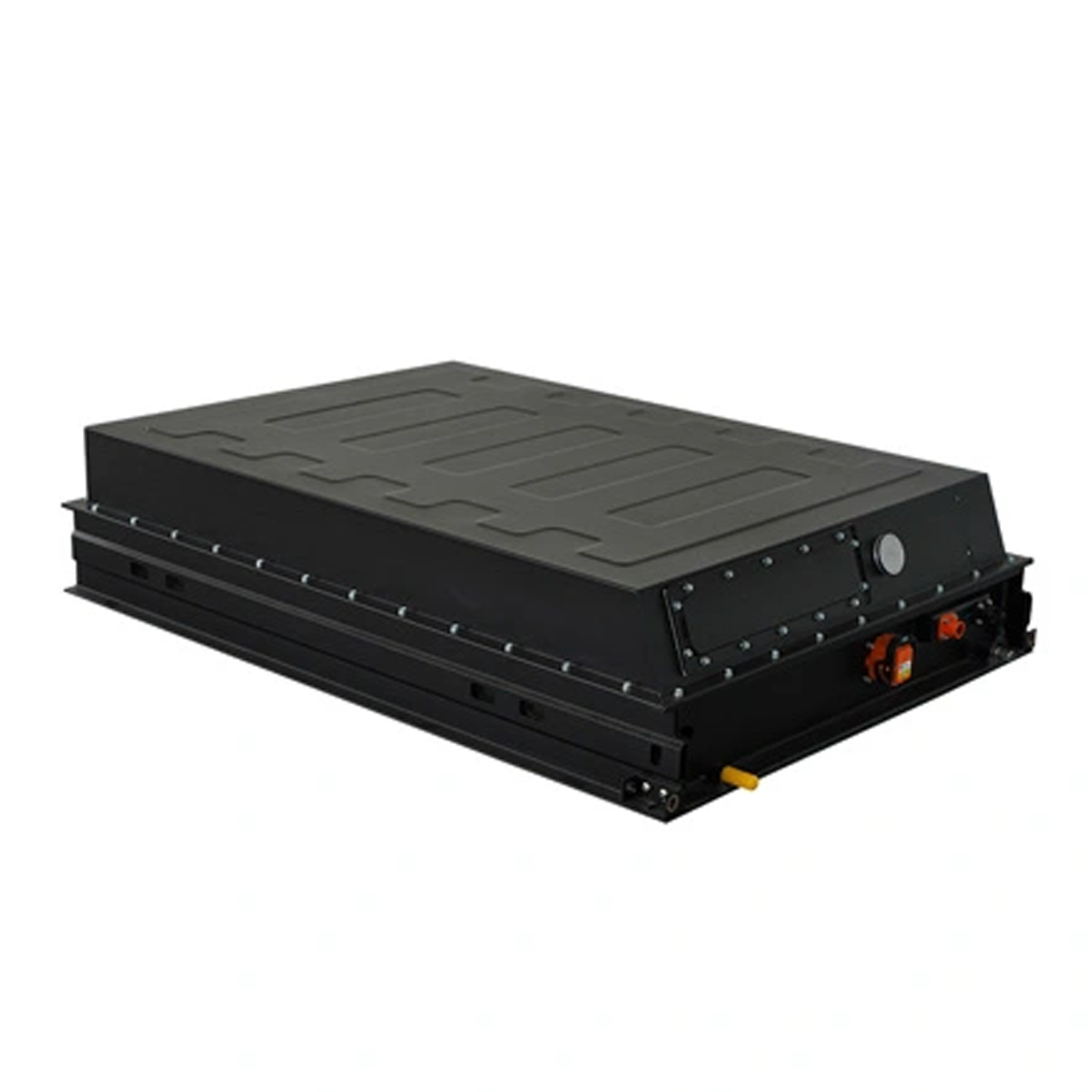
LITHIUM STORAGE's Flexi Pack C&D platform is designed specifically for commercial vehicles such as electric trucks, buses and heavy-duty mining vehicles. It uses LFP205Ah, 230Ah, 280Ah and 302Ah prismatic cells in fixed-format standard packs that can be combined into larger systems.

Step 1: Define Daily Energy Consumption

Start with required driving range.

The battery should be sized from:

vehicle energy consumption (kWh/km) × required range

Suppose a converted distribution truck consumes 1.1kWh/km and needs 180km between charges:

1.1 × 180 = 198kWh usable energy

Additional margin may be required for:

  • Cold weather

  • HVAC

  • Battery aging

  • Route variation

  • Reserve SOC

Therefore, nominal pack capacity would normally exceed the theoretical 198kWh.

Step 2: Define System Voltage

Commercial EV powertrains commonly use high-voltage architecture.

The correct system voltage depends on:

  • Traction inverter

  • Motor

  • DC/DC converter

  • HVAC

  • Onboard charger

  • Regenerative braking

  • PDU

LITHIUM STORAGE's Standard Pack C configurations include nominal voltages of 115.2V and 153.6V, while Standard Pack D versions use 105.6V and 144V depending on cell arrangement. Multiple packs can form a larger vehicle battery architecture under the system BMS/PDU design.

Step 3: Check Pack Energy

Current Flexi Pack configurations range from approximately 29.5 to 35.3kWh per standard pack, depending on cell and pack format.

Examples:

Pack ConfigurationNominal Energy
C, 280Ah / 115.2V32.26kWh
C, 302Ah / 115.2V34.79kWh
C, 230Ah / 153.6V35.33kWh
D, 280Ah / 105.6V29.57kWh
D, 230Ah / 144V33.12kWh

This modular approach allows capacity to be built around the vehicle instead of developing a new enclosure from scratch.

Step 4: Confirm Peak Power

Range determines energy, but acceleration and hill climbing determine power.

Calculate the battery's required:

  • Continuous discharge current

  • Peak discharge current

  • Peak duration

  • Regenerative charge current

A truck may have sufficient kWh but still perform poorly if the battery cannot supply the traction inverter's peak current.

Step 5: Account for Regenerative Braking

The battery also needs to accept energy.

During long downhill sections or repeated stop-start urban driving, regenerative braking can return substantial power to the battery.

The BMS needs enough:

  • Charge-current capability

  • SOC headroom

  • Temperature margin

If the battery is already near full SOC, regenerative braking may need to be reduced.

Step 6: Packaging and Axle Weight

Commercial vehicles have strict packaging constraints.

Battery placement affects:

  • Front/rear axle load

  • Vehicle center of gravity

  • Ground clearance

  • Payload

  • Crash protection

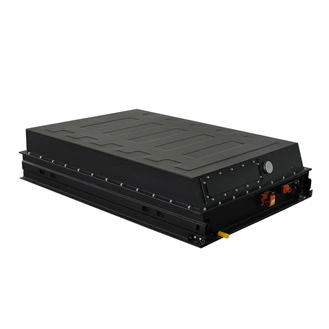
LITHIUM STORAGE's Standard Pack C and D use fixed external formats, approximately 1070 × 635 × 249mm and 1020 × 635 × 249mm respectively, with individual pack weights roughly 195–220kg depending on configuration.

A conversion designer can therefore plan vehicle packaging around known pack dimensions.

Step 7: Select Thermal Management

Commercial trucks operate:

  • In summer heat

  • In winter cold

  • At high continuous loads

  • During fast charging

The Flexi Pack platform uses liquid cooling and electric heating.

This is particularly useful where vehicle routes involve broad ambient-temperature ranges.

Step 8: Design the High-Voltage Distribution System

The battery does not connect directly to every vehicle component.

A commercial EV may require a PDU to distribute high-voltage DC power to:

  • Traction inverter

  • HVAC

  • DC/DC converter

  • Air compressor

  • Steering

  • Onboard charger

LITHIUM STORAGE supplies a PDU as part of its commercial-vehicle battery architecture.

Step 9: Check Serviceability

For commercial fleets, downtime matters.

Standardized packs can simplify:

  • Replacement

  • Spare-parts strategy

  • Pack diagnostics

  • Scaling across multiple truck platforms

This is one reason LITHIUM STORAGE emphasizes fixed pack formats with multiple cell/capacity options.

Step 10: Define the Charging Strategy

A city delivery truck returning to the depot every night may prioritize overnight charging.

A long-haul or high-utilization commercial vehicle may require:

  • Depot DC fast charging

  • Mid-route charging

  • Higher battery capacity

The battery size and charging infrastructure must therefore be designed together.

Information to Give the Battery Supplier

A Commercial Vehicle Lithium Battery Manufacturer should receive:

  • Vehicle GVW

  • Payload target

  • Range

  • Route profile

  • Energy consumption

  • Motor peak/continuous power

  • Inverter voltage

  • Maximum regenerative current

  • Available battery volume

  • Axle-weight limits

  • Minimum/maximum temperature

  • Charger power

LITHIUM STORAGE's Flexi Pack C&D gives electric-truck conversion projects a standardized LFP building block, but final suitability still depends on complete vehicle engineering.

The right battery is therefore the one that balances range, power, weight, packaging, thermal management and high-voltage integration—not simply the pack with the largest Ah rating.


Latest News & Blog in Lithium Storage

+86-18686976230
info@lslithiumbattery.com
0086-025-8773-9887
Register to download
close