Warehouse temperature has a direct impact on forklift battery runtime, charging speed, available power, and long-term service life. A forklift working in a climate-controlled distribution center faces very different battery conditions from one operating in a freezer warehouse, loading dock, foundry, or non-air-conditioned factory.
For a LiFePO4 Forklift Battery, temperature management is particularly important because charging and discharging do not have identical temperature limits. A battery may continue powering a forklift below 0°C while requiring heating or charging restrictions at the same temperature.
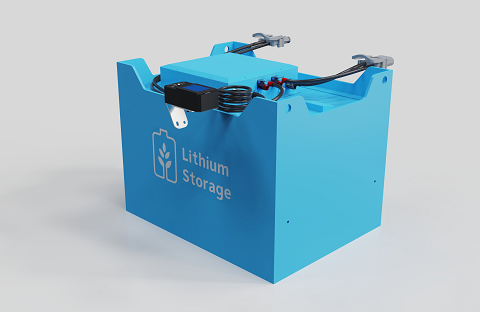
LITHIUM STORAGE supplies LiFePO4 forklift battery systems for pallet trucks, stackers, reach trucks, counterbalance forklifts, and other material-handling equipment. Its solutions cover 24V, 36V, 48V, and 80V-class applications and can be configured for different operating temperatures, battery compartments, capacities, connectors, and communication requirements.
Why Temperature Changes Lithium Battery Performance
Lithium-ion batteries depend on electrochemical reactions and lithium-ion movement between the electrodes. Temperature changes the rate at which these processes occur.
When temperature falls:
Electrolyte resistance increases.
Lithium-ion diffusion becomes slower.
Internal resistance rises.
Voltage drop under heavy load can increase.
Available discharge capacity can decline.
Charging becomes more restricted.
At elevated temperatures, the opposite problem appears. Electrochemical reactions become faster, but unwanted side reactions also accelerate. Prolonged high-temperature operation can therefore increase battery degradation and shorten useful life.
This means the ideal warehouse battery environment is not simply “the warmer the better.” The objective is to keep the battery within its specified operating range and avoid repeated exposure to temperature extremes.
Cold Warehouses: Expect Reduced Available Power and Capacity
Cold storage is one of the most demanding warehouse applications for electric forklifts.
A forklift operating at -10°C or -20°C may still be able to perform normal material handling, but battery behavior will differ from operation at 25°C. Increased internal resistance can produce greater voltage sag when the truck accelerates, climbs a ramp, or raises a heavy pallet.
Laboratory research on LFP batteries has also demonstrated that temperature affects usable capacity and power capability as conditions fall below freezing.
In real warehouse operations, cold-temperature performance depends on several factors:
Cell chemistry and design
Battery state of charge
Continuous and peak discharge current
Time spent inside the freezer
Battery insulation
Forklift workload
Starting battery temperature
Whether heating is installed
For this reason, buyers should request low-temperature performance information for the specific battery configuration, rather than relying only on a general claim that a LiFePO4 battery “works at -30°C.”
Discharging Below 0°C Is Different from Charging Below 0°C
This distinction is critical when specifying a LiFePO4 Forklift Battery.
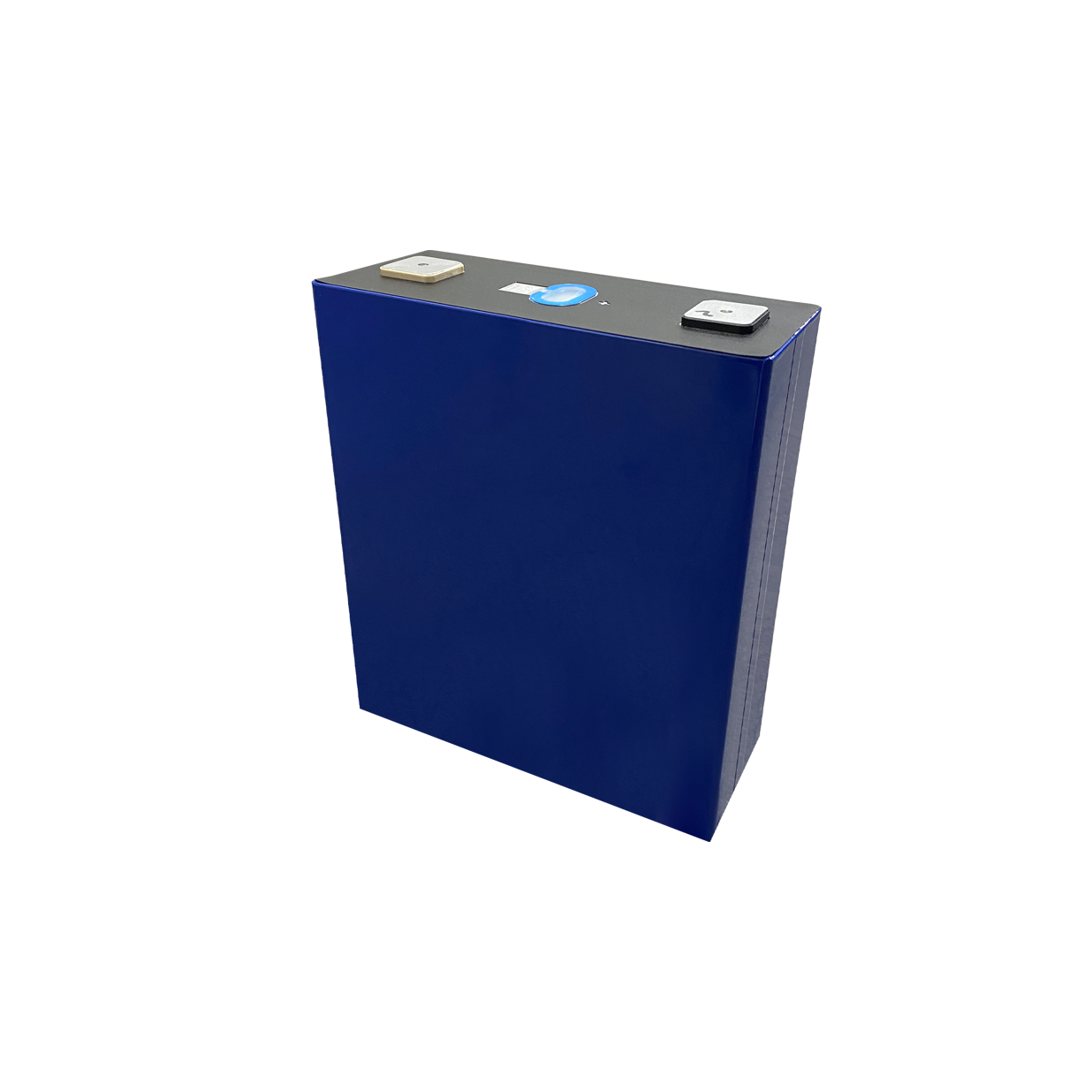
For example, LITHIUM STORAGE's 205Ah LFP cell specifies:
Charging temperature: 0°C to 55°C
Discharging temperature: -30°C to 55°C
Storage temperature: -30°C to 60°C
The same cell is listed with ≥4,000 cycles under its stated 0.5C charge/discharge and 100% DOD test conditions.
Therefore, a forklift battery may continue supplying energy at -20°C even though the cells should not be charged at that temperature without an appropriate thermal solution.
Charging cold lithium-ion cells is more restrictive because low-temperature charging can increase the risk of lithium plating on the anode. Consequently, a battery designed for freezer warehouses may require preheating before the charger is allowed to deliver normal current.
Three Common Cold-Storage Operating Scenarios
LITHIUM STORAGE identifies three practical cold-storage conditions that require different battery designs.
Scenario 1: Forklift Works at 0°C to -20°C but Charges Outside
This is one of the easier configurations.
The truck operates inside the cold warehouse but returns to an area above 0°C for charging. Battery insulation may help slow temperature loss while the forklift is operating.
The main questions are:
How long does the forklift remain inside?
Does the battery warm sufficiently before charging?
How much capacity is required to compensate for cold-temperature losses?
Scenario 2: Forklift Operates at -20°C to -45°C but Charges in a Warm Area
The lower operating temperature increases the need for application-specific engineering.
Battery insulation, enclosure protection, and potentially active heating become more important. The battery must also provide sufficient discharge capability for traction and hydraulic peak loads despite increased internal resistance.
Scenario 3: Forklift Operates and Charges Inside the Cold Store
This is the most demanding condition.
If charging occurs below the battery's normal permitted charging temperature, the system may require charging heating or automatic battery preheating before charging begins.
LITHIUM STORAGE lists IP66 battery packs, insulation, charging-heating systems, and optional discharge heating among the possible approaches for sub-zero forklift operation.
The battery, BMS, heater, charger, and forklift therefore need to be designed as one system.
What Happens to Charging Time in Cold Warehouses?
Temperature can increase practical charging time even if the charger itself has enough power.
Suppose a battery is rated to accept 200A under normal conditions. If its internal temperature is below the approved charging range, the BMS may first prevent charging or allow only limited current until the battery warms sufficiently.
The effective process may become:
Connect charger → battery preheating → minimum cell temperature reached → controlled charging begins → normal charge current becomes available
For a warehouse relying on 20- or 30-minute opportunity-charging periods, preheating time can therefore affect productivity.
This is why charger sizing cannot be separated from thermal design.
A high-output charger will not provide a fast turnaround if the BMS must heavily restrict current because the cells are too cold.
High Warehouse Temperatures Create a Different Problem
Cold storage receives much of the attention, but hot warehouses can also shorten battery life.
Examples include:
Foundries
Steel processing facilities
Hot manufacturing plants
Warehouses without climate control
Outdoor loading areas in hot climates
Facilities where forklifts perform continuous heavy-duty work
High ambient temperature combines with heat produced by:
The result can be higher cell temperatures.
LITHIUM STORAGE notes that high-temperature conditions can cause a forklift battery's BMS to reduce charging or discharging current. Its battery selection guidance therefore recommends confirming charging, discharging, storage, reduced-power, and heating temperature requirements separately.
Repeated operation close to the battery's thermal limit should be investigated rather than treated as normal.
High Temperature Can Accelerate Battery Aging
A battery can remain operational at an elevated temperature while still aging faster than expected.
Prolonged heat accelerates degradation reactions inside lithium-ion cells. Over time this can contribute to:
Capacity loss
Increasing internal resistance
Reduced available power
Greater cell-to-cell variation
Shorter useful battery life
This becomes particularly important when comparing advertised cycle-life figures.
Cycle-life testing is normally performed under specified laboratory temperatures and current rates. The same battery used continuously in a much hotter warehouse may not deliver identical field life.
LITHIUM STORAGE's own material-handling guidance emphasizes that lithium-ion cycle life is strongly influenced by temperature and that low-temperature charging may require heating or current reduction while prolonged high temperature accelerates degradation.
For a fleet manager, average cell temperature over thousands of operating hours can therefore matter more than a short-term maximum-temperature specification.
Temperature Also Affects Peak Forklift Performance
A forklift battery does more than provide average energy over an eight-hour shift.
Short periods of high power are needed for:
At low temperature, increased internal resistance can result in larger voltage drop under these loads.
A battery that has enough Ah capacity may still be unsuitable if it cannot provide the required peak current at the warehouse's minimum operating temperature.
This is why LITHIUM STORAGE recommends confirming not only capacity but also continuous discharge current, peak current, peak-current duration, BMS limits, and high/low-temperature derating.
For a cold-storage LiFePO4 Forklift Battery, these power specifications can be as important as nominal kWh.
Condensation and Moisture Need Attention Too
Cold warehouses introduce another environmental challenge: condensation.
A forklift repeatedly moving between a freezer and a warm loading area can experience rapid temperature changes. Moisture may condense on equipment surfaces as the cold truck enters warmer, humid air.
Battery system design may therefore need to consider:
LITHIUM STORAGE identifies IP66-rated enclosures as one of its cold-storage battery configuration options.
The operating environment should therefore be described to the supplier in detail. Saying only “the warehouse is -20°C” may not communicate that forklifts repeatedly move between -20°C and +20°C throughout the day.
Should You Oversize the Battery for Cold Storage?
Sometimes—but not automatically.
If cold temperature reduces practical usable capacity, additional nominal capacity may help ensure that the forklift can complete its required work period. However, battery sizing should be based on energy consumption rather than an arbitrary percentage increase.
A useful calculation is:
Required battery energy = expected energy consumption between charging opportunities + operational reserve
Then adjust the design according to anticipated cold-temperature performance.
Factors include:
LITHIUM STORAGE similarly notes that cold-storage operation affects battery performance and charging behavior and may require insulation, low-temperature charging protection, or heating.
Oversizing too much increases battery cost and potentially weight, while undersizing can force deeper cycling and create more frequent low-SOC operation.
Temperature Management and Opportunity Charging Must Work Together
Opportunity charging is one of the main advantages of lithium forklift batteries. Trucks can recharge during lunch breaks, shift changes, and other natural downtime.
Temperature determines how effectively those charging windows can be used.
In a moderate-temperature warehouse:
20-minute break = 20 minutes of potential charging
In a sub-zero warehouse:
20-minute break = preheating time + actual charging time
If heating consumes half the available break, the system may restore much less energy than originally calculated.
Cold-storage fleet design should therefore consider:
Energy consumed → charging interval → battery temperature → heating time → actual charge current → energy restored
This system-level calculation is more reliable than simply selecting a fast charger.
Practical Temperature Checklist for Warehouse Buyers
Before selecting a forklift battery, document the actual environment.
| Information | Why It Matters |
|---|
| Normal warehouse temperature | Establishes baseline operation |
| Minimum temperature | Determines low-temperature requirements |
| Maximum temperature | Helps evaluate heat-related derating |
| Hours spent in cold storage | Influences thermal equilibrium |
| Charging temperature | Determines whether heating is needed |
| Indoor/outdoor transitions | Indicates condensation exposure |
| Peak forklift current | Cold conditions can reduce power capability |
| Charging windows | Heating may reduce usable charging time |
| Shifts per day | Determines total daily energy demand |
| Battery compartment | Affects insulation/heating integration |
This information allows a supplier to recommend a battery based on actual duty cycle rather than nominal voltage and capacity alone.
Choosing a LiFePO4 Forklift Battery for Different Warehouse Temperatures
For a normal indoor warehouse, standard LiFePO4 systems can provide fast charging, stable discharge voltage, and reduced routine maintenance.
For high-temperature warehouses, pay particular attention to:
For cold-storage warehouses, evaluate:
LITHIUM STORAGE's forklift battery platform is designed for modern material-handling applications and supports rapid charging up to approximately 80% within one hour for suitable configurations, while cold-storage solutions can incorporate additional thermal and environmental protection according to operating conditions.
Temperature Should Be Part of Battery Selection from the Start
Temperature is not a secondary maintenance issue to consider after a forklift battery has been purchased. It affects available capacity, discharge power, charging permission, charging time, battery aging, and ultimately fleet uptime.
A LiFePO4 Forklift Battery can work effectively in demanding warehouse environments, including cold-storage operations, but the battery configuration must match the real temperature profile.
When requesting a battery quotation, provide the supplier with minimum and maximum operating temperatures, charging temperature, daily operating hours, forklift load profile, charging windows, battery compartment dimensions, and required current.
For warehouse operators, the best-performing battery is not simply the one with the widest temperature number on its datasheet. It is the battery system whose cells, BMS, heating or insulation, charger, enclosure, and capacity are engineered for the temperatures the forklift actually experiences every day.
 EN
EN
 fr
fr  de
de  it
it  ru
ru  es
es  pt
pt  tr
tr  jp
jp  ar
ar  th
th 

 No.9 East Mozhou Road, Jiangning District, 211111, Nanjing City, China