Lead-acid batteries have powered electric forklifts for decades and remain in use across many warehouses. However, facilities operating multiple shifts, maintaining high forklift utilization, or managing large battery rooms are increasingly evaluating lithium-ion systems.
The transition is not driven by battery chemistry alone. It reflects a change in how warehouses organize charging, labor, equipment availability, floor space, maintenance, and fleet data.
A Forklift Lithium Battery can remain installed in the truck and receive partial charges during breaks or shift changes. This differs from the traditional lead-acid operating model, in which discharged batteries can require removal, replacement, full charging, cooling, watering, and equalization.
For warehouses with frequent material movements and limited downtime, changing the battery system can therefore affect the entire operating process.
Lead-Acid and Lithium Forklift Operations Compared
| Operating Area | Lead-Acid Battery System | Lithium-Ion Battery System |
|---|
| Charging method | Commonly charged after a defined discharge period | Can be partially charged during planned idle periods |
| Battery changes | Frequently used in multi-shift operations | Battery can remain installed when the charging plan supports the workload |
| Routine battery care | Watering, cleaning, inspection, and equalization can be required | No watering or routine equalization |
| Charging and cooling | Full charging and cooling time must be considered | No separate lead-acid cooling period |
| Spare batteries | Can be required to support continuous operation | Fewer batteries can be required in suitable applications |
| Battery-room use | Charging, storage, cooling, and maintenance space can be required | Charging points can be positioned near work areas |
| Power delivery | Voltage gradually decreases during discharge | Voltage remains relatively consistent through the usable charge range |
| Battery data | Often depends on charger records and manual inspections | BMS can provide state-of-charge, temperature, current, and fault information |
| Initial investment | Generally lower | Generally higher |
| Operational fit | Common in lower-utilization or established lead-acid fleets | Frequently evaluated for high-utilization and multi-shift fleets |
The decision should still be based on the warehouse’s actual duty cycle. Lithium-ion does not automatically reduce costs or improve productivity in every operation.
1. Warehouses Want Charging to Fit Around the Work Schedule
Traditional battery charging can force the warehouse schedule to accommodate the battery. Lithium-ion allows the charging plan to be organized around periods when the forklift is already idle.
These charging periods can include:
This approach is commonly known as opportunity charging.
Toyota explains that opportunity charging allows a lithium-ion battery to remain inside the forklift while receiving short charges during breaks and shift changes. It is particularly relevant to multi-shift warehouses where there is not enough inactive time for a long charge-and-cool cycle between shifts.
The operational change is important. Instead of driving a forklift to a central battery room and exchanging the battery, the operator can park near a charger and connect the truck during an existing break.
For this system to work, the warehouse must still calculate:
Energy consumed between charging periods
Duration of each break
Charger output
Maximum battery charging current
Number of forklifts sharing each charger
Required state-of-charge reserve
Available electrical power
Opportunity charging is not simply a battery feature. It is a combination of battery capacity, charger size, charger location, operator behavior, and work scheduling.
2. Battery Changes Interrupt Material Flow
In a multi-shift lead-acid operation, a discharged battery can be replaced with a charged battery while the first pack is moved to a charging station.
The complete process can involve:
Driving the forklift away from its work area
Waiting for an available battery-changing station
Disconnecting the discharged battery
Using a crane, extractor, or transfer system
Installing a charged battery
Securing and reconnecting the pack
Returning the truck to operation
Even when the process is organized efficiently, the truck and operator are not moving materials during the battery change.
Lithium-ion systems are frequently selected to remove this interruption. Toyota states that lithium-ion batteries can be opportunity charged without routine battery swaps, while Hyster notes that one lithium-ion battery can replace multiple lead-acid batteries in appropriately configured multi-shift operations.
Removing battery changes can affect:
The number of batteries that can be removed from the fleet depends on actual daily energy consumption. A supplier should not promise that one lithium battery will replace several lead-acid batteries without reviewing the work cycle and charging schedule.
3. Warehouses Are Reducing Routine Battery Maintenance
Flooded lead-acid traction batteries require regular procedures to maintain electrolyte levels and battery condition.
Depending on the system and operating schedule, this can include:
Lithium-ion batteries do not require watering or routine equalization. Toyota describes lithium forklift batteries as virtually maintenance-free compared with the watering, equalizing, and cleaning associated with lead-acid batteries.
This allows maintenance personnel to spend less time on battery-specific tasks. It can also reduce the variability caused by inconsistent watering or charging practices.
Lithium batteries still require inspection. Warehouses should check:
The change is therefore from regular electrochemical maintenance to inspection and system monitoring—not from maintenance to no responsibility at all.
4. Battery Rooms Use Valuable Warehouse Space
A lead-acid battery room can include areas for:
This space does not directly store inventory or support order fulfillment.
When lithium batteries remain inside the forklifts, charging points can be distributed closer to operating areas. Spare battery storage and central battery-changing activities can then be reduced.
Toyota notes that fewer batteries and fewer swaps can reduce the storage space associated with lead-acid systems. Hyster similarly identifies the release of charging space as one result of replacing multiple lead-acid batteries with a single lithium-ion pack in suitable applications.
Recovered space can be reassigned to:
Pallet storage
Staging
Packing
Returns processing
Production support
Additional traffic lanes
New workstations
This factor is particularly relevant in warehouses with high property costs, limited expansion options, or congested battery-changing areas.
Distributed charging still requires planning. Charger locations must avoid blocking aisles, emergency routes, loading areas, and pedestrian traffic.
5. Multi-Shift Warehouses Need More Operating Availability
A single-shift warehouse can often charge a lead-acid battery overnight. In this operating pattern, the available charging window can be long enough that battery swapping is unnecessary.
The situation changes when a forklift operates across two or three shifts.
There can be little time available for:
Full charging
Battery cooling
Equalization
Maintenance
Battery replacement
Lithium-ion batteries are frequently used in these environments because they can receive energy during short idle periods and return to work without a separate cooling cycle.
Hyster identifies intensive and multi-shift operations as key applications for lithium-ion forklift batteries and states that opportunity charging during breaks can support handling over two or three shifts.
A multi-shift lithium system must still maintain a positive daily energy balance.
For example, assume a forklift consumes 18kWh during each shift and works two shifts per day. The battery and charging schedule must provide at least 36kWh of usable daily energy, plus an operating reserve.
This energy can come from:
The battery’s starting state of charge
Charging during the first shift
Charging during the shift change
Charging during the second shift
Overnight recovery charging
A battery with insufficient capacity or an undersized charger will still create operational interruptions, regardless of chemistry.
6. Consistent Power Helps Stabilize Work Cycles
Lead-acid battery voltage declines progressively as the battery discharges. Depending on the forklift and operating conditions, this can affect travel speed, acceleration, hydraulic response, and end-of-shift performance.
Lithium-ion batteries maintain a more stable voltage through their usable discharge range. Toyota identifies consistent power delivery as one of the differences warehouses can observe when transitioning from lead-acid to lithium-ion forklift batteries.
For a warehouse, the practical effect can be more predictable:
This does not mean a lithium battery increases the forklift’s rated speed or lifting capacity. Those limits are controlled by the truck design, motor controller, safety settings, and load rating.
The operational value comes from maintaining similar performance as the battery moves from a high to a lower state of charge.
7. Warehouses Are Looking for Better Fleet Visibility
A modern lithium battery usually includes a battery management system that monitors the battery pack.
Depending on the configuration, available information can include:
Battery voltage
Individual cell voltage
Current
Temperature
State of charge
Charging history
Operating hours
Fault codes
Battery location
State of health
This gives fleet managers more information than a basic battery discharge indicator.
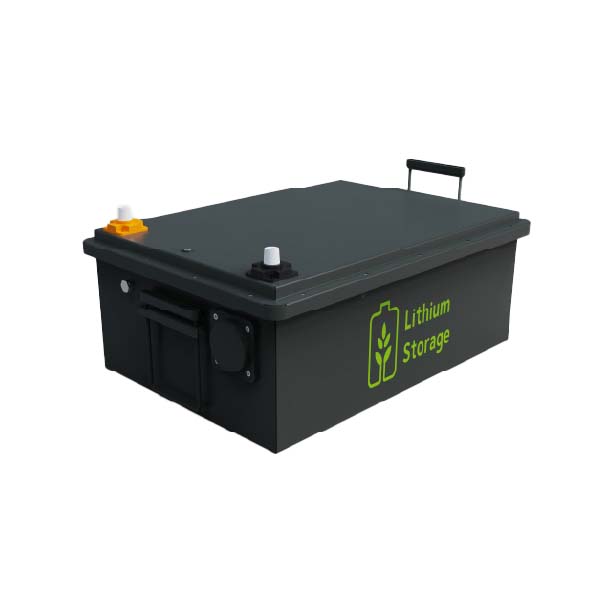
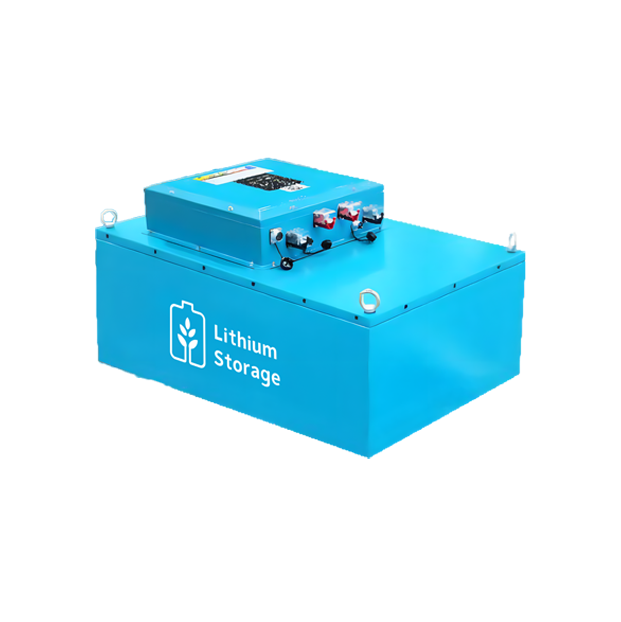
LITHIUM STORAGE states that its Smart FLT battery systems can support BMS monitoring, communication commissioning, remote technical support, GPS or GPRS functions, and cloud-based battery information for selected configurations.
Battery data can help warehouses identify:
Forklifts that are not being charged during breaks
Repeated low-state-of-charge operation
Abnormal battery temperatures
Charger utilization
Fault patterns
Differences between operators or shifts
Batteries approaching service attention
Data access alone does not improve fleet performance. The warehouse also needs a process for reviewing the information and responding to alarms or repeated charging problems.
8. Clean and Controlled Operations Have Different Requirements
Lead-acid battery maintenance can involve water, electrolyte, corrosion, and battery-cleaning procedures. This can create additional management requirements in facilities where cleanliness and process control are important.
Lithium-ion systems are sealed and do not require watering. Hyster identifies food, beverage, and pharmaceutical operations as applications where lithium-ion battery systems can be relevant because hygiene is a priority.
Warehouse environments that can consider this factor include:
The battery’s enclosure rating, connector protection, cleaning procedure, and temperature limits must still be checked for the specific environment.
A standard indoor battery should not automatically be used in washdown, freezing, corrosive, or outdoor conditions.
9. Lithium Can Simplify Fleet Expansion
Expanding a lead-acid forklift fleet can require more than purchasing additional trucks.
The warehouse can also need:
Additional spare batteries
More charger positions
Larger battery-storage areas
Battery stands
Battery-handling equipment
Watering capacity
Additional maintenance labor
A lithium fleet can use a different expansion model. When each forklift carries one installed battery and uses distributed opportunity charging, the facility can add trucks without increasing battery-room activity at the same rate.
However, expansion can still require:
Before expanding, the facility should review the available transformer, panel, circuit, and charger capacity. Rapid charging several forklifts at the same time can create significant electrical demand.
10. The Battery Can Be Matched More Closely to the Application
Lithium forklift batteries are often configured for the specific truck and operating profile.
A battery proposal can account for:
The target product range includes 24V, 36V, 48V, and 80V LiFePO4 battery configurations for pallet trucks, stackers, reach trucks, counterbalance forklifts, and other industrial vehicles. It also lists customization of housings, additional weight, connectors, and communication settings.
This customization is important because a lithium pack should not be treated as a universal replacement selected only by voltage and Ah.
Two forklifts using 48V batteries can still have different requirements for:
Dimensions
Weight
Discharge current
Connector position
Charger current
CAN communication
The battery supplier should verify the exact forklift model before production.
11. Warehouses Are Reviewing Total Operating Cost
Lithium-ion batteries generally have a higher initial purchase cost than lead-acid batteries. Warehouses are therefore comparing the complete operating cost rather than the battery invoice alone.
Relevant cost areas include:
Toyota notes that high-throughput operations often see the greatest return from lithium-ion systems, while the financial case varies according to utilization and application.
A facility operating a few forklifts for several hours per day can reach a different conclusion from a distribution center running dozens of trucks across three shifts.
The transition should therefore be evaluated using:
Cost per forklift operating hour
or:
Cost per pallet movement
These measures connect battery cost to the work the warehouse actually performs.
12. Operator Workflows Become Simpler—but Training Still Matters
Lithium systems remove some traditional battery tasks, but they introduce a different operator routine.
Operators are expected to:
Connect the forklift during scheduled breaks
Confirm that charging has started
Disconnect the charger correctly
Monitor the state-of-charge display
Respond to battery warnings
Avoid using incompatible chargers
Report connector or cable damage
Toyota describes the move to lithium-ion as a culture change because operators need to develop the habit of connecting the truck whenever suitable idle time is available.
Without consistent charging behavior, a correctly sized lithium system can still experience a low state of charge before the end of the shift.
Warehouses should therefore define:
When operators should charge
Which chargers belong to which trucks
Minimum state-of-charge targets
Responsibility for end-of-shift charging
Response procedures for alarms
Rules for damaged connectors
Charger parking and cable management
The transition is most successful when the battery, charging plan, and operator process are introduced together.
When Lead-Acid Batteries Can Remain Part of the Fleet
Replacing lead-acid batteries is not necessary in every warehouse.
Lead-acid can remain an operational option when:
Forklifts operate intermittently
There is one shift per day
A long overnight charging period is available
Each truck requires only one battery
Existing chargers remain serviceable
Battery maintenance is already well controlled
The current trucks are approaching replacement
Electrical upgrades for lithium charging would be substantial
The operation does not lose productive time to battery changes
Hyster continues to offer lead-acid power solutions and notes that correct charging and maintenance discipline are important for obtaining expected performance from these batteries.
Some warehouses also operate mixed fleets during the transition. Trucks with high annual use can move to lithium first, while low-use trucks continue operating with existing lead-acid systems.
Which Forklifts Should Be Converted First?
Warehouses do not always need to replace every battery at once.
The first candidates are often forklifts that have:
The highest annual operating hours
Two- or three-shift schedules
Frequent battery changes
High battery-maintenance requirements
Long travel routes
Repeated low-battery interruptions
High downtime costs
Predictable charging breaks
Several lead-acid batteries assigned to one truck
Lower-utilization equipment can be reviewed later.
A phased conversion allows the warehouse to measure:
Energy consumed per shift
Charger utilization
Battery temperature
Operator charging compliance
Maintenance-hour reduction
Forklift availability
Pallet throughput
Actual electricity use
The results from the first group can then guide the capacity, charger placement, and operating procedures for the rest of the fleet.
Planning a Lead-Acid-to-Lithium Transition
Review the Existing Fleet
Record each forklift’s:
Brand
Model
Serial number
Rated voltage
Current battery capacity
Battery dimensions
Battery weight
Connector
Charger
Annual operating hours
Measure the Duty Cycle
Collect information about:
Identify Charging Windows
Document the length and frequency of:
Breaks
Meal periods
Shift changes
Overnight downtime
Planned production stops
Review Electrical Infrastructure
Confirm:
Verify Physical Compatibility
Confirm:
Compartment dimensions
Minimum battery weight
Ballast requirements
Connector position
Cable length
Battery restraint
Removal direction
Confirm System Communication
Check:
Train Operators and Maintenance Teams
Define charging, inspection, fault-reporting, and emergency procedures before the system enters daily service.
 EN
EN
 fr
fr  de
de  it
it  ru
ru  es
es  pt
pt  tr
tr  jp
jp  ar
ar  th
th 



 No.9 East Mozhou Road, Jiangning District, 211111, Nanjing City, China